What is DNS Sinkhole? Applications and How to Use DNS Sinkhole Technique
Security

What is DNS Sinkhole? Applications and How to Use DNS Sinkhole Technique

DNS Sinkhole is a cybersecurity technique that redirects malicious DNS queries to a controlled IP address, preventing malware from connecting to C&C servers and protecting systems.

In this series: Bảo mật
  1. 1 What is Malware? Classification, Characteristics, and Prevention
  2. 2 What is DDoS? Signs, Response and Effective Prevention Methods
  3. 3 What is Phishing? Recognizing and Preventing Online Fraud
  4. 4 What is DNS Sinkhole? Applications and How to Use DNS Sinkhole Technique
  5. 5 What is OAuth 2.0? Authorization and Login with Google/GitHub
  6. 6 What is a Trojan? Essential Information About Trojan Malware
  7. 7 What Is Zero Trust? The 'Never Trust, Always Verify' Security Model
  8. 8 What is VPN? Virtual Private Network, WireGuard and OpenVPN
  9. 9 What Is MFA? Multi-Factor Authentication vs 2FA Explained
  10. 10 What is a Firewall? Role and Functions in Network Security
  11. 11 What is SQL Injection? Database Attacks and Prevention
  12. 12 What is XSS? Cross-Site Scripting Attacks and Prevention
✦ Quick summary
DNS Sinkhole is a cybersecurity technique that redirects malicious DNS queries to a controlled IP address, preventing malware from connecting to C&C servers and protecting systems.
How was this post?

DNS Sinkhole is a cybersecurity technique that redirects malicious DNS queries to a controlled IP address, preventing malware from connecting to C&C servers. This article analyzes how DNS Sinkhole works, how to deploy it, and real-world examples.

What is DNS Sinkhole?

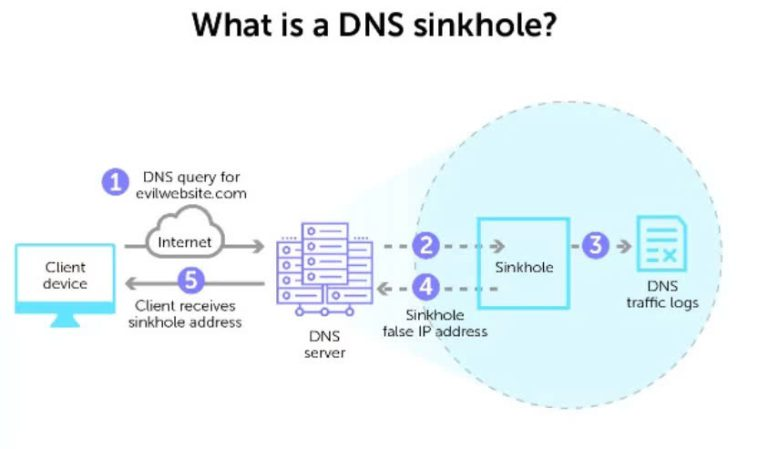
DNS Sinkhole (also known as DNS sinkholing) is a cybersecurity technique that redirects malicious or unwanted DNS queries to a controlled IP address. The primary purpose of DNS Sinkhole is to prevent malware-infected systems from connecting to command and control (C&C) servers and to limit the spread of malware within the network.

When an internal device infected with malware attempts to connect to a C&C server through a malicious domain name, DNS Sinkhole blocks the DNS query and redirects it to a harmless IP address managed by the security team. This helps isolate the infected device while providing critical information about the malware's activity.

How DNS Sinkhole Works Technically

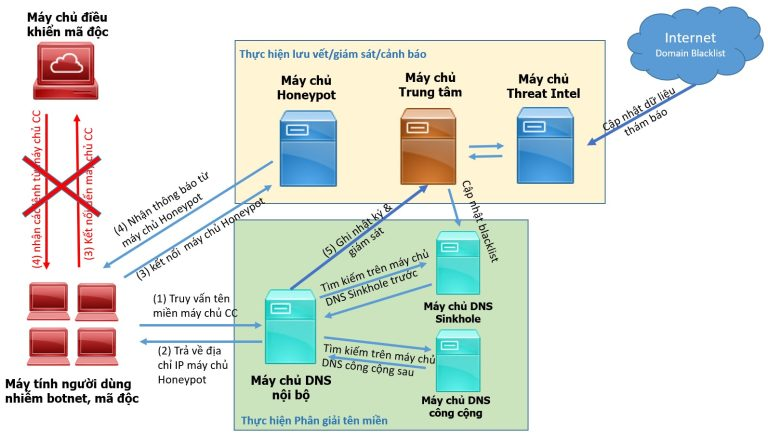
The DNS Sinkhole system operates by configuring the organization's DNS server to perform the following steps:

  • Collect and analyze a list of dangerous or malicious domain names.
  • Replace the DNS response for queries related to these domains with the IP address of a "sinkhole server."
  • The "sinkhole server" records information about the infected device and reports to the cybersecurity team.
  • Isolate and prevent malware activity by blocking connections to the actual command and control server.

The coordination between components in the DNS Sinkhole architecture significantly reduces information security risks caused by malware.

The Importance of DNS Sinkhole in Cybersecurity

DNS Sinkhole plays an essential role in protecting an organization's network systems against threats from malware.

  • Preventing malware spread: DNS Sinkhole blocks malware from accessing C&C servers, limiting their ability to spread within the internal network.
  • Protecting sensitive data: By isolating infected devices, this technique prevents the theft of critical data being sent to malicious servers.
  • Providing intelligence on malware activity: DNS Sinkhole logs communications from infected devices, helping the security team better understand the scale and nature of the attack.
  • Reducing incident remediation costs: This technique enables early detection of infected devices, reducing the time and cost needed to investigate and handle cybersecurity incidents.

What is VNPT Proxy?

With these benefits, DNS Sinkhole is an indispensable solution in the cybersecurity strategy of any organization.

How Does DNS Sinkhole Work?

To better understand how DNS Sinkhole operates, let us examine the following steps:

  • Malware infiltrates an internal device within the organization.
  • The malware attempts to connect to a C&C server through a malicious domain name.
  • Instead of returning the real IP address of the C&C server, DNS Sinkhole redirects the query to a "sinkhole server."
  • The "sinkhole server" records information about the infected device and notifies the security team.
  • The connection between the infected device and the C&C server is blocked, preventing the spread of malware.

During this process, DNS Sinkhole acts as a "black hole" (sinkhole) to attract and neutralize malicious DNS queries. This allows the organization to proactively and effectively prevent threats from malware.

Deploying DNS Sinkhole in an Organization

To successfully deploy DNS Sinkhole in an organization, the following steps need to be taken:

Choosing a sinkhole solution

Depending on the scale, infrastructure, and security needs, the organization must choose an appropriate DNS Sinkhole solution. Common options include:

  • Building an in-house sinkhole system
  • Using a third-party DNS Sinkhole service
  • Integrating sinkhole functionality into existing security products

Creating and maintaining domain lists

A critical component of DNS Sinkhole is the list of malicious domains to block. The organization needs to continuously update and expand this list based on:

  • Threat intelligence sources
  • Malware behavior analysis
  • Reports from the security community
  • Data from internal monitoring systems

Maintaining a high-quality domain list is essential to ensure the effectiveness of DNS Sinkhole.

Configuration and integration

After obtaining the domain list and sinkhole solution, the organization needs to perform the following configuration and integration steps:

  • Configure the organization's DNS server to redirect queries related to malicious domains.
  • Ensure all devices on the network use the DNS server configured with sinkhole.
  • Integrate the sinkhole system with other security tools such as SIEM and EDR for comprehensive visibility and rapid response capabilities.

Careful deployment and configuration are key factors for DNS Sinkhole to maximize its effectiveness in the organization's cybersecurity system.
Limitations and Potential Risks of DNS Sinkhole

Alongside its clear benefits, using DNS Sinkhole also comes with certain limitations and risks to be aware of:

False alerts and missing real threats

If the sinkhole domain list is not updated regularly and accurately, the organization may encounter:

  • False positives: Blocking access to legitimate domain names
  • False negatives: Allowing malicious domains not yet added to the list to slip through

Therefore, careful maintenance and updating of the domain list is crucial to minimize these risks.

What is Alibaba Cloud? Asia's No.1 Trusted Cloud Computing Service

Evasion techniques by sophisticated attackers

Experienced attackers can use techniques to bypass DNS Sinkhole, such as:

  • Fast Flux: Continuously changing the IP addresses associated with malicious domains
  • Domain Generation Algorithms (DGA): Generating large numbers of random domain names to avoid being listed in the sinkhole

To counter this, organizations need to combine DNS Sinkhole with other security measures such as behavioral analysis and artificial intelligence to detect sophisticated evasion techniques.

Resource and maintenance costs

Deploying and maintaining a DNS Sinkhole system requires significant resources for:

  • Hardware and bandwidth for the "sinkhole server"
  • Personnel to monitor, update domain lists, and handle incidents

Organizations need a proper resource allocation plan to operate the sinkhole system efficiently without impacting overall operations.

Potential slowdowns and performance issues

In some cases, redirecting DNS queries can lead to higher latency, affecting user experience. Performance issues may occur if:

  • The "sinkhole server" lacks the capacity to handle large query volumes
  • The sinkhole configuration is not optimized
  • The organization's network is overloaded

To minimize these negative impacts, organizations need to closely monitor system performance and adjust configurations as needed.

Dependence on reliable DNS infrastructure

The effectiveness of DNS Sinkhole heavily depends on the reliability and security of the DNS infrastructure being used. If the organization's DNS server is attacked or compromised, attackers can bypass the sinkhole mechanism or disrupt the overall network operations.

Therefore, alongside deploying DNS Sinkhole, organizations also need measures to protect and monitor their DNS infrastructure, ensuring integrity and high availability.

Reasons to Use DNS Sinkhole

Despite certain limitations, DNS Sinkhole remains an indispensable technique in the cybersecurity strategy of organizations, with the following key benefits:

  • Enhanced security capabilities: DNS Sinkhole provides a critical layer of protection, preventing malware from connecting to command and control servers and stealing data.
  • Early threat detection: This technique enables early detection of infected devices on the network, allowing the security team to respond promptly.
  • Improved incident response: Information collected from DNS Sinkhole provides important context for investigating, analyzing, and effectively responding to cybersecurity incidents.
  • Cost and resource savings: By preventing the spread of malware, DNS Sinkhole helps reduce the cost and resources needed to remediate the consequences of attacks.
  • Compliance with security regulations and standards: Deploying DNS Sinkhole is one of the measures that helps organizations meet information security requirements and comply with regulations and standards such as GDPR, HIPAA, and PCI DSS.

With these benefits, DNS Sinkhole has become a popular and indispensable solution in the cybersecurity systems of many organizations worldwide.

How to Get Started with DNS Sinkhole

To get started with DNS Sinkhole, organizations need to follow these steps:

  • Assess needs and define specific security objectives for the organization.
  • Research and select an appropriate DNS Sinkhole solution (build in-house, use a third-party service, or integrate with existing security products).
  • Develop and maintain a list of malicious domains to block, based on threat intelligence sources and malware behavior analysis.
  • Configure the organization's DNS system to redirect malicious queries to a "sinkhole server."
  • Establish procedures for monitoring, updating domain lists, and handling alerts from the DNS Sinkhole system.
  • Train and raise employee awareness about the role of DNS Sinkhole in the overall cybersecurity strategy.

What is a Botnet? The Impact of DDoS Botnets on Businesses

By following the steps above, organizations can successfully deploy DNS Sinkhole and significantly enhance their network protection against threats from malware.
Examples of DNS Sinkhole Use Cases

Below are some typical examples of how organizations use DNS Sinkhole to protect their network systems:

Using DNS Sinkhole to Stop CryptoLocker

CryptoLocker is a dangerous type of ransomware that encrypts victims' important files and demands ransom for decryption. To prevent the spread of CryptoLocker, many organizations deployed DNS Sinkhole with the following steps:

  • Identify the list of malicious domains associated with CryptoLocker.
  • Configure the DNS system to redirect queries to these domains to a "sinkhole server."
  • Monitor and analyze data from the "sinkhole server" to detect and isolate devices infected with CryptoLocker on the network.

By applying the DNS Sinkhole technique, organizations were able to prevent the spread of CryptoLocker, minimize damage, and protect their critical data.

The WannaCry Ransomware Attack of 2017

In May 2017, the WannaCry ransomware attack affected hundreds of thousands of computers worldwide. To respond to this attack, many organizations used DNS Sinkhole as a protective measure:

  • As WannaCry spread, security experts quickly identified a "kill switch" -- a domain name that WannaCry checked before encrypting data.
  • By registering and sinkholing this domain, researchers inadvertently activated the "kill switch," significantly slowing the spread of WannaCry.
  • Many organizations also deployed internal DNS Sinkholes, redirecting queries related to WannaCry to protect their systems.

The WannaCry case demonstrated the importance of DNS Sinkhole as an effective tool for rapidly responding to large-scale ransomware attacks.

{{< test-result title="Comparison of DNS Protection Solutions" headers="Criteria|DNS Sinkhole|DNS Firewall|Pi-hole|DNSSEC" row1="Purpose|Block malware C&C|Content filtering|Block ads + malware|DNS authentication" row2="Scope|Enterprise network|Enterprise network|Home/small network|Global" row3="Cost|Medium|High|Free|Free" row4="Complexity|Medium|High|Low|Medium" row5="Best for|SOC, enterprises|Large enterprises|Individuals, SMEs|All scales" />}}

Note

DNS Sinkhole is an essential technique in cybersecurity strategy, helping detect and isolate malware-infected devices. Combine with SIEM, EDR, and threat intelligence to achieve optimal security effectiveness.

Conclusion: DNS Sinkhole is an effective cybersecurity technique that redirects malicious DNS queries to prevent malware from connecting to C&C servers. This technique has been proven through real-world cases such as CryptoLocker and WannaCry. Despite some limitations like false positives and DGA evasion techniques, DNS Sinkhole remains an indispensable component in an enterprise's network defense system.

Sources

Frequently Asked Questions

Frequently Asked QuestionsQ&A

DNS Sinkhole là kỹ thuật an ninh mạng chuyển hướng truy vấn DNS độc hại tới địa chỉ IP được kiểm soát, ngăn chặn malware kết nối với máy chủ C&C. Bài viết phân tích cách hoạt động, triển khai và các ví dụ thực tế về DNS Sinkhole.

DNS Sinkhole là gì?

DNS Sinkhole (hay còn gọi là DNS sinkholing) là một kỹ thuật an ninh mạng cho phép chuyển hướng các truy vấn DNS độc hại hoặc không mong muốn tới một địa chỉ IP được kiểm soát. Mục đích chính của DNS Sinkhole là ngăn chặn các hệ thống bị nhiễm phần mềm độc hại kết nối với máy chủ điều khiển (C&C server) và hạn chế sự lây lan của mã độc trong mạng.

Khi một thiết bị nội bộ bị nhiễm phần mềm độc hại và cố gắng kết nối với máy chủ C&C thông qua một tên miền độc hại, DNS Sinkhole sẽ chặn truy vấn DNS và chuyển hướng nó đến một địa chỉ IP vô hại được quản lý bởi đội ngũ bảo mật. Điều này giúp cô lập thiết bị bị nhiễm, đồng thời cung cấp thông tin quan trọng về hoạt động của mã độc.

Cấu trúc hoạt động kỹ thuật DNS Sinkhole

Hệ thống DNS Sinkhole hoạt động bằng cách cấu hình máy chủ DNS của tổ chức để thực hiện các bước sau:

  • Thu thập và phân tích danh sách các tên miền nguy hiểm hoặc độc hại.
  • Thay đổi thông tin trả về cho các truy vấn DNS liên quan đến những tên miền này bằng địa chỉ IP của "sinkhole server".
  • "Sinkhole server" ghi lại thông tin về thiết bị bị nhiễm và báo cáo cho đội ngũ an ninh mạng.
  • Cách ly và ngăn chặn hoạt động của phần mềm độc hại bằng cách không cho phép chúng kết nối với máy chủ điều khiển thực sự.

Sự phối hợp giữa các thành phần trong cấu trúc DNS Sinkhole giúp giảm thiểu đáng kể rủi ro an toàn thông tin gây ra bởi phần mềm độc hại.

Tầm quan trọng của DNS Sinkhole trong an ninh mạng

DNS Sinkhole đóng vai trò thiết yếu trong việc bảo vệ hệ thống mạng của tổ chức trước các mối nguy hại từ phần mềm độc hại.

  • Phòng ngừa sự lây lan của malware: DNS Sinkhole ngăn chặn phần mềm độc hại truy cập vào máy chủ C&C, hạn chế khả năng chúng lây lan trong mạng nội bộ.
  • Bảo vệ dữ liệu nhạy cảm: Bằng cách cô lập thiết bị bị nhiễm, kỹ thuật này ngăn chặn việc đánh cắp dữ liệu quan trọng gửi đến máy chủ độc hại.
  • Cung cấp thông tin về hoạt động của malware: DNS Sinkhole ghi lại thông tin liên lạc của các thiết bị bị nhiễm, giúp đội ngũ bảo mật hiểu rõ hơn về quy mô và bản chất của cuộc tấn công.
  • Giảm chi phí khắc phục sự cố: Kỹ thuật này giúp phát hiện sớm các thiết bị bị nhiễm, giảm thời gian và chi phí để điều tra, xử lý các sự cố an ninh mạng. Với những lợi ích trên, DNS Sinkhole là một giải pháp không thể thiếu trong chiến lược an ninh mạng của các tổ chức.

DNS Sinkhole hoạt động như thế nào?

Để hiểu rõ hơn về cách thức hoạt động của DNS Sinkhole, hãy cùng xem xét các bước sau:

  • Phần mềm độc hại xâm nhập vào thiết bị nội bộ của tổ chức.
  • Mã độc cố gắng kết nối với máy chủ C&C thông qua một tên miền độc hại.
  • Thay vì trả về địa chỉ IP thực của máy chủ C&C, DNS Sinkhole chuyển hướng truy vấn đến "sinkhole server".
  • "Sinkhole server" ghi lại thông tin về thiết bị bị nhiễm và thông báo cho nhóm bảo mật.
  • Kết nối giữa thiết bị bị nhiễm và máy chủ C&C bị chặn, ngăn chặn sự lây lan của phần mềm độc hại.

Trong quá trình này, DNS Sinkhole đóng vai trò như một "hố đen" (sinkhole) để thu hút và vô hiệu hóa các truy vấn DNS độc hại. Nhờ đó, tổ chức có thể ngăn chặn mối nguy hại từ phần mềm độc hại một cách proactive và hiệu quả.

Triển khai DNS Sinkhole trong một tổ chức

Để triển khai thành công DNS Sinkhole trong tổ chức, cần thực hiện các bước sau:

Lựa chọn giải pháp sinkhole

Tùy thuộc vào quy mô, cơ sở hạ tầng và nhu cầu bảo mật, tổ chức cần lựa chọn giải pháp DNS Sinkhole phù hợp. Các lựa chọn phổ biến bao gồm:

  • Xây dựng hệ thống sinkhole nội bộ
  • Sử dụng dịch vụ DNS Sinkhole từ bên thứ ba
  • Tích hợp tính năng sinkhole trong các sản phẩm bảo mật hiện có

Tạo và duy trì danh sách domain

Một thành phần quan trọng của DNS Sinkhole là danh sách các tên miền độc hại cần chặn. Tổ chức cần liên tục cập nhật và mở rộng danh sách này dựa trên:

  • Nguồn tình báo về các mối đe dọa (threat intelligence)
  • Phân tích hành vi của malware
  • Báo cáo từ cộng đồng bảo mật
  • Dữ liệu từ hệ thống giám sát nội bộ

Việc duy trì một danh sách domain chất lượng là rất cần thiết để đảm bảo hiệu quả của DNS Sinkhole.

Cấu hình và tích hợp

Sau khi có danh sách domain và giải pháp sinkhole, tổ chức cần thực hiện các bước cấu hình và tích hợp:

  • Cấu hình máy chủ DNS của tổ chức để chuyển hướng các truy vấn liên quan đến những tên miền độc hại.
  • Đảm bảo tất cả các thiết bị trong mạng đều sử dụng máy chủ DNS đã cấu hình sinkhole.
  • Tích hợp hệ thống sinkhole với các công cụ bảo mật khác như SIEM, EDR để có cái nhìn tổng quan và khả năng phản ứng nhanh.

Việc triển khai và cấu hình cẩn thận là yếu tố then chốt để DNS Sinkhole phát huy tối đa hiệu quả trong hệ thống an ninh mạng của tổ chức.

Những hạn chế và rủi ro tiềm ẩn của DNS Sinkhole

Bên cạnh những lợi ích rõ ràng, việc sử dụng DNS Sinkhole cũng đi kèm với một số hạn chế và rủi ro cần lưu ý:

Cảnh báo giả, bỏ sót các mối đe dọa thực sự

Nếu danh sách domain sinkhole không được cập nhật thường xuyên và chính xác, tổ chức có thể gặp phải:

  • Cảnh báo sai (false positives): Chặn truy cập đến các tên miền hợp pháp
  • Bỏ sót các mối đe dọa thực sự (false negatives): Để lọt các tên miền độc hại chưa được đưa vào danh sách

Do đó, việc duy trì và cập nhật danh sách domain một cách kỹ lưỡng rất quan trọng để giảm thiểu những rủi ro này.

Alibaba Cloud là gì? Dịch vụ Cloud Computing uy tín số 1 Châu Á

Kỹ thuật né tránh của những kẻ tấn công tinh vi

Những kẻ tấn công có kinh nghiệm có thể sử dụng các kỹ thuật để vượt qua DNS Sinkhole như:

  • Fast Flux: Thay đổi liên tục địa chỉ IP tương ứng với tên miền độc hại
  • Domain Generation Algorithms (DGA): Tạo ra hàng loạt tên miền ngẫu nhiên để tránh bị liệt vào danh sách sinkhole

Để đối phó, tổ chức cần kết hợp DNS Sinkhole với các biện pháp bảo mật khác như phân tích hành vi, trí tuệ nhân tạo để phát hiện những kỹ thuật né tránh tinh vi.

Chi phí tài nguyên và bảo trì

Triển khai và duy trì hệ thống DNS Sinkhole đòi hỏi nguồn lực đáng kể về:

  • Phần cứng, băng thông cho "sinkhole server"
  • Nhân lực để giám sát, cập nhật danh sách domain và xử lý sự cố

Tổ chức cần có kế hoạch phân bổ tài nguyên hợp lý để vận hành hiệu quả hệ thống sinkhole, đồng thời không ảnh hưởng đến hoạt động chung.

Khả năng chậm lại và các vấn đề về hiệu suất

Trong một số trường hợp, việc chuyển hướng truy vấn DNS có thể dẫn đến độ trễ cao hơn, ảnh hưởng đến trải nghiệm người dùng. Các vấn đề về hiệu suất có thể xảy ra nếu:

  • "Sinkhole server" không đủ khả năng xử lý khối lượng truy vấn lớn
  • Cấu hình sinkhole chưa được tối ưu hóa
  • Mạng của tổ chức bị quá tải

Để giảm thiểu những tác động tiêu cực này, tổ chức cần giám sát chặt chẽ hiệu suất hệ thống và điều chỉnh cấu hình khi cần thiết.

Sự phụ thuộc vào cơ sở hạ tầng DNS đáng tin cậy

Hiệu quả của DNS Sinkhole phụ thuộc rất lớn vào độ tin cậy và an toàn của cơ sở hạ tầng DNS được sử dụng. Nếu máy chủ DNS của tổ chức bị tấn công hoặc bị thỏa hiệp, kẻ tấn công có thể vượt qua cơ chế sinkhole hoặc phá hoại hoạt động chung của mạng.

Do đó, bên cạnh việc triển khai DNS Sinkhole, tổ chức cũng cần có các biện pháp bảo vệ và giám sát cơ sở hạ tầng DNS, đảm bảo tính toàn vẹn và sẵn sàng cao.

Lý do nên sử dụng DNS Sinkhole

Mặc dù có một số hạn chế nhất định, DNS Sinkhole vẫn là một kỹ thuật không thể thiếu trong chiến lược an ninh mạng của các tổ chức, với những lợi ích chính sau:

  • Nâng cao khả năng bảo mật: DNS Sinkhole cung cấp một lớp bảo vệ quan trọng, ngăn chặn phần mềm độc hại kết nối với máy chủ điều khiển và lấy cắp dữ liệu.
  • Phát hiện sớm các mối đe dọa: Kỹ thuật này cho phép phát hiện sớm các thiết bị bị nhiễm trong mạng, giúp đội ngũ bảo mật có thể xử lý kịp thời.
  • Cải thiện khả năng phản ứng với sự cố: Thông tin thu thập từ DNS Sinkhole cung cấp bối cảnh quan trọng để điều tra, phân tích và ứng phó hiệu quả với các sự cố an ninh mạng.
  • Tiết kiệm chi phí và nguồn lực: Bằng cách ngăn chặn sự lây lan của phần mềm độc hại, DNS Sinkhole giúp giảm thiểu chi phí và nguồn lực cần thiết để khắc phục hậu quả của các cuộc tấn công.
  • Tuân thủ các quy định và tiêu chuẩn bảo mật: Triển khai DNS Sinkhole là một trong những biện pháp giúp tổ chức đáp ứng các yêu cầu về bảo mật thông tin, tuân thủ các quy định và tiêu chuẩn như GDPR, HIPAA, PCI DSS.

Với những lợi ích trên, DNS Sinkhole đã trở thành một giải pháp phổ biến và không thể thiếu trong hệ thống an ninh mạng của nhiều tổ chức trên toàn cầu.

Cách bắt đầu sử dụng DNS Sinkhole

Để bắt đầu sử dụng DNS Sinkhole, tổ chức cần thực hiện các bước sau:

  • Đánh giá nhu cầu và xác định mục tiêu bảo mật cụ thể của tổ chức.
  • Tìm hiểu và lựa chọn giải pháp DNS Sinkhole phù hợp (xây dựng nội bộ, sử dụng dịch vụ bên thứ ba, hoặc tích hợp với các sản phẩm bảo mật sẵn có).
  • Phát triển và duy trì danh sách các tên miền độc hại cần chặn, dựa trên nguồn tình báo về mối đe dọa và phân tích hành vi của phần mềm độc hại.
  • Cấu hình hệ thống DNS của tổ chức để chuyển hướng các truy vấn độc hại đến "sinkhole server".
  • Thiết lập quy trình giám sát, cập nhật danh sách tên miền và xử lý các cảnh báo từ hệ thống DNS Sinkhole.
  • Đào tạo và nâng cao nhận thức cho nhân viên về vai trò của DNS Sinkhole trong chiến lược an ninh mạng tổng thể.

Botnet là gì? Tác động của DDoS Botnet đối với doanh nghiệp

Bằng cách tuân theo các bước trên, tổ chức có thể triển khai thành công DNS Sinkhole và tăng cường đáng kể khả năng bảo vệ hệ thống mạng của mình trước các mối đe dọa từ phần mềm độc hại.

Ví dụ các tình huống sử dụng DNS Sinkhole

Dưới đây là một số ví dụ điển hình về cách các tổ chức sử dụng DNS Sinkhole để bảo vệ hệ thống mạng của họ:

Sử dụng DNS Sinkhole để ngăn chặn CryptoLocker

CryptoLocker là một loại ransomware nguy hiểm, mã hóa các tệp quan trọng của nạn nhân và đòi tiền chuộc để giải mã. Để ngăn chặn sự lây lan của CryptoLocker, nhiều tổ chức đã triển khai DNS Sinkhole với các bước sau:

  • Xác định danh sách các tên miền độc hại liên quan đến CryptoLocker.
  • Cấu hình hệ thống DNS để chuyển hướng các truy vấn đến những tên miền này tới "sinkhole server".
  • Giám sát và phân tích dữ liệu từ "sinkhole server" để phát hiện và cô lập các thiết bị bị nhiễm CryptoLocker trong mạng.

Nhờ áp dụng kỹ thuật DNS Sinkhole, các tổ chức đã ngăn chặn được sự lây lan của CryptoLocker, giảm thiểu thiệt hại và bảo vệ dữ liệu quan trọng của mình.

Cuộc tấn công ransomware WannaCry 2017

Vào tháng 5 năm 2017, cuộc tấn công ransomware WannaCry đã gây ảnh hưởng đến hàng trăm nghìn máy tính trên toàn cầu. Để ứng phó với cuộc tấn công này, nhiều tổ chức đã sử dụng DNS Sinkhole như một biện pháp bảo vệ:

  • Khi WannaCry lây lan, các chuyên gia bảo mật đã nhanh chóng xác định "kill switch" – một tên miền mà WannaCry kiểm tra trước khi mã hóa dữ liệu.
  • Bằng cách đăng ký và sinkhole tên miền này, các nhà nghiên cứu đã vô tình kích hoạt "kill switch", làm chậm đáng kể sự lây lan của WannaCry.
  • Nhiều tổ chức cũng đã triển khai DNS Sinkhole nội bộ, chuyển hướng các truy vấn liên quan đến WannaCry để bảo vệ hệ thống của họ.

Trường hợp của WannaCry cho thấy tầm quan trọng của DNS Sinkhole như một công cụ hiệu quả để ứng phó nhanh chóng với các cuộc tấn công ransomware quy mô lớn.

{{< test-result title="So sanh cac giai phap bao ve DNS" headers="Tieu chi|DNS Sinkhole|DNS Firewall|Pi-hole|DNSSEC" row1="Muc dich|Chan malware C&C|Loc noi dung|Chan quang cao + malware|Xac thuc DNS" row2="Pham vi|Mang doanh nghiep|Mang doanh nghiep|Mang gia dinh/nho|Toan cau" row3="Chi phi|Trung binh|Cao|Mien phi|Mien phi" row4="Do phuc tap|Trung binh|Cao|Thap|Trung binh" row5="Phu hop|SOC, doanh nghiep|Doanh nghiep lon|Ca nhan, SME|Moi quy mo" />}}

Ghi chú

DNS Sinkhole la ky thuat thiet yeu trong chien luoc an ninh mang, giup phat hien va co lap thiet bi bi nhiem malware. Ket hop voi SIEM, EDR va threat intelligence de dat hieu qua bao mat toi uu.

Ket luan: DNS Sinkhole la ky thuat an ninh mang hieu qua, chuyen huong truy van DNS doc hai de ngan chan malware ket noi voi may chu C&C. Ky thuat nay da duoc chung minh qua cac truong hop thuc te nhu CryptoLocker va WannaCry. Du co mot so han che nhu false positives va ky thuat ne tranh DGA, DNS Sinkhole van la thanh phan khong the thieu trong he thong phong thu mang cua doanh nghiep.

Nguồn tham khảo
Câu hỏi thường gặpQ&A