What is Oracle? A Beginner's Guide to Oracle Database
Development

What is Oracle? A Beginner's Guide to Oracle Database

Oracle Database is the world's leading relational database management system. Learn about its architecture, key features, editions, and the pros and cons of Oracle Database.

✦ Quick summary
Oracle Database is the world's leading relational database management system. Learn about its architecture, key features, editions, and the pros and cons of Oracle Database.
How was this post?

Oracle Database is the world's leading relational database management system, widely used in enterprises. This article explains what Oracle is, its system architecture, key features, editions, and guidance on choosing the right one.

What is Oracle?

Oracle is a multi-purpose relational database management system (RDBMS) developed and distributed by Oracle Corporation. It is one of the most popular and reliable database systems in the world, widely used in enterprise applications ranging from human resource management to financial accounting and supply chain management.

Oracle Database provides a powerful platform for storing, managing, and retrieving data efficiently. It supports various data models such as relational, object-relational, and XML, allowing users to store and access both structured and unstructured data flexibly.

One of Oracle's key strengths is its ability to handle large and complex data volumes while ensuring high performance and data consistency. The system also provides many advanced features such as backup and recovery, multi-layered security, and both horizontal and vertical scalability.
History of Oracle Development

Oracle's history began in 1977 when Larry Ellison, Bob Miner, and Ed Oates founded Software Development Laboratories (SDL). Initially, they developed a database for the United States Central Intelligence Agency (CIA) under the code name Project Oracle.

  • 1979: The company was renamed Relational Software Inc. and released the first commercial version of Oracle, Oracle V2 — the first SQL database on the market.
  • 1982: The company was renamed Oracle Corporation, after its flagship product.
  • 1983: Oracle released version 3, rewritten in C to support multiple platforms.
  • 1984: Oracle version 4 was launched with read consistency and transaction support features.
  • 1985: Oracle version 5 was introduced, supporting client-server and distributed models.
  • 1988: Oracle version 6 was released with row-level locking and hot backup features.
  • 1992: Oracle7 was released with many performance and management improvements.
  • 1997: Oracle8 was launched, supporting object-relational and Internet computing.
  • 1999: Oracle8i was introduced, focusing on Internet and Java.
  • 2001: Oracle9i was released with the Real Application Clusters (RAC) feature.
  • 2003: Oracle Database 10g was released, introducing the grid computing concept.
  • 2007: Oracle Database 11g was launched with numerous management and performance improvements.
  • 2013: Oracle Database 12c was introduced, supporting multitenant architecture and in-memory.
  • 2019: Oracle Database 19c was released, considered the long-term version of the 12c Release 2 line.
  • 2021: Oracle Database 21c was released with many new features such as Blockchain Tables and JSON relational duality.

Over more than 40 years of development, Oracle has continuously improved and expanded its system capabilities, evolving from a simple database into a comprehensive platform for enterprise data, including cloud and artificial intelligence solutions.

Oracle Database Architecture

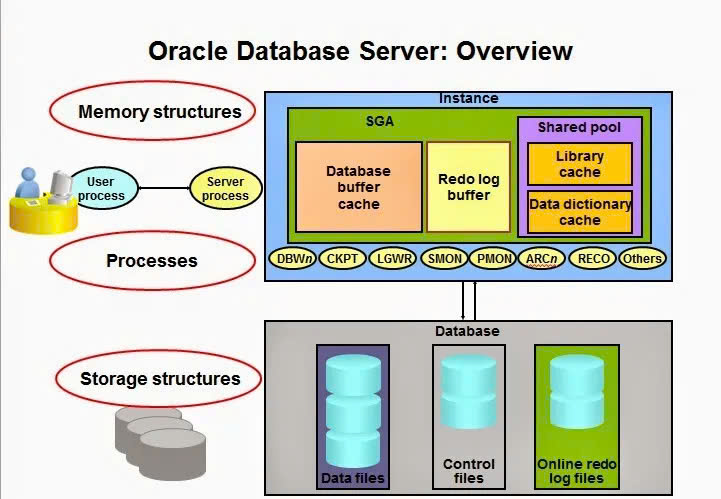
Oracle Database architecture is a sophisticated system designed to ensure high performance, availability, and security. Below is an overview of the main components in Oracle architecture:

  • Instance: This is the collection of memory structures and background processes required to access the database. Each instance corresponds to one database and includes:
    • System Global Area (SGA): A shared memory area containing data and control information.
    • Program Global Area (PGA): Private memory for each server process.
    • Background Processes: Background processes that perform I/O tasks and maintain the database.
  • Database: Consists of physical files that store actual data. The main components include:
    • Data Files: Contain actual data of database objects such as tables and indexes.
    • Control Files: Store information about the physical structure of the database.
    • Redo Log Files: Record all changes made to the data.
  • Logical Structures:
    • Tablespaces: The largest logical unit of storage in Oracle.
    • Segments: Database objects such as tables or indexes.
    • Extents: Contiguous blocks of space allocated to segments.
    • Data Blocks: The smallest unit of I/O in Oracle.
  • Memory Structures:
    • Database Buffer Cache: Stores recently accessed data blocks.
    • Redo Log Buffer: Temporarily stores redo log information before writing to disk.
    • Shared Pool: Contains parsed SQL statements and data dictionary data.
  • Process Structures:
    • User Processes: Connect users to the Oracle instance.
    • Server Processes: Perform work for user processes.
    • Background Processes: Perform maintenance and I/O tasks.

What is a Kernel? Introduction to Kernels in Operating Systems

This architecture allows Oracle Database to efficiently handle concurrent transactions, ensure data consistency, and provide robust recovery capabilities. It also supports advanced features like Real Application Clusters (RAC) for scalability and high availability.
Key Features and Options of Oracle Database

Oracle Database provides a wide range of powerful features and options, making it one of the most comprehensive database management systems on the market. Here are some key features:

Performance and Scalability

Oracle Database is renowned for its ability to handle large data volumes and ensure high performance.

  • In-Memory Option: Allows data to be stored in memory in columnar format, significantly increasing analytical query speed.
  • Partitioning: Divides large tables and indexes into smaller segments, improving performance and manageability.
  • Real Application Clusters (RAC): Allows multiple Oracle instances to run simultaneously on multiple nodes, supporting horizontal scaling.
  • Parallel Execution: Breaks large tasks into smaller parts for concurrent processing.
  • Automatic Storage Management (ASM): Simplifies storage management and optimizes I/O performance.

Database Backup and Recovery

Data protection is every enterprise's top priority. Oracle provides robust solutions to keep your data safe:

  • Recovery Manager (RMAN): An integrated tool for backup, recovery, and archive data management.
  • Flashback Technology: Allows viewing and recovering data at a point in the past without restoring from a backup.
  • Data Guard: Provides disaster recovery and high availability solutions through maintaining standby databases.
  • Zero Data Loss Recovery Appliance: A dedicated appliance for backup and recovery with maximum data protection.

Availability and Support

Oracle is committed to providing continuous service and comprehensive support. Here are the key features in this area:

  • Online Operations: Allows many maintenance tasks to be performed without disconnecting users.
  • Edition-Based Redefinition: Supports application upgrades with minimal downtime.
  • Application Continuity: Automatically recovers sessions and transactions after failures without application intervention.
  • Global Data Services: Load balances and routes requests across multiple databases globally.

Information Security

In the digital age, data security is critical. Oracle provides multiple layers of protection:

  • Transparent Data Encryption: Automatically encrypts data without requiring application changes.
  • Data Redaction: Masks sensitive data in query results.
  • Virtual Private Database: Controls access at the row level based on security policies.
  • Database Vault: Prevents unauthorized access to sensitive data, even from database administrators.
  • Audit Vault: Centralizes audit log collection and analysis.

Information Integration

Oracle not only stores data but also integrates and processes various types of information:

  • XML DB: Supports efficient XML data storage and processing.
  • JSON Support: Stores and queries JSON data natively.
  • Spatial and Graph: Supports storage, querying, and analysis of spatial and graph data.
  • Text: Provides advanced text search and analysis capabilities.
  • OLAP: Integrates online analytical processing capabilities for business applications.

Simple Management

Despite its power, Oracle is easy to manage thanks to these tools and features:

  • Enterprise Manager: A comprehensive management tool for the entire Oracle stack.
  • Automatic Workload Repository (AWR): Collects and stores performance statistics for analysis and reporting.
  • Automatic Database Diagnostic Monitor (ADDM): Analyzes AWR data to provide performance recommendations.
  • SQL Tuning Advisor: Automatically analyzes and optimizes SQL statements.
  • Database Resource Manager: Manages resources to ensure quality of service for different user groups.

These features make Oracle Database a comprehensive solution capable of meeting the needs of businesses from small to large, across many different industries.

What is Proxy Airbnb

Advantages and Disadvantages of Oracle Software

Like every technology, Oracle has its own strengths and limitations. Let's evaluate objectively:

Advantages of Oracle

  • High Performance: Oracle is optimized to handle large data volumes and complex transactions efficiently.
  • Reliability: With features like RAC and Data Guard, Oracle provides high reliability and availability.
  • Strong Security: Oracle provides multiple layers of security, including encryption, access control, and auditing.
  • Scalability: Oracle can scale both horizontally and vertically to meet growing demands.
  • Rich Features: Oracle provides a wide range of advanced features for data analytics, transaction processing, and data management.
  • Multi-Platform Support: Oracle can run on many different operating systems and hardware.
  • Good Integration: Oracle integrates well with many enterprise applications and other technologies.

Disadvantages of Oracle

  • High Cost: Oracle typically has higher licensing and maintenance costs compared to some other database solutions.
  • Complex Management: Due to its many advanced features, Oracle can require significant skills and experience to manage effectively.
  • Large Resource Requirements: Oracle can demand powerful hardware for optimal performance, especially for large-scale deployments.
  • Steep Learning Curve: Mastering Oracle can take considerable time and effort due to its complexity.
  • Vendor Lock-In: Using Oracle can lead to dependence on a single vendor for the enterprise's critical database.
Why Should You Choose Oracle Software?

Oracle Database stands out as a top choice for enterprises for many important reasons:

Superior Performance

Oracle Database is specially designed to handle massive data volumes and complex transactions with high performance. In-Memory Column Store technology enables real-time data analytics, while Exadata provides a hardware-software optimized platform for maximum performance. The Parallel Execution feature breaks large tasks into smaller parts for concurrent processing, significantly reducing processing time for demanding workloads.

Powerful Multi-User Capability

With the ability to support thousands of concurrent users, Oracle is the ideal choice for large-scale enterprise applications. The advanced lock and transaction management system ensures data consistency even in environments where many users are updating simultaneously.

Diverse Editions to Choose From

Oracle offers various editions, from the free Express Edition to the fully-featured Enterprise Edition, allowing organizations to choose the solution that best fits their needs and budget. This makes Oracle suitable for both small businesses and multinational corporations.

Real Application Clusters (RAC) Technology

RAC is a unique feature that allows multiple Oracle instances to run simultaneously on multiple servers, sharing the same database. This not only provides horizontal scalability but also ensures high availability, helping maintain continuous business operations even during hardware failures.

Comprehensive Backup and Recovery Solutions

Oracle's Recovery Manager (RMAN) provides a powerful backup and recovery solution, automating many complex tasks. RMAN supports incremental backups, data compression, and point-in-time recovery, helping protect critical enterprise data from loss and ensuring rapid recovery after incidents.
Benefits of Using Oracle Software

Choosing Oracle Database brings many significant benefits to enterprises:

Comprehensive Enterprise Support

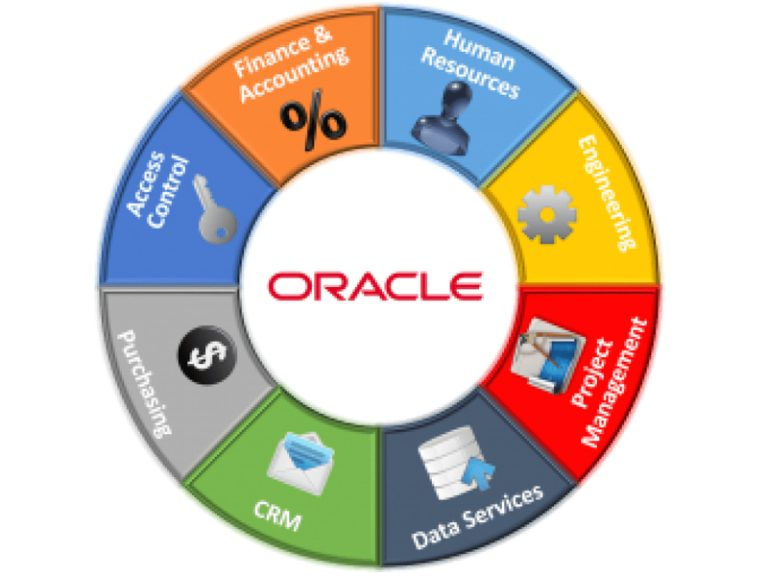
Oracle is not just a database but also provides a comprehensive solution ecosystem for many industries and business processes. From human resource management to supply chain, Oracle has integrated applications that help enterprises optimize their operations on a unified platform.

Intelligent Automation

Oracle integrates many advanced automation features such as automatic memory management, automatic SQL tuning, and automatic statistics collection. These features not only reduce the administrative burden but also continuously optimize database performance, allowing administrators to focus on more strategic tasks.

Advanced Multi-Layered Security

In an era where data security is the top priority, Oracle provides a range of multi-layered security features. From transparent encryption to detailed access control and continuous monitoring, Oracle helps protect sensitive data from internal and external threats while ensuring compliance with data security regulations.

Flexible Deployment

Oracle can be deployed on many different platforms, from traditional physical servers to virtualized and cloud environments. This capability allows enterprises to be flexible in choosing the deployment model that best fits their IT strategy while facilitating gradual cloud migration.

What is GitHub? A Detailed A-Z Guide to Getting Started

Powerful Data Analytics

With integrated tools like Oracle Analytics, enterprises can easily access, analyze, and visualize their data. This capability enables fast and accurate data-driven business decisions, thereby enhancing competitive advantage in the market.

Driving Innovation

Oracle provides a comprehensive set of application development tools and frameworks, enabling developers to build powerful and scalable applications. From traditional development tools to support for new technologies like blockchain and artificial intelligence, Oracle facilitates enterprise innovation and adaptation to new technology trends.

Diverse Data Support

Oracle supports many different types of data, from traditional structured data to unstructured data such as JSON, XML, and spatial data. This capability allows enterprises to leverage all their data sources, creating a comprehensive view of business operations and customers.

Long-Term Cost Optimization

Although initial costs may be high, Oracle's automation features and high performance can lead to significant long-term cost savings. By reducing administrative needs, increasing operational efficiency, and improving uptime, Oracle can deliver significant value to enterprises, especially for mission-critical applications requiring high reliability and performance.
Overview of Oracle Software Editions

Oracle offers various editions to meet diverse customer needs:

  • Oracle Database Standard Edition 2 (SE2): Suitable for small and medium businesses, providing basic features at a lower cost.
  • Oracle Database Enterprise Edition (EE): The fully-featured edition, suitable for large enterprises and demanding applications.
  • Oracle Database Express Edition (XE): A free edition with limited resources, suitable for learning and development.
  • Oracle Database Personal Edition: Designed for individual developers, providing most Enterprise Edition features.
  • Oracle Database Cloud Service: Provides Oracle Database as a cloud service, enabling flexible deployment and easy management.
  • Oracle Exadata Database Machine: An integrated hardware and software solution, optimized for maximum performance.
  • Oracle Autonomous Database: A self-managing, self-securing, and self-repairing database based on cloud technology.

Frequently Asked Questions About Oracle Software

What is Logical Backup in Oracle?

Logical backup in Oracle is the process of copying data at the logical level (such as tables, schemas) rather than copying all physical data files. This method allows selective backup and is commonly used to migrate data between databases or to create copies of a portion of the data.

How Many Background Processes Does Oracle Have?

Oracle uses many background processes to manage and maintain the database. The number and types of background processes can vary depending on the Oracle version and configuration, but some key background processes include:

  • PMON (Process Monitor)
  • SMON (System Monitor)
  • DBWR (Database Writer)
  • LGWR (Log Writer)
  • CKPT (Checkpoint)
  • ARCH (Archiver)
  • RECO (Recoverer)

Each of these processes has its own role in ensuring stable and efficient database operations.

What Are the Versions of Oracle Software?

Oracle regularly releases new versions of the Database with new features and improvements. Some recent versions include:

  • Oracle Database 12c (12.1 and 12.2)
  • Oracle Database 18c
  • Oracle Database 19c
  • Oracle Database 21c
  • Oracle Database 23c

Each version brings performance improvements, security enhancements, and new features to meet the growing needs of users and enterprises.

{{< test-result title="Comparison of Oracle Database Editions" headers="Edition|Target Audience|Features|Cost" rows="Express (XE)|Learning, Development|Basic, limited resources|Free;Standard Edition 2|Small and Medium Businesses|Full basic features|Medium;Enterprise Edition|Large Enterprises|Full + RAC, Data Guard, In-Memory|High;Autonomous Database|All scales|Self-managing, self-securing, cloud|Pay-per-use" />}}

Note

Oracle Database is the most powerful enterprise DBMS, with the ability to handle large data, multi-layered security, and high availability through RAC and Data Guard. Choose the right edition based on your scale and budget.

Conclusion: Oracle Database is the world's leading database solution with over 40 years of development. From the free Express Edition to Autonomous Database on the cloud, Oracle meets all enterprise needs. Its robust architecture, rich features, and multi-layered security make Oracle a trusted choice for mission-critical systems.

Sources
  • https://www.oracle.com/database/
  • https://docs.oracle.com/en/database/
  • https://www.oracle.com/database/technologies/appdev/xe.html

Frequently Asked QuestionsQ&A

Oracle Database là hệ quản trị cơ sở dữ liệu quan hệ hàng đầu thế giới, được sử dụng rộng rãi trong doanh nghiệp. Bài viết giải thích Oracle là gì, kiến trúc hệ thống, tính năng nổi bật, các phiên bản và hướng dẫn lựa chọn phù hợp.

Oracle là gì?

Oracle là một hệ quản trị cơ sở dữ liệu quan hệ (RDBMS) đa mục đích, được phát triển và phân phối bởi Oracle Corporation. Đây là một trong những hệ thống cơ sở dữ liệu phổ biến và đáng tin cậy nhất trên thế giới, được sử dụng rộng rãi trong các ứng dụng doanh nghiệp, từ quản lý nguồn nhân lực đến kế toán tài chính và quản lý chuỗi cung ứng.

Oracle Database cung cấp một nền tảng mạnh mẽ để lưu trữ, quản lý và truy xuất dữ liệu một cách hiệu quả. Nó hỗ trợ các mô hình dữ liệu khác nhau như quan hệ, đối tượng-quan hệ và XML, cho phép người dùng lưu trữ và truy cập dữ liệu có cấu trúc và phi cấu trúc một cách linh hoạt.

Một trong những điểm mạnh chính của Oracle là khả năng xử lý khối lượng dữ liệu lớn và phức tạp, đồng thời đảm bảo hiệu suất cao và tính nhất quán của dữ liệu. Hệ thống này cũng cung cấp nhiều tính năng nâng cao như sao lưu và khôi phục, bảo mật đa lớp, và khả năng mở rộng theo chiều ngang và chiều dọc.

Lịch sử phát triển của Oracle

Lịch sử của Oracle bắt đầu từ năm 1977, khi Larry Ellison, Bob Miner và Ed Oates thành lập Software Development Laboratories (SDL). Ban đầu, họ phát triển một cơ sở dữ liệu cho Cơ quan Tình báo Trung ương Hoa Kỳ (CIA) với tên mã Project Oracle.

  • 1979: Công ty đổi tên thành Relational Software Inc. và phát hành phiên bản thương mại đầu tiên của - - Oracle, Oracle V2 – cơ sở dữ liệu SQL đầu tiên trên thị trường.
  • 1982: Công ty đổi tên thành Oracle Corporation, theo tên sản phẩm chủ lực của họ.
  • 1983: Oracle phát hành phiên bản 3, viết lại bằng ngôn ngữ C để hỗ trợ đa nền tảng.
  • 1984: Oracle phiên bản 4 ra mắt với tính năng nhất quán đọc và hỗ trợ giao dịch.
  • 1985: Oracle phiên bản 5 được giới thiệu, hỗ trợ mô hình client-server và phân tán.
  • 1988: Oracle phiên bản 6 ra mắt với tính năng row-level locking và hot backups.
  • 1992: Oracle7 được phát hành với nhiều cải tiến về hiệu suất và quản lý.
  • 1997: Oracle8 ra mắt, hỗ trợ đối tượng-quan hệ và Internet computing.
  • 1999: Oracle8i được giới thiệu, tập trung vào Internet và Java.
  • 2001: Oracle9i ra mắt với tính năng Real Application Clusters (RAC).
  • 2003: Oracle Database 10g được phát hành, giới thiệu khái niệm grid computing.
  • 2007: Oracle Database 11g ra mắt với nhiều cải tiến về quản lý và hiệu suất.
  • 2013: Oracle Database 12c được giới thiệu, hỗ trợ kiến trúc multitenant và in-memory.
  • 2019: Oracle Database 19c ra mắt, được coi là phiên bản dài hạn của dòng 12c Release 2.
  • 2021: Oracle Database 21c được phát hành với nhiều tính năng mới như Blockchain Tables và JSON relational duality.

Qua hơn 40 năm phát triển, Oracle đã liên tục cải tiến và mở rộng khả năng của hệ thống, từ một cơ sở dữ liệu đơn giản trở thành một nền tảng toàn diện cho dữ liệu doanh nghiệp, bao gồm cả giải pháp đám mây và trí tuệ nhân tạo.

Kiến trúc của hệ quản trị cơ sở dữ liệu Oracle

Kiến trúc của Oracle Database là một hệ thống phức tạp và tinh vi, được thiết kế để đảm bảo hiệu suất cao, tính sẵn sàng và bảo mật. Dưới đây là tổng quan về các thành phần chính trong kiến trúc Oracle:

  • Instance: Đây là tập hợp các cấu trúc bộ nhớ và các tiến trình nền cần thiết để truy cập vào cơ sở dữ liệu. Mỗi instance tương ứng với một cơ sở dữ liệu và bao gồm:
    • System Global Area (SGA): Vùng nhớ chia sẻ chứa dữ liệu và thông tin điều khiển.
    • Program Global Area (PGA): Vùng nhớ riêng cho mỗi tiến trình server.
    • Background Processes: Các tiến trình nền thực hiện các tác vụ I/O và duy trì cơ sở dữ liệu.
  • Database: Bao gồm các tập tin vật lý lưu trữ dữ liệu thực tế. Các thành phần chính bao gồm:
    • Data Files: Chứa dữ liệu thực của các đối tượng cơ sở dữ liệu như bảng và chỉ mục.
    • Control Files: Lưu trữ thông tin về cấu trúc vật lý của cơ sở dữ liệu.
    • Redo Log Files: Ghi lại tất cả các thay đổi được thực hiện đối với dữ liệu.
  • Logical Structures:
    • Tablespaces: Đơn vị logic lớn nhất của lưu trữ trong Oracle.
    • Segments: Các đối tượng cơ sở dữ liệu như bảng hoặc chỉ mục.
    • Extents: Các khối liên tục của không gian được cấp phát cho segments.
    • Data Blocks: Đơn vị nhỏ nhất của I/O trong Oracle.
  • Memory Structures:
    • Database Buffer Cache: Lưu trữ các data blocks được truy cập gần đây.
    • Redo Log Buffer: Lưu trữ tạm thời thông tin redo log trước khi ghi vào disk.
    • Shared Pool: Chứa câu lệnh SQL đã phân tích và dữ liệu từ điển.
  • Process Structures:
    • User Processes: Kết nối người dùng với Oracle instance.
    • Server Processes: Thực hiện công việc cho user processes.
    • Background Processes: Thực hiện các tác vụ bảo trì và I/O.

Kernel là gì? Giới thiệu về kernel trong hệ điều hành

Kiến trúc này cho phép Oracle Database xử lý hiệu quả các giao dịch đồng thời, đảm bảo tính nhất quán của dữ liệu và cung cấp khả năng khôi phục mạnh mẽ. Nó cũng hỗ trợ các tính năng nâng cao như Real Application Clusters (RAC) cho khả năng mở rộng và tính sẵn sàng cao.

Các tính năng và tùy chọn nổi bật của Oracle Database

Oracle Database cung cấp một loạt các tính năng và tùy chọn mạnh mẽ, giúp nó trở thành một trong những hệ quản trị cơ sở dữ liệu toàn diện nhất trên thị trường. Dưới đây là một số tính năng nổi bật:

Hiệu suất và khả năng mở rộng

Oracle Database nổi tiếng với khả năng xử lý khối lượng dữ liệu lớn và đảm bảo hiệu suất cao.

  • In-Memory Option: Cho phép lưu trữ dữ liệu trong bộ nhớ theo định dạng cột, tăng đáng kể tốc độ truy vấn phân tích.
  • Partitioning: Chia các bảng và chỉ mục lớn thành các phân đoạn nhỏ hơn, cải thiện hiệu suất và khả năng quản lý.
  • Real Application Clusters (RAC): Cho phép nhiều instance Oracle chạy đồng thời trên nhiều nút, hỗ trợ mở rộng theo chiều ngang.
  • Parallel Execution: Chia nhỏ các tác vụ lớn thành nhiều phần nhỏ hơn để xử lý đồng thời. Automatic Storage Management (ASM): Đơn giản hóa quản lý lưu trữ và tối ưu hóa hiệu suất I/O.

Sao lưu và khôi phục cơ sở dữ liệu (Backup và Recovery)

Bảo vệ dữ liệu là ưu tiên hàng đầu của mọi doanh nghiệp. Oracle cung cấp các giải pháp mạnh mẽ để đảm bảo an toàn cho dữ liệu của bạn:

  • Recovery Manager (RMAN): Công cụ tích hợp cho sao lưu, khôi phục và quản lý dữ liệu lưu trữ.
  • Flashback Technology: Cho phép xem và khôi phục dữ liệu tại một thời điểm trong quá khứ mà không cần khôi phục từ bản sao lưu.
  • Data Guard: Cung cấp giải pháp disaster recovery và high availability thông qua việc duy trì các cơ sở dữ liệu dự phòng.
  • Zero Data Loss Recovery Appliance: Thiết bị chuyên dụng cho sao lưu và khôi phục với khả năng bảo vệ dữ liệu tối đa.

Tính khả dụng và hỗ trợ

Oracle cam kết cung cấp dịch vụ liên tục và hỗ trợ toàn diện. Dưới đây là các tính năng nổi bật trong lĩnh vực này:

  • Online Operations: Cho phép thực hiện nhiều tác vụ bảo trì mà không cần ngắt kết nối người dùng.
  • Edition-Based Redefinition: Hỗ trợ nâng cấp ứng dụng với thời gian ngừng hoạt động tối thiểu.
  • Application Continuity: Tự động phục hồi các phiên làm việc và giao dịch sau sự cố mà không cần can thiệp của ứng dụng.
  • Global Data Services: Cân bằng tải và định tuyến yêu cầu giữa nhiều cơ sở dữ liệu trên phạm vi toàn cầu.

Bảo mật thông tin

Trong thời đại số hóa, bảo mật dữ liệu là yếu tố quyết định. Oracle cung cấp nhiều lớp bảo vệ:

  • Transparent Data Encryption: Mã hóa dữ liệu tự động mà không cần thay đổi ứng dụng.
  • Data Redaction: Che giấu dữ liệu nhạy cảm trong kết quả truy vấn.
  • Virtual Private Database: Kiểm soát truy cập ở mức hàng dựa trên chính sách bảo mật.
  • Database Vault: Ngăn chặn truy cập trái phép vào dữ liệu nhạy cảm, kể cả từ người quản trị cơ sở dữ liệu.
  • Audit Vault: Tập trung hóa việc thu thập và phân tích nhật ký kiểm toán.

Tích hợp thông tin

Oracle không chỉ lưu trữ dữ liệu mà còn tích hợp và xử lý nhiều loại thông tin khác nhau:

  • XML DB: Hỗ trợ lưu trữ và xử lý dữ liệu XML hiệu quả.
  • JSON Support: Lưu trữ và truy vấn dữ liệu JSON một cách tự nhiên.
  • Spatial and Graph: Hỗ trợ lưu trữ, truy vấn và phân tích dữ liệu không gian và đồ thị.
  • Text: Cung cấp khả năng tìm kiếm và phân tích văn bản nâng cao.
  • OLAP: Tích hợp khả năng phân tích trực tuyến cho các ứng dụng kinh doanh.

Quản lý đơn giản

Mặc dù mạnh mẽ, Oracle vẫn dễ dàng quản lý nhờ các công cụ và tính năng sau:

  • Enterprise Manager: Công cụ quản lý toàn diện cho toàn bộ stack Oracle.
  • Automatic Workload Repository (AW
  • Automatic Workload Repository (AWR): Thu thập và lưu trữ thống kê hiệu suất để phân tích và báo cáo.
  • Automatic Database Diagnostic Monitor (ADDM): Phân tích dữ liệu AWR để cung cấp các khuyến nghị hiệu suất.
  • SQL Tuning Advisor: Tự động phân tích và tối ưu hóa các câu lệnh SQL.
  • Database Resource Manager: Quản lý tài nguyên để đảm bảo chất lượng dịch vụ cho các nhóm người dùng khác nhau.

Những tính năng này giúp Oracle Database trở thành một giải pháp toàn diện, có khả năng đáp ứng nhu cầu của các doanh nghiệp từ nhỏ đến lớn, trong nhiều lĩnh vực khác nhau.

Ưu điểm và nhược điểm của phần mềm Oracle

Như mọi công nghệ, Oracle có những điểm mạnh và hạn chế riêng. Hãy cùng đánh giá khách quan:

Ưu điểm của Oracle

  • Hiệu suất cao: Oracle được tối ưu hóa để xử lý khối lượng dữ liệu lớn và giao dịch phức tạp một cách hiệu quả.
  • Độ tin cậy: Với các tính năng như RAC và Data Guard, Oracle cung cấp độ tin cậy và tính sẵn sàng cao.
  • Bảo mật mạnh mẽ: Oracle cung cấp nhiều lớp bảo mật, bao gồm mã hóa, kiểm soát truy cập và kiểm toán.
  • Khả năng mở rộng: Oracle có thể mở rộng theo cả chiều ngang và chiều dọc để đáp ứng nhu cầu ngày càng tăng.
  • Tính năng phong phú: Oracle cung cấp một loạt các tính năng nâng cao cho phân tích dữ liệu, xử lý giao dịch và quản lý dữ liệu.
  • Hỗ trợ đa nền tảng: Oracle có thể chạy trên nhiều hệ điều hành và phần cứng khác nhau.
  • Tích hợp tốt: Oracle tích hợp tốt với nhiều ứng dụng doanh nghiệp và công nghệ khác.

Nhược điểm của Oracle

  • Chi phí cao: Oracle thường có chi phí cấp phép và bảo trì cao hơn so với một số giải pháp cơ sở dữ liệu khác.
  • Phức tạp trong quản lý: Do có nhiều tính năng nâng cao, Oracle có thể đòi hỏi kỹ năng và kinh nghiệm đáng kể để quản lý hiệu quả.
  • Yêu cầu tài nguyên lớn: Oracle có thể đòi hỏi phần cứng mạnh mẽ để hoạt động tối ưu, đặc biệt là đối với các triển khai quy mô lớn.
  • Đường cong học tập dốc: Việc làm chủ Oracle có thể mất nhiều thời gian và nỗ lực do sự phức tạp của nó.
  • Phụ thuộc vào nhà cung cấp: Sử dụng Oracle có thể dẫn đến sự phụ thuộc vào một nhà cung cấp duy nhất cho cơ sở dữ liệu quan trọng của doanh nghiệp.

Tại sao nên chọn phần mềm Oracle?

Oracle Database nổi bật như một lựa chọn hàng đầu cho các doanh nghiệp vì nhiều lý do quan trọng:

Hiệu suất vượt trội

Oracle Database được thiết kế đặc biệt để xử lý khối lượng dữ liệu khổng lồ và các giao dịch phức tạp với hiệu suất cao. Công nghệ In-Memory Column Store cho phép phân tích dữ liệu theo thời gian thực, trong khi Exadata cung cấp một nền tảng tối ưu hóa phần cứng-phần mềm để đạt hiệu suất tối đa. Tính năng Parallel Execution cho phép chia nhỏ các tác vụ lớn thành nhiều phần nhỏ hơn để xử lý đồng thời, giúp giảm đáng kể thời gian xử lý cho các tải công việc đòi hỏi khắt khe.

Khả năng đa người dùng mạnh mẽ

Với khả năng hỗ trợ hàng nghìn người dùng đồng thời, Oracle là lựa chọn lý tưởng cho các ứng dụng doanh nghiệp quy mô lớn. Hệ thống quản lý khóa và giao dịch tiên tiến đảm bảo tính nhất quán của dữ liệu ngay cả trong môi trường có nhiều người dùng cập nhật cùng lúc.

Đa dạng phiên bản để lựa chọn

Oracle cung cấp nhiều phiên bản khác nhau, từ Express Edition miễn phí đến Enterprise Edition đầy đủ tính năng, cho phép các tổ chức chọn giải pháp phù hợp nhất với nhu cầu và ngân sách của mình. Điều này làm cho Oracle trở nên phù hợp với cả doanh nghiệp nhỏ lẫn các tập đoàn đa quốc gia.

Công nghệ Real Application Clusters (RAC)

RAC là một tính năng độc đáo cho phép nhiều instance Oracle chạy đồng thời trên nhiều máy chủ, chia sẻ cùng một cơ sở dữ liệu. Điều này không chỉ cung cấp khả năng mở rộng theo chiều ngang mà còn đảm bảo tính sẵn sàng cao, giúp duy trì hoạt động kinh doanh liên tục ngay cả khi có sự cố phần cứng.

Giải pháp sao lưu và khôi phục toàn diện

Recovery Manager (RMAN) của Oracle cung cấp một giải pháp sao lưu và khôi phục mạnh mẽ, tự động hóa nhiều tác vụ phức tạp. RMAN hỗ trợ sao lưu tăng dần, nén dữ liệu, và khôi phục theo thời điểm, giúp bảo vệ dữ liệu quan trọng của doanh nghiệp khỏi mất mát và đảm bảo khả năng phục hồi nhanh chóng sau sự cố.

Lợi ích của việc sử dụng phần mềm Oracle

Việc lựa chọn Oracle Database mang lại nhiều lợi ích đáng kể cho doanh nghiệp:

Hỗ trợ toàn diện cho doanh nghiệp

Oracle không chỉ là một cơ sở dữ liệu, mà còn cung cấp một hệ sinh thái giải pháp toàn diện cho nhiều ngành công nghiệp và quy trình kinh doanh. Từ quản lý nguồn nhân lực đến chuỗi cung ứng, Oracle có các ứng dụng tích hợp giúp doanh nghiệp tối ưu hóa hoạt động của mình trên một nền tảng thống nhất.

Tự động hóa thông minh

Oracle tích hợp nhiều tính năng tự động hóa tiên tiến như tự động quản lý bộ nhớ, tự động điều chỉnh SQL, và tự động thu thập thống kê. Những tính năng này không chỉ giảm gánh nặng quản trị mà còn liên tục tối ưu hóa hiệu suất của cơ sở dữ liệu, cho phép các nhà quản trị tập trung vào các nhiệm vụ chiến lược hơn.

Bảo mật đa lớp tiên tiến

Trong thời đại mà bảo mật dữ liệu là ưu tiên hàng đầu, Oracle cung cấp một loạt các tính năng bảo mật đa lớp. Từ mã hóa trong suốt đến kiểm soát truy cập chi tiết và giám sát liên tục, Oracle giúp bảo vệ dữ liệu nhạy cảm khỏi các mối đe dọa nội bộ và bên ngoài, đồng thời đảm bảo tuân thủ các quy định về bảo mật dữ liệu.

Triển khai linh hoạt

Oracle có thể được triển khai trên nhiều nền tảng khác nhau, từ máy chủ vật lý truyền thống đến các môi trường ảo hóa và đám mây. Khả năng này cho phép doanh nghiệp linh hoạt trong việc lựa chọn mô hình triển khai phù hợp nhất với chiến lược IT của mình, đồng thời tạo điều kiện cho việc di chuyển dần dần lên đám mây.

GitHub là gì? Hướng dẫn chi tiết từ A-Z để bắt đầu sử dụng

Phân tích dữ liệu mạnh mẽ

Với các công cụ tích hợp như Oracle Analytics, doanh nghiệp có thể dễ dàng truy cập, phân tích và trực quan hóa dữ liệu của mình. Khả năng này cho phép ra quyết định kinh doanh dựa trên dữ liệu một cách nhanh chóng và chính xác, từ đó nâng cao lợi thế cạnh tranh trên thị trường.

Thúc đẩy đổi mới

Oracle cung cấp một bộ công cụ và framework phát triển ứng dụng toàn diện, cho phép các nhà phát triển xây dựng các ứng dụng mạnh mẽ và có khả năng mở rộng. Từ các công cụ phát triển truyền thống đến hỗ trợ cho các công nghệ mới như blockchain và trí tuệ nhân tạo, Oracle tạo điều kiện cho doanh nghiệp đổi mới và thích ứng với các xu hướng công nghệ mới.

Hỗ trợ đa dạng dữ liệu

Oracle hỗ trợ nhiều loại dữ liệu khác nhau, từ dữ liệu có cấu trúc truyền thống đến dữ liệu phi cấu trúc như JSON, XML, và dữ liệu không gian. Khả năng này cho phép doanh nghiệp tận dụng tất cả các nguồn dữ liệu của mình, tạo ra một cái nhìn toàn diện về hoạt động kinh doanh và khách hàng.

Tối ưu hóa chi phí dài hạn

Mặc dù chi phí ban đầu có thể cao, nhưng tính năng tự động hóa và hiệu suất cao của Oracle có thể giúp tiết kiệm đáng kể chi phí về lâu dài. Thông qua việc giảm nhu cầu quản trị, tăng hiệu quả hoạt động, và cải thiện thời gian hoạt động, Oracle có thể mang lại giá trị đáng kể cho doanh nghiệp, đặc biệt là đối với các ứng dụng quan trọng đòi hỏi độ tin cậy và hiệu suất cao.

Tổng hợp các phiên bản của phần mềm Oracle

Oracle cung cấp nhiều phiên bản khác nhau để đáp ứng nhu cầu đa dạng của khách hàng:

  • Oracle Database Standard Edition 2 (SE2): Phù hợp cho các doanh nghiệp nhỏ và vừa, cung cấp các tính năng cơ bản với chi phí thấp hơn.
  • Oracle Database Enterprise Edition (EE): Phiên bản đầy đủ tính năng, phù hợp cho các doanh nghiệp lớn và các ứng dụng đòi hỏi khắt khe.
  • Oracle Database Express Edition (XE): Phiên bản miễn phí, giới hạn về tài nguyên, phù hợp cho việc học tập và phát triển.
  • Oracle Database Personal Edition: Dành cho các nhà phát triển đơn lẻ, cung cấp hầu hết các tính năng của Enterprise Edition.
  • Oracle Database Cloud Service: Cung cấp Oracle Database dưới dạng dịch vụ đám mây, cho phép triển khai linh hoạt và quản lý dễ dàng.
  • Oracle Exadata Database Machine: Giải pháp phần cứng và phần mềm tích hợp, được tối ưu hóa cho hiệu suất cao nhất.
  • Oracle Autonomous Database: Cơ sở dữ liệu tự quản lý, tự bảo mật và tự sửa chữa dựa trên công nghệ đám mây.

Một số câu hỏi thường gặp về phần mềm Oracle

Sao lưu logic trong Oracle là gì?

Sao lưu logic trong Oracle là quá trình sao chép dữ liệu ở cấp độ logic (như bảng, schema) thay vì sao chép toàn bộ các tệp dữ liệu vật lý. Phương pháp này cho phép sao lưu có chọn lọc và thường được sử dụng để di chuyển dữ liệu giữa các cơ sở dữ liệu hoặc để tạo bản sao của một phần dữ liệu.

Quy trình nền của Oracle có bao nhiêu bước?

Oracle sử dụng nhiều quy trình nền để quản lý và duy trì cơ sở dữ liệu. Số lượng và loại quy trình nền có thể thay đổi tùy thuộc vào phiên bản và cấu hình của Oracle, nhưng một số quy trình nền chính bao gồm:

  • PMON (Process Monitor)
  • SMON (System Monitor)
  • DBWR (Database Writer)
  • LGWR (Log Writer)
  • CKPT (Checkpoint)
  • ARCH (Archiver)
  • RECO (Recoverer)

Mỗi quy trình này có vai trò riêng trong việc đảm bảo hoạt động ổn định và hiệu quả của cơ sở dữ liệu.

Các phiên bản của phần mềm Oracle? Oracle thường phát hành các phiên bản mới của Database với các tính năng và cải tiến mới. Một số phiên bản gần đây bao gồm:

  • Oracle Database 12c (12.1 và 12.2)
  • Oracle Database 18c
  • Oracle Database 19c
  • Oracle Database 21c
  • Oracle Database 23c

Mỗi phiên bản đều mang đến những cải tiến về hiệu suất, bảo mật và tính năng mới để đáp ứng nhu cầu ngày càng tăng của người dùng và doanh nghiệp.

{{< test-result title="So sanh cac phien ban Oracle Database" headers="Phien ban|Doi tuong|Tinh nang|Chi phi" rows="Express (XE)|Hoc tap, phat trien|Co ban, gioi han tai nguyen|Mien phi;Standard Edition 2|Doanh nghiep nho va vua|Day du tinh nang co ban|Trung binh;Enterprise Edition|Doanh nghiep lon|Day du + RAC, Data Guard, In-Memory|Cao;Autonomous Database|Moi quy mo|Tu quan ly, tu bao mat, dam may|Theo su dung" />}}

Ghi chú

Oracle Database la he quan tri CSDL manh me nhat cho doanh nghiep, voi kha nang xu ly du lieu lon, bao mat da lop va tinh san sang cao nho RAC va Data Guard. Chon phien ban phu hop tuy theo quy mo va ngan sach.

Ket luan: Oracle Database la giai phap CSDL hang dau the gioi voi hon 40 nam phat trien. Tu Express Edition mien phi den Autonomous Database tren dam may, Oracle dap ung moi nhu cau doanh nghiep. Kien truc manh me, tinh nang phong phu va bao mat da lop giup Oracle la lua chon tin cay cho cac he thong quan trong.

Nguồn tham khảo
  • https://www.oracle.com/database/
  • https://docs.oracle.com/en/database/
  • https://www.oracle.com/database/technologies/appdev/xe.html
Câu hỏi thường gặpQ&A