What is a Data Center? Complete Guide to International Standard Data Centers
Cloud and Server

What is a Data Center? Complete Guide to International Standard Data Centers

A data center is a facility designed to store, process and manage digital data. Learn how it works, key components, Tier levels and security measures.

✦ Quick summary
A data center is a facility designed to store, process and manage digital data. Learn how it works, key components, Tier levels and security measures.
How was this post?

A data center is a specialized facility for storing, processing and managing digital data, serving as the foundation for business operations in the digital era. This article covers how data centers work, key components and international Tier standards.

What is a Data Center?

A data center is a specialized facility designed to store, process and manage large volumes of digital data. It typically includes computer systems, storage devices, network infrastructure and supporting equipment.

Data centers operate 24/7, ensuring data availability and security. They function as massive data warehouses where critical business information is professionally protected and managed.

Common Data Center Types

  • Traditional Data Center: Built and managed by the enterprise itself.
  • Colocation Data Center: Leases space and infrastructure within an existing data center.
  • Data Center Proxy: Acts as an intermediary server between users and data center servers.

What is Colocation?

Colocation allows businesses to rent space and infrastructure to place their own equipment and servers. Customers benefit from existing infrastructure: backup power, cooling systems, security and high-bandwidth network connectivity, significantly reducing costs.

What is a Data Center Proxy?

A Data Center Proxy acts as a connection point between users and servers. Its primary functions are hiding user IP addresses, enhancing security and improving page load speeds.

How Data Centers Work

Data centers operate on the principle of tight integration between hardware, software and network systems:

  1. End devices (computers, phones, sensors) send data to the data center.
  2. Data is stored in hard drives, tape or cloud storage systems.
  3. Servers and software process data based on requests.
  4. The network system retrieves and distributes data to end devices.
  5. Management systems monitor and control all operations.

What is a Rotating Proxy? Benefits of Using Rotating Proxies

Data Center Components

Computing
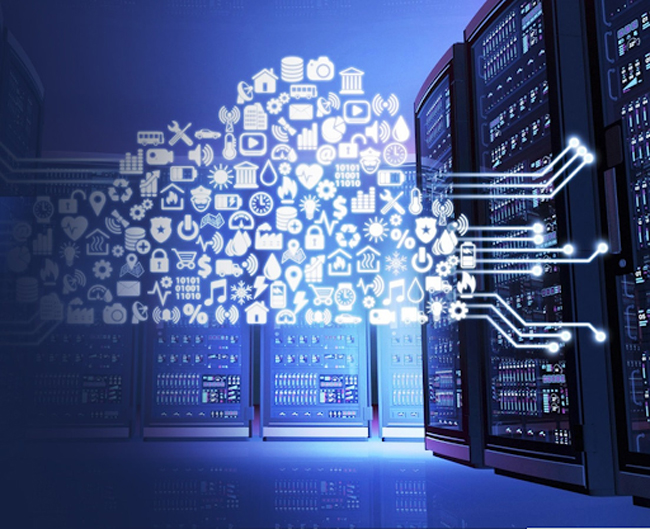
Servers are the primary devices for data processing, running applications and storing information. CPUs are the "brain" executing instructions, RAM stores data being processed, and network cards connect servers to the network.

Storage

  • NAS/SAN: Provides centralized storage capacity, allowing multiple servers to access simultaneously.
  • HDD: Traditional storage devices with lower cost.
  • SSD: Faster access speeds than HDD, improving performance.

Networking
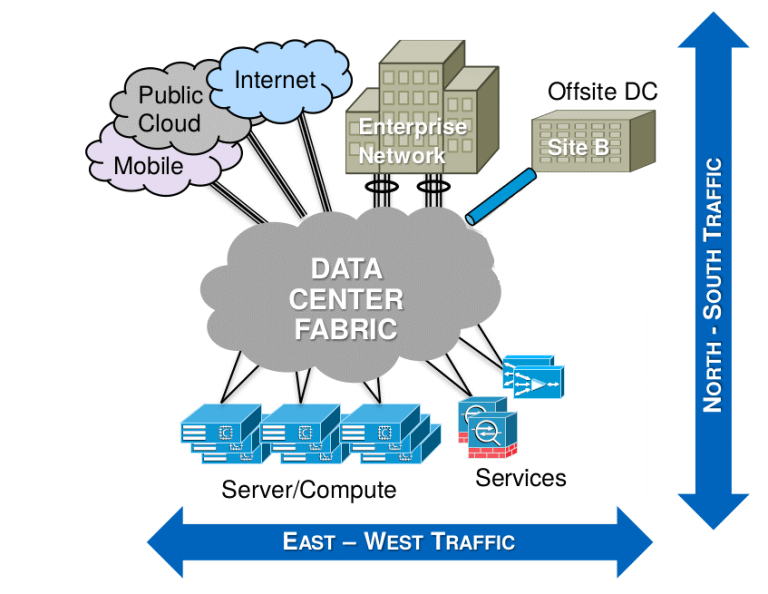
  • Switch/Router: Forwards data between servers and network devices.
  • Firewall: Blocks unauthorized access and protects against security threats.
  • Load Balancer: Distributes traffic across multiple servers.
  • Gateway: Connects the data center to the Internet and other networks.

Roles of a Data Center

  • Data storage and protection: Customer information, operational data and software applications are stored securely.
  • Online service platform: Websites, email, software applications and cloud computing services.
  • Business performance enhancement: Supports continuous and efficient operations.
Choosing the Right Data Center

Small businesses should start with Colocation or Cloud hosting to save costs. Only build a private data center when scale is large enough and you have a dedicated IT team to manage it.

Who Should Use a Data Center?
  • SMEs: Store data and run applications without large investments.
  • Large enterprises: Store massive data and manage complex IT systems.
  • Government organizations: Secure critical information and serve administrative management.
  • ISPs and Cloud providers: Platform for developing and delivering services.

International Standard Tier Levels
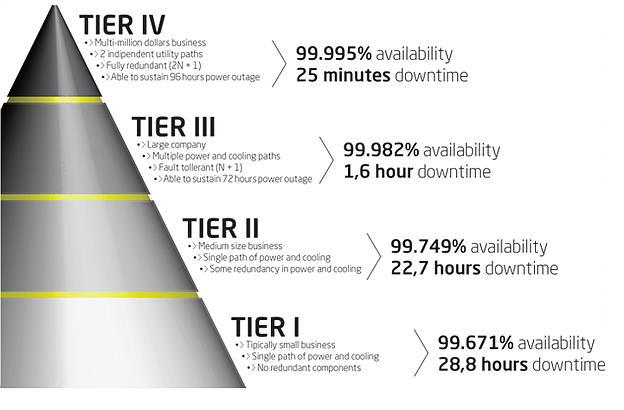
According to Uptime Institute standards, data centers are classified into 4 Tier levels:

Tier 1 (99.671% uptime): Simple structure, minimal redundancy. Suitable for small businesses not requiring high availability.

Tier 2 (99.749% uptime): Basic redundancy systems (backup power, cooling). Suitable for SMEs.

Tier 3 (99.982% uptime): Allows maintenance without service disruption. Suitable for large enterprises requiring continuous operation.

Tier 4 (99.995% uptime): Highest level, withstands failures without affecting service. Ideal for organizations needing maximum security and absolute stability.

Data Center Security Measures

  • Physical access control: Camera systems, access cards, strict security control.
  • Network access control: Firewalls, IDS/IPS to prevent Internet threats.
  • Data backup and recovery: Regular backups, rapid recovery during incidents.
  • Remote monitoring and management: Centralized monitoring and management systems.
  • Staff training: Raising awareness of cybersecurity and preventive measures.
Data Center Standards Note

When choosing a data center provider, verify Tier certification (Uptime Institute) and compliance with international security standards like ISO 27001 and PCI DSS. A higher Tier isn't always necessary — choose based on actual needs.

Conclusion: Data centers are a critical foundation for business operations in the digital era, from secure data storage to high availability. Choosing the right Tier level and appropriate security measures helps optimize cost and performance.
Sources

Frequently Asked Questions

Frequently Asked QuestionsQ&A
What is a Data Center?
A data center is a specialized facility designed to store, process and manage large volumes of digital data, operating continuously 24/7.
How many Tier levels do data centers have?
Data centers are classified into 4 Tier levels by Uptime Institute standards: Tier 1 (99.671%), Tier 2 (99.749%), Tier 3 (99.982%) and Tier 4 (99.995% uptime).
What is Colocation?
Colocation is a service that leases space and infrastructure within a data center, allowing businesses to place their own equipment and servers without building a data center.
What are the main components of a data center?
A data center has 3 main components: Computing (servers, CPU, RAM), Storage (NAS/SAN, HDD, SSD) and Networking (Switch, Router, Firewall, Load Balancer).
Who should use a Data Center?
Data centers suit SMEs, large enterprises, government organizations, ISPs and cloud providers that need to store and manage data with high availability and security.

Datacenter (trung tâm dữ liệu) là cơ sở vật chất chuyên lưu trữ, xử lý và quản lý dữ liệu kỹ thuật số, đóng vai trò nền tảng cho hoạt động của doanh nghiệp trong kỷ nguyên số. Bài viết giúp bạn hiểu rõ cách hoạt động, thành phần cấu tạo và các cấp độ Tier chuẩn quốc tế.

Datacenter là gì?

Datacenter, hay còn gọi là trung tâm dữ liệu, là cơ sở vật chất được thiết kế chuyên biệt để lưu trữ, xử lý và quản lý một lượng lớn dữ liệu kỹ thuật số. Một Datacenter thường bao gồm các hệ thống máy tính, thiết bị lưu trữ, mạng lưới kết nối cùng với các thiết bị hỗ trợ khác.

Datacenter hoạt động liên tục 24/7, đảm bảo tính khả dụng và an toàn của dữ liệu. Nó giống như một kho chứa dữ liệu khổng lồ, nơi mọi thông tin quan trọng của doanh nghiệp được bảo vệ và quản lý chuyên nghiệp.

Các loại Datacenter phổ biến

  • Datacenter truyền thống: Tự xây dựng và quản lý bởi doanh nghiệp.
  • Datacenter Colocation: Dịch vụ cho thuê không gian và cơ sở hạ tầng trong Datacenter.
  • Datacenter Proxy: Hoạt động như máy chủ trung gian giữa người dùng và các server trong Datacenter.

Datacenter Colocation là gì?

Datacenter Colocation cho phép doanh nghiệp thuê không gian và cơ sở hạ tầng để đặt thiết bị và máy chủ riêng. Khách hàng được hưởng tiện ích từ cơ sở hạ tầng sẵn có: điện năng dự phòng, hệ thống làm mát, an ninh bảo mật và kết nối mạng băng thông rộng, giúp tiết kiệm chi phí đáng kể.

Datacenter Proxy là gì?

Datacenter Proxy hoạt động như điểm kết nối giữa người dùng và các server. Chức năng chính là ẩn địa chỉ IP người dùng, tăng cường bảo mật và cải thiện tốc độ tải trang web.

Cách thức hoạt động của Datacenter

Datacenter hoạt động dựa trên nguyên tắc tích hợp và phối hợp chặt chẽ giữa các hệ thống phần cứng, phần mềm và mạng lưới:

  1. Thiết bị đầu cuối (máy tính, điện thoại, cảm biến) gửi dữ liệu đến Datacenter.
  2. Dữ liệu được lưu trữ trong hệ thống ổ cứng, băng từ hoặc lưu trữ đám mây.
  3. Máy chủ và phần mềm xử lý dữ liệu dựa trên yêu cầu.
  4. Hệ thống mạng lưới tìm kiếm và phân phối dữ liệu đến thiết bị đầu cuối.
  5. Hệ thống quản lý giám sát và điều khiển hoạt động toàn bộ.

Thành phần cấu tạo của Datacenter

Điện toán – Data Center Computing

Máy chủ (Server) là thiết bị chủ yếu thực hiện các tác vụ xử lý dữ liệu, vận hành ứng dụng và lưu trữ thông tin. Bộ xử lý (CPU) là "bộ não" thực hiện các lệnh, bộ nhớ (RAM) lưu trữ dữ liệu đang xử lý, và card mạng kết nối máy chủ với mạng lưới.

Lưu trữ – Data Center Storage

  • NAS/SAN: Cung cấp dung lượng lưu trữ tập trung, cho phép nhiều máy chủ truy cập cùng lúc.
  • Ổ cứng HDD: Thiết bị lưu trữ truyền thống với giá thành thấp.
  • Ổ cứng SSD: Tốc độ truy xuất nhanh hơn HDD, tăng cường hiệu suất.

Mạng – Data Center Network

  • Switch/Router: Chuyển tiếp dữ liệu giữa các máy chủ và thiết bị mạng.
  • Firewall: Chặn truy cập trái phép và bảo vệ khỏi đe dọa an ninh mạng.
  • Load Balancer: Phân phối lưu lượng truy cập đến các máy chủ khác nhau.
  • Cổng kết nối (Gateway): Kết nối Datacenter với Internet và các mạng lưới khác.

Vai trò của Datacenter

  • Lưu trữ và bảo vệ dữ liệu: Thông tin khách hàng, dữ liệu vận hành, ứng dụng phần mềm đều được lưu trữ an toàn.
  • Nền tảng dịch vụ trực tuyến: Website, email, ứng dụng phần mềm và dịch vụ điện toán đám mây.
  • Nâng cao hiệu suất kinh doanh: Hỗ trợ hoạt động liên tục và hiệu quả.
Mẹo chọn Datacenter phù hợp

Doanh nghiệp nhỏ nên bắt đầu với Colocation hoặc Cloud hosting để tiết kiệm chi phí. Chỉ xây dựng Datacenter riêng khi quy mô đủ lớn và có đội ngũ IT chuyên trách quản lý.

Đối tượng phù hợp sử dụng Datacenter

  • Doanh nghiệp vừa và nhỏ (SME): Lưu trữ dữ liệu, vận hành ứng dụng mà không cần đầu tư lớn.
  • Doanh nghiệp lớn: Lưu trữ dữ liệu khổng lồ và quản lý hệ thống IT phức tạp.
  • Tổ chức chính phủ: Bảo mật thông tin quan trọng và phục vụ quản lý hành chính.
  • Nhà cung cấp dịch vụ Internet (ISP) và Cloud: Nền tảng để phát triển và cung cấp dịch vụ.

Các cấp độ Datacenter chuẩn quốc tế

Theo tiêu chuẩn Uptime Institute, Datacenter được phân loại thành 4 cấp độ Tier:

Tier 1 (99.671% uptime): Cấu trúc đơn giản, ít hệ thống dự phòng. Phù hợp doanh nghiệp nhỏ không yêu cầu tính khả dụng cao.

Tier 2 (99.749% uptime): Có hệ thống dự phòng cơ bản (nguồn điện dự phòng, hệ thống làm mát). Phù hợp doanh nghiệp vừa và nhỏ.

Tier 3 (99.982% uptime): Cho phép bảo trì mà không làm gián đoạn dịch vụ. Phù hợp doanh nghiệp lớn và tổ chức yêu cầu hoạt động liên tục.

Tier 4 (99.995% uptime): Cấp độ cao nhất, chịu đựng sự cố mà không ảnh hưởng dịch vụ. Lý tưởng cho tổ chức cần bảo mật tối đa và ổn định tuyệt đối.

Biện pháp an ninh của Datacenter

  • Kiểm soát truy cập vật lý: Hệ thống camera, thẻ từ, kiểm soát an ninh chặt chẽ.
  • Kiểm soát truy cập mạng: Tường lửa, IDS/IPS ngăn chặn đe dọa từ mạng Internet.
  • Sao lưu và phục hồi dữ liệu: Sao lưu thường xuyên, khôi phục nhanh chóng khi sự cố.
  • Giám sát và quản lý từ xa: Hệ thống giám sát và quản lý tập trung.
  • Đào tạo nhân viên: Nâng cao nhận thức về an ninh mạng và biện pháp phòng tránh.
Lưu ý về tiêu chuẩn Datacenter

Khi chọn nhà cung cấp Datacenter, hãy kiểm tra chứng nhận Tier (Uptime Institute) và tuân thủ các tiêu chuẩn bảo mật quốc tế như ISO 27001, PCI DSS. Tier cao hơn không phải lúc nào cũng cần thiết — chọn theo nhu cầu thực tế.

Kết luận: Datacenter là nền tảng quan trọng cho hoạt động doanh nghiệp trong kỷ nguyên số, từ lưu trữ dữ liệu an toàn đến cung cấp tính khả dụng cao. Chọn đúng cấp độ Tier và biện pháp bảo mật phù hợp giúp tối ưu chi phí và hiệu suất.

Nguồn tham khảo

Câu hỏi thường gặp

Câu hỏi thường gặpQ&A
Datacenter là gì?
Datacenter (trung tâm dữ liệu) là cơ sở vật chất được thiết kế chuyên biệt để lưu trữ, xử lý và quản lý lượng lớn dữ liệu kỹ thuật số, hoạt động liên tục 24/7.
Datacenter có mấy cấp độ Tier?
Datacenter được phân loại thành 4 cấp độ Tier theo tiêu chuẩn Uptime Institute: Tier 1 (99.671%), Tier 2 (99.749%), Tier 3 (99.982%) và Tier 4 (99.995% uptime).
Datacenter Colocation là gì?
Datacenter Colocation là dịch vụ cho thuê không gian và cơ sở hạ tầng trong trung tâm dữ liệu, cho phép doanh nghiệp đặt thiết bị và máy chủ riêng mà không cần xây dựng datacenter.
Datacenter gồm những thành phần nào?
Datacenter gồm 3 thành phần chính: Điện toán (máy chủ, CPU, RAM), Lưu trữ (NAS/SAN, HDD, SSD) và Mạng (Switch, Router, Firewall, Load Balancer).
Ai nên sử dụng Datacenter?
Datacenter phù hợp cho doanh nghiệp vừa và nhỏ, tập đoàn lớn, tổ chức chính phủ, nhà cung cấp dịch vụ Internet (ISP) và nhà cung cấp dịch vụ đám mây cần lưu trữ và quản lý dữ liệu.