What is Web Scraping? A Complete Guide to Web Data Collection
Development

What is Web Scraping? A Complete Guide to Web Data Collection

Web Scraping is the technique of automatically collecting data from websites. This article explains in detail what web scraping is, how it works, popular tools, the role of proxies in scraping, and important legal considerations.

✦ Quick summary
Web Scraping is the technique of automatically collecting data from websites. This article explains in detail what web scraping is, how it works, popular tools, the role of proxies in scraping, and im...
How was this post?

Web Scraping is the technique of automatically collecting data from websites, helping businesses extract information at a speed and scale that manual effort cannot match. This article explains in detail what web scraping is, how it works, popular tools, the role of proxies, and important legal considerations.

What is Web Scraping?

Web Scraping (also known as web harvesting or web data extraction) is the process of using software or scripts to automatically access websites and extract structured data from their HTML source code. Instead of manually copying each piece of information, web scraping allows you to collect millions of data points in just minutes.

Difference Between Web Scraping and Web Crawling

Many people confuse these two concepts:

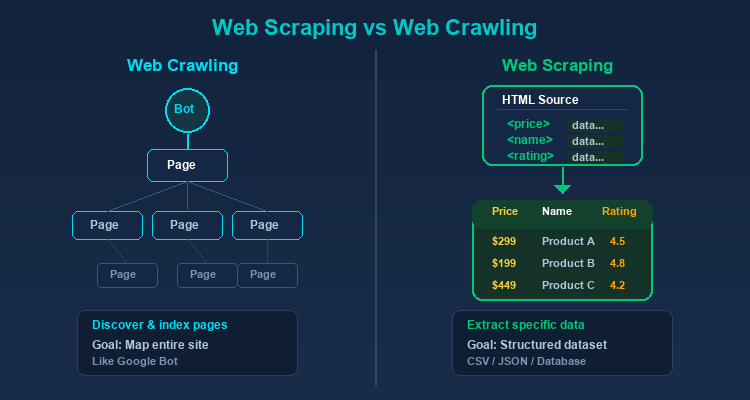
  • Web Crawling is the process of browsing and indexing web pages, similar to how Google Bot works. Its primary goal is to discover and map website structures.

  • Web Scraping focuses on extracting specific data from known pages. For example: getting product prices, customer reviews, or contact information.

In practice, a data collection project often combines both: crawling to find the necessary URLs, then scraping to extract data from each URL.
How Does Web Scraping Work?

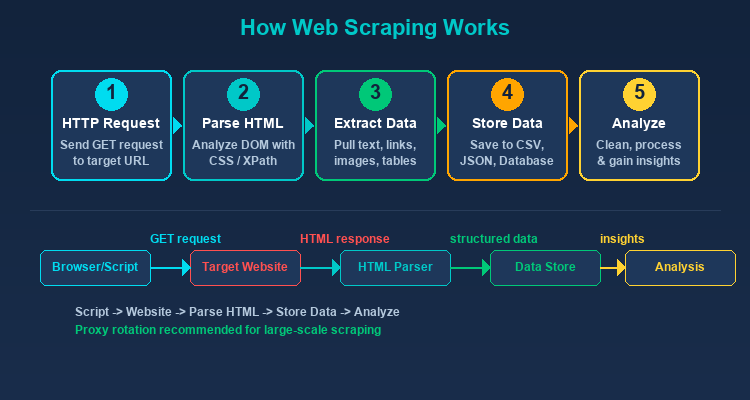
The basic web scraping workflow involves the following steps:

Send HTTP Request

The script sends an HTTP request (usually GET) to the target URL, just like when your browser accesses a web page. The server responds with the page's HTML code.

Parse HTML

After receiving the HTML, the scraping tool analyzes the DOM (Document Object Model) structure to identify where the target data is located. Common methods include:

  • CSS Selectors: Select elements based on class, id, or HTML structure.
  • XPath: A powerful query language for XML/HTML that allows precise navigation within the DOM structure.
  • Regular Expressions: Search for specific text patterns in HTML.

Extract Data

Data is extracted from the identified HTML elements — this can be text, attributes (href, src), tables, or any content displayed on the page.

Store Data

Extracted data is saved in structured formats like CSV, JSON, Excel, or databases (MySQL, PostgreSQL, MongoDB).

Process and Analyze

Raw data is cleaned, normalized, and analyzed to derive valuable business insights.

Programming Libraries

  • Beautiful Soup (Python): A simple, easy-to-use HTML/XML parsing library. Suitable for small to medium scraping projects.

  • Scrapy (Python): A powerful and comprehensive scraping framework. Supports asynchronous processing, data pipelines, and middleware. Ideal for large-scale projects.

  • Puppeteer (Node.js): A library for controlling headless Chrome/Chromium browsers. Excellent for handling websites that use JavaScript rendering.

  • Playwright (Multi-language): Similar to Puppeteer but supports multiple browsers (Chrome, Firefox, Safari) and multiple programming languages.

  • Selenium: A browser automation tool that allows interaction with websites like a real user (clicking, scrolling, filling forms).

No-Code Platforms

  • Octoparse: An intuitive drag-and-drop interface requiring no coding. Perfect for users without programming experience.

  • ParseHub: Similar to Octoparse, supports scraping complex websites with JavaScript.

  • Apify: A cloud-based platform providing ready-made actors (scripts) for many popular websites.

Challenges in Web Scraping
Anti-Scraping Mechanisms

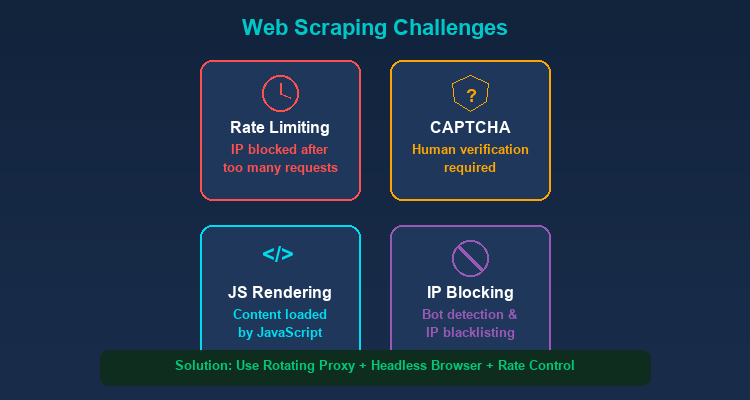
Websites increasingly implement measures to block scraping bots:

  • Rate Limiting: Restricts the number of requests from a single IP within a given timeframe.
  • CAPTCHA: Requires verification that the user is human.
  • IP Blocking: Blocks IPs that send too many requests or exhibit abnormal behavior.
  • User-Agent Detection: Detects and blocks requests that don't come from real browsers.
  • Honeypot Traps: Hidden links that only bots would access, used to identify scrapers.

JavaScript Rendering

Many modern websites use JavaScript to render content (Single Page Applications - SPA). This means the initial HTML doesn't contain the data — data is only loaded after JavaScript executes. The solution is to use headless browsers like Puppeteer or Playwright.

HTML Structure Changes

Websites frequently update their interfaces, causing scraper selectors to break. Scrapers need to be designed flexibly with monitoring systems to detect errors early.

Large-Scale Data Processing

Collecting millions of pages requires systems capable of parallel processing, queue management, and efficient storage.

The Role of Proxies in Web Scraping
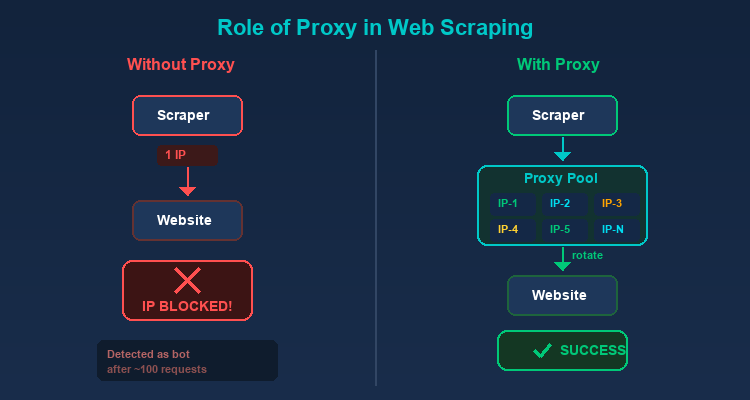
Proxies are an essential component of any large-scale web scraping project. Here's why:

Avoiding IP Blocks

When sending thousands of requests from the same IP, the website will quickly detect and block you. Proxies allow you to rotate IPs continuously, distributing requests across many different IP addresses.

Bypassing Geo-Restrictions

Some websites display different content depending on geographic location. Proxies from different countries let you access content from any region.

Increasing Collection Speed

Using multiple proxies simultaneously allows parallel requests, significantly increasing scraping speed without exceeding the rate limit for each individual IP.

Best Proxy Types for Scraping

  • Residential Proxy: The best choice for scraping. Real ISP IPs that are very hard to detect as bots. Ideal for websites with strong anti-scraping measures.

  • Datacenter Proxy: High speed, lower cost. Suitable for scraping websites with less protection or low rate limits.

  • Rotating Proxy: Automatically changes IP after each request or after a set time period. Perfect for large-scale scraping.

Web Scraping Proxy Test
Tested on 2026-02-15 TMProxy
Test results for 3 proxy types when scraping 10,000 product pages from a major e-commerce site:
Proxy Type Success Rate Avg Speed IPs Blocked Cost/10K pages
Residential 98.5% 1.2s/page 0.3% $$
Datacenter 72% 0.4s/page 28% $
Rotating Residential 99.2% 1.5s/page 0.1% $$$

Rotating residential proxy achieved the highest success rate (99.2%) with virtually no IP blocks. Datacenter proxy was faster but had 28% of requests blocked.

TMProxy offers all these proxy types with over 10 million IPs from 200+ countries and automatic IP rotation — the perfect solution for professional web scraping.

Proxy for Web Scraping

Real-World Applications of Web Scraping
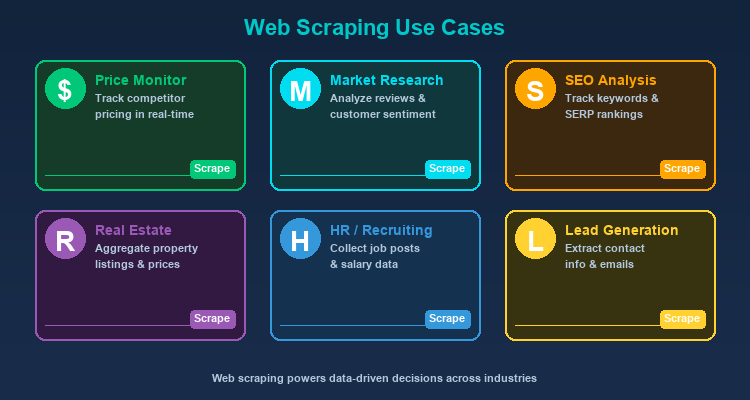
Price Monitoring

E-commerce businesses use scraping to track competitor product prices in real-time, allowing them to adjust their pricing strategies accordingly.

Market Research

Collecting product reviews, social media comments, and search trends to understand customer needs and sentiment.

HR Tech / Recruitment

Gathering job listings from employment websites to analyze labor market trends, salary levels, and in-demand skills.

Real Estate

Collecting property listings, prices, and area information from real estate websites for market analysis.

SEO and Digital Marketing

Tracking keyword rankings, analyzing competitor backlinks, and collecting SERP (Search Engine Results Page) data.

Web scraping is not always legal. You should be aware of:

  • Terms of Service (ToS): Many websites prohibit scraping in their terms of use. Violations can lead to legal consequences.

  • Robots.txt: This file specifies which parts of a website allow or disallow bot access. You should respect the robots.txt file.

  • Personal Data: Collecting personal data must comply with data protection regulations like GDPR (Europe) and CCPA (California).

  • Copyright: Copyrighted content should not be copied or redistributed without permission.

ToS violations can lead to lawsuits

Some companies have won lawsuits against scrapers who violated Terms of Service (LinkedIn vs. hiQ Labs, Craigslist vs. 3Taps). Before scraping any site at scale, read the ToS carefully and if in doubt — seek legal advice.

Best Practices for Effective Web Scraping

To build a sustainable and professional scraping system, follow these key principles:

Respect robots.txt

Always check and follow the target website's robots.txt file before scraping. This file specifies which URLs bots are allowed or disallowed to access. While robots.txt is not legally binding in all jurisdictions, respecting it demonstrates professional ethics and reduces the risk of being blocked.

Implement Rate Limiting

Don't send requests too quickly — this can overwhelm the target server and get your IP blocked immediately. Set a minimum delay of 1-3 seconds between requests, or adjust according to the site's allowed rate.

Random delay is more effective than fixed delay

Instead of a fixed time.sleep(2), use time.sleep(random.uniform(1.5, 4.0)). Regular patterns are easily detected by anti-bot systems — random delays simulate real user behavior much more naturally.

Use Rotating Proxies

Continuous IP rotation is critical for large-scale scraping. A diverse proxy pool with IPs from multiple countries and ISPs helps distribute requests and avoid detection. TMProxy offers over 10 million residential IPs with automatic rotation, ideal for any scraping project.

Simulate Real User-Agent and Headers

Send requests with headers that mimic real browsers: User-Agent, Accept, Accept-Language, Referer. Rotate User-Agents between requests to avoid fingerprint-based detection. Use an updated list of User-Agents from popular browsers.

Handle Errors with Exponential Backoff

When encountering errors (HTTP 429, 503, timeouts), don't retry immediately. Use exponential backoff — wait 1s, then 2s, 4s, 8s... Set a maximum retry limit (usually 3-5 attempts) to avoid infinite loops. Log errors for analysis and scraper improvement.

Store Raw HTML Before Parsing

Always save the raw HTML of pages to storage (files or database) before extracting data. This allows you to re-parse data when extraction logic changes without re-scraping, saving significant time and bandwidth.

Set Up Monitoring and Alerts

Establish a monitoring system to track: request success rates, scraping speed, number of blocked IPs, and data quality. Automatic alerts when error rates exceed thresholds help detect and resolve issues quickly.

Web Scraping Code Example with Python

Here's a simple example using Beautiful Soup to scrape product titles and prices from a website:

Python
 1import requests
 2from bs4 import BeautifulSoup
 3
 4url = "https://example.com/products"
 5headers = {"User-Agent": "Mozilla/5.0 (Windows NT 10.0; Win64; x64) AppleWebKit/537.36"}
 6
 7# Use proxy to avoid blocking
 8proxies = {"http": "http://user:pass@proxy.tmproxy.com:8080",
 9           "https": "http://user:pass@proxy.tmproxy.com:8080"}
10
11response = requests.get(url, headers=headers, proxies=proxies, timeout=30)
12soup = BeautifulSoup(response.text, "html.parser")
13
14products = soup.select(".product-item")
15for product in products:
16    name = product.select_one(".product-name").text.strip()
17    price = product.select_one(".product-price").text.strip()
18    print(f"{name}: {price}")

This example demonstrates key best practices: using User-Agent headers, proxies, timeouts, and CSS selectors for structured data extraction.

AI-Powered Scraping

Artificial intelligence is transforming how scraping works. AI tools can automatically identify page structures, adapt when layouts change, and extract data without manually written selectors. Machine learning helps scrapers "learn" from HTML patterns and self-adjust when websites update.

Headless Browsers as the Standard

With the rise of Single Page Applications (SPA) and JavaScript-heavy websites, headless browsers like Puppeteer and Playwright have become the default tool rather than just a fallback. Modern websites require JavaScript execution to render content, making simple HTTP requests insufficient.

Increasingly Sophisticated Anti-Bot Measures

Cloudflare, Akamai, and other CDNs continuously improve their bot detection capabilities. New techniques include: mouse and keyboard behavior analysis, TLS fingerprinting, and headless browser detection through JavaScript APIs. This requires scrapers to become increasingly sophisticated.

Growth of Scraping-as-a-Service

Many businesses are shifting to external scraping services instead of building their own infrastructure. Platforms like Apify, ScrapingBee, and Bright Data offer simple APIs that handle proxy rotation, CAPTCHA solving, and browser rendering — letting businesses focus on data analysis rather than infrastructure management.

Ethical and Compliant Scraping

There is a growing trend toward ethical practices and legal compliance in the scraping community. Standards and best practices are becoming more clearly established. Businesses invest in compliance, respect ToS and personal data regulations. This helps the web scraping industry develop sustainably and gain wider acceptance.

Conclusion: Web Scraping is a powerful technique that helps businesses efficiently collect and leverage web data. For successful large-scale implementation, you need a reliable proxy system, the right scraping tools, and solid legal knowledge. With the right combination of tools and strategy, web scraping can deliver tremendous value for your business.
Sources

Frequently Asked Questions

Frequently Asked QuestionsQ&A
What is web scraping and how does it work?
Web scraping is the technique of using software or scripts to automatically access websites and extract structured data from HTML. The process involves: sending HTTP requests, parsing HTML, extracting data, storing it, and processing/analyzing the results.
What is the difference between web scraping and web crawling?
Web crawling browses and indexes web pages (like Google Bot), aiming to discover website structures. Web scraping focuses on extracting specific data from known pages — such as product prices and customer reviews.
What role do proxies play in web scraping?
Proxies help rotate IPs continuously to avoid blocking, bypass geo-restrictions to access region-specific content, and increase collection speed by sending parallel requests through multiple IPs. Residential proxies are the best choice for scraping.
Is web scraping legal?
It depends on how it's done. You need to check Terms of Service, respect robots.txt, comply with GDPR/CCPA when collecting personal data, and avoid copying copyrighted content. Violating ToS can lead to legal consequences.
What is the best web scraping tool for beginners?
Beautiful Soup (Python) is the best choice for beginners — simple and easy to learn. If you don't know programming, Octoparse or ParseHub offer intuitive drag-and-drop interfaces. Scrapy is ideal for large-scale projects.

Web Scraping là kỹ thuật tự động thu thập dữ liệu từ các trang web, giúp doanh nghiệp trích xuất thông tin với tốc độ và quy mô mà con người không thể thực hiện thủ công. Bài viết giải thích chi tiết Web Scraping là gì, cách hoạt động, công cụ phổ biến, vai trò của proxy và lưu ý pháp lý quan trọng.

Web Scraping là gì?

Web Scraping (còn gọi là web harvesting hoặc web data extraction) là quá trình sử dụng phần mềm hoặc script để tự động truy cập các trang web và trích xuất dữ liệu có cấu trúc từ mã HTML của trang. Thay vì sao chép thủ công từng thông tin, web scraping cho phép bạn thu thập hàng triệu điểm dữ liệu chỉ trong vài phút.

Sự khác biệt giữa Web Scraping và Web Crawling

Nhiều người nhầm lẫn hai khái niệm này:

  • Web Crawling là quá trình duyệt và lập chỉ mục các trang web, tương tự như cách Google Bot hoạt động. Mục tiêu chính là khám phá và lập bản đồ cấu trúc website.

  • Web Scraping tập trung vào việc trích xuất dữ liệu cụ thể từ các trang đã biết. Ví dụ: lấy giá sản phẩm, đánh giá khách hàng hoặc thông tin liên hệ.

Trong thực tế, một dự án thu thập dữ liệu thường kết hợp cả hai: crawling để tìm các URL cần thiết, sau đó scraping để trích xuất dữ liệu từ từng URL.

Web Scraping hoạt động như thế nào?

Quy trình cơ bản của web scraping bao gồm các bước sau:

Gửi HTTP Request

Script gửi yêu cầu HTTP (thường là GET) đến URL mục tiêu, giống như khi trình duyệt của bạn truy cập một trang web. Server phản hồi với mã HTML của trang.

Phân tích HTML (Parsing)

Sau khi nhận được HTML, công cụ scraping sẽ phân tích cấu trúc DOM (Document Object Model) để xác định vị trí của dữ liệu cần thu thập. Các phương pháp phổ biến:

  • CSS Selectors: Chọn phần tử dựa trên class, id hoặc cấu trúc HTML.
  • XPath: Ngôn ngữ truy vấn mạnh mẽ cho XML/HTML, cho phép điều hướng chính xác trong cấu trúc DOM.
  • Regular Expressions: Tìm kiếm mẫu văn bản cụ thể trong HTML.

Trích xuất dữ liệu

Dữ liệu được trích xuất từ các phần tử HTML đã xác định — có thể là text, thuộc tính (href, src), bảng biểu hoặc bất kỳ nội dung nào hiển thị trên trang.

Lưu trữ dữ liệu

Dữ liệu đã trích xuất được lưu vào định dạng có cấu trúc như CSV, JSON, Excel hoặc cơ sở dữ liệu (MySQL, PostgreSQL, MongoDB).

Xử lý và phân tích

Dữ liệu thô được làm sạch, chuẩn hóa và phân tích để rút ra insights có giá trị cho doanh nghiệp.

Các công cụ Web Scraping phổ biến

Thư viện lập trình

  • Beautiful Soup (Python): Thư viện phân tích HTML/XML đơn giản, dễ sử dụng. Phù hợp cho các dự án scraping nhỏ và vừa.

  • Scrapy (Python): Framework scraping mạnh mẽ và hoàn chỉnh. Hỗ trợ xử lý bất đồng bộ, pipeline dữ liệu và middleware. Phù hợp cho dự án quy mô lớn.

  • Puppeteer (Node.js): Thư viện điều khiển trình duyệt headless Chrome/Chromium. Giải quyết tốt các trang web sử dụng JavaScript rendering.

  • Playwright (Multi-language): Tương tự Puppeteer nhưng hỗ trợ nhiều trình duyệt (Chrome, Firefox, Safari) và nhiều ngôn ngữ lập trình.

  • Selenium: Công cụ tự động hóa trình duyệt, cho phép tương tác với trang web như người dùng thật (click, scroll, điền form).

Nền tảng No-Code

  • Octoparse: Giao diện kéo thả trực quan, không cần viết code. Phù hợp cho người không có kinh nghiệm lập trình.

  • ParseHub: Tương tự Octoparse, hỗ trợ scraping các trang web phức tạp với JavaScript.

  • Apify: Nền tảng cloud-based cung cấp các actor (script) sẵn có cho nhiều trang web phổ biến.

Thách thức trong Web Scraping

Cơ chế chống scraping

Các trang web ngày càng triển khai nhiều biện pháp để chặn bot scraping:

  • Rate Limiting: Giới hạn số lượng request từ một IP trong khoảng thời gian nhất định.
  • CAPTCHA: Yêu cầu xác minh người dùng là con người.
  • IP Blocking: Chặn các IP gửi quá nhiều request hoặc có hành vi bất thường.
  • User-Agent Detection: Phát hiện và chặn request không đến từ trình duyệt thật.
  • Honeypot Traps: Các liên kết ẩn mà chỉ bot mới truy cập, dùng để phát hiện scraper.

JavaScript Rendering

Nhiều trang web hiện đại sử dụng JavaScript để render nội dung (Single Page Applications - SPA). Điều này có nghĩa là HTML ban đầu không chứa dữ liệu — dữ liệu chỉ được tải sau khi JavaScript thực thi. Giải pháp là sử dụng headless browser như Puppeteer hoặc Playwright.

Thay đổi cấu trúc HTML

Trang web thường xuyên cập nhật giao diện, khiến selector của scraper bị hỏng. Cần thiết kế scraper linh hoạt và có hệ thống giám sát để phát hiện lỗi sớm.

Xử lý dữ liệu lớn

Thu thập hàng triệu trang đòi hỏi hệ thống có khả năng xử lý song song, quản lý hàng đợi (queue) và lưu trữ hiệu quả.

Vai trò của Proxy trong Web Scraping

Proxy là thành phần không thể thiếu trong bất kỳ dự án web scraping quy mô nào. Đây là lý do:

Tránh bị chặn IP

Khi gửi hàng nghìn request từ cùng một IP, trang web sẽ nhanh chóng phát hiện và chặn bạn. Proxy cho phép bạn xoay IP liên tục, phân tán request qua nhiều địa chỉ IP khác nhau.

Vượt qua giới hạn địa lý

Một số trang web hiển thị nội dung khác nhau tùy theo vị trí địa lý. Proxy từ các quốc gia khác nhau cho phép bạn truy cập nội dung ở bất kỳ khu vực nào.

Tăng tốc độ thu thập

Sử dụng nhiều proxy đồng thời cho phép gửi request song song, tăng tốc độ scraping đáng kể mà không vượt quá giới hạn rate limit của mỗi IP.

Các loại proxy phù hợp cho scraping

  • Residential Proxy: Lựa chọn tốt nhất cho scraping. IP thật từ ISP nên rất khó bị phát hiện là bot. Phù hợp cho các trang web có cơ chế chống scraping mạnh.

  • Datacenter Proxy: Tốc độ cao, giá rẻ hơn. Phù hợp cho scraping các trang web ít bảo vệ hoặc có rate limit thấp.

  • Rotating Proxy: Tự động đổi IP sau mỗi request hoặc sau khoảng thời gian nhất định. Lý tưởng cho scraping quy mô lớn.

Web Scraping Proxy Test
Tested on 2026-02-15 TMProxy
Kết quả kiểm tra 3 loại proxy khi scraping 10,000 trang sản phẩm từ một trang e-commerce lớn:
Loại proxy Tỷ lệ thành công Tốc độ trung bình IP bị chặn Chi phí/10K trang
Residential 98.5% 1.2s/trang 0.3% $$
Datacenter 72% 0.4s/trang 28% $
Rotating Residential 99.2% 1.5s/trang 0.1% $$$

Rotating residential proxy đạt tỷ lệ thành công cao nhất (99.2%) với gần như không bị chặn IP. Datacenter proxy nhanh hơn nhưng 28% request bị block.

TMProxy cung cấp tất cả các loại proxy trên với hơn 10 triệu IP từ 200+ quốc gia, hỗ trợ xoay IP tự động — giải pháp hoàn hảo cho web scraping chuyên nghiệp.

Ứng dụng thực tế của Web Scraping

Theo dõi giá cả (Price Monitoring)

Các doanh nghiệp thương mại điện tử sử dụng scraping để theo dõi giá sản phẩm của đối thủ cạnh tranh theo thời gian thực, từ đó điều chỉnh chiến lược giá phù hợp.

Nghiên cứu thị trường

Thu thập đánh giá sản phẩm, bình luận trên mạng xã hội và xu hướng tìm kiếm để hiểu nhu cầu và tâm lý khách hàng.

Tuyển dụng (HR Tech)

Thu thập thông tin tuyển dụng từ các trang việc làm để phân tích xu hướng thị trường lao động, mức lương và kỹ năng được yêu cầu.

Bất động sản

Thu thập danh sách bất động sản, giá cả và thông tin khu vực từ các trang web bất động sản để phân tích thị trường.

SEO và Digital Marketing

Theo dõi thứ hạng từ khóa, phân tích backlink của đối thủ và thu thập dữ liệu SERP (Search Engine Results Page).

Lưu ý pháp lý khi thực hiện Web Scraping

Web scraping không phải lúc nào cũng hợp pháp. Bạn cần lưu ý:

  • Điều khoản dịch vụ (ToS): Nhiều trang web cấm scraping trong điều khoản sử dụng. Vi phạm có thể dẫn đến hậu quả pháp lý.

  • Robots.txt: File này chỉ định những phần nào của trang web cho phép hoặc không cho phép bot truy cập. Nên tôn trọng file robots.txt.

  • Dữ liệu cá nhân: Thu thập dữ liệu cá nhân phải tuân thủ các quy định bảo vệ dữ liệu như GDPR (Châu Âu), CCPA (California).

  • Bản quyền: Nội dung được bảo vệ bản quyền không nên được sao chép hoặc tái phân phối mà không có sự cho phép.

Vi phạm ToS có thể dẫn đến kiện tụng

Một số công ty đã thắng kiện các scraper vi phạm Terms of Service (LinkedIn vs. hiQ Labs, Craigslist vs. 3Taps). Trước khi scrape bất kỳ trang nào ở quy mô lớn, hãy đọc kỹ ToS và nếu có nghi ngờ — tham khảo ý kiến pháp lý.

Thực hành tốt nhất cho Web Scraping hiệu quả

Để xây dựng hệ thống scraping bền vững và chuyên nghiệp, hãy tuân thủ các nguyên tắc sau:

Tôn trọng robots.txt

Luôn kiểm tra và tuân thủ file robots.txt của trang web trước khi scraping. File này chỉ định những URL nào bot được phép và không được phép truy cập. Mặc dù robots.txt không có tính ràng buộc pháp lý tuyệt đối, việc tôn trọng nó thể hiện đạo đức nghề nghiệp và giảm nguy cơ bị chặn.

Kiểm soát tốc độ request (Rate Limiting)

Không gửi request quá nhanh — điều này có thể làm quá tải server mục tiêu và khiến IP bạn bị chặn ngay lập tức. Đặt khoảng cách tối thiểu 1-3 giây giữa các request, hoặc điều chỉnh theo rate limit mà trang web cho phép.

Random delay hiệu quả hơn fixed delay

Thay vì time.sleep(2) cố định, dùng time.sleep(random.uniform(1.5, 4.0)). Pattern đều đặn dễ bị hệ thống anti-bot phát hiện — random delay mô phỏng hành vi người dùng thật tự nhiên hơn nhiều.

Sử dụng Rotating Proxy

Xoay IP liên tục là yếu tố sống còn cho scraping quy mô lớn. Một pool proxy đa dạng với IP từ nhiều quốc gia và ISP khác nhau giúp phân tán request và tránh bị phát hiện. TMProxy cung cấp hơn 10 triệu IP residential với khả năng xoay tự động, lý tưởng cho mọi dự án scraping.

Giả lập User-Agent và Headers

Gửi request với headers giống trình duyệt thật: User-Agent, Accept, Accept-Language, Referer. Xoay User-Agent giữa các request để tránh bị phát hiện dựa trên fingerprint. Sử dụng danh sách User-Agent cập nhật từ các trình duyệt phổ biến.

Xử lý lỗi với Exponential Backoff

Khi gặp lỗi (HTTP 429, 503, timeout), không retry ngay lập tức. Sử dụng exponential backoff — chờ 1s, rồi 2s, 4s, 8s... Đặt giới hạn retry tối đa (thường 3-5 lần) để tránh vòng lặp vô hạn. Ghi log lỗi để phân tích và cải thiện scraper.

Lưu trữ HTML thô trước khi parse

Luôn lưu HTML thô của trang vào storage (file hoặc database) trước khi trích xuất dữ liệu. Điều này cho phép bạn re-parse dữ liệu khi logic trích xuất thay đổi mà không cần scrape lại, tiết kiệm thời gian và bandwidth đáng kể.

Giám sát và cảnh báo

Thiết lập hệ thống monitoring để theo dõi: tỷ lệ request thành công, tốc độ scraping, số lượng IP bị chặn, và chất lượng dữ liệu thu thập. Cảnh báo tự động khi tỷ lệ lỗi vượt ngưỡng giúp phát hiện và xử lý vấn đề nhanh chóng.

Ví dụ code Web Scraping với Python

Dưới đây là ví dụ đơn giản sử dụng Beautiful Soup để scrape tiêu đề sản phẩm và giá từ một trang web:

Python
 1import requests
 2from bs4 import BeautifulSoup
 3
 4url = "https://example.com/products"
 5headers = {"User-Agent": "Mozilla/5.0 (Windows NT 10.0; Win64; x64) AppleWebKit/537.36"}
 6
 7# Sử dụng proxy để tránh bị chặn
 8proxies = {"http": "http://user:pass@proxy.tmproxy.com:8080",
 9           "https": "http://user:pass@proxy.tmproxy.com:8080"}
10
11response = requests.get(url, headers=headers, proxies=proxies, timeout=30)
12soup = BeautifulSoup(response.text, "html.parser")
13
14products = soup.select(".product-item")
15for product in products:
16    name = product.select_one(".product-name").text.strip()
17    price = product.select_one(".product-price").text.strip()
18    print(f"{name}: {price}")

Ví dụ trên minh họa các best practice: sử dụng User-Agent header, proxy, timeout và CSS selectors để trích xuất dữ liệu có cấu trúc.

Xu hướng Web Scraping trong tương lai

Scraping hỗ trợ bởi AI

Trí tuệ nhân tạo đang thay đổi cách scraping hoạt động. Các công cụ AI có thể tự động nhận diện cấu trúc trang web, thích ứng khi layout thay đổi, và trích xuất dữ liệu mà không cần viết selector thủ công. Machine learning giúp scraper "học" từ các mẫu HTML và tự điều chỉnh khi trang web cập nhật.

Headless Browser trở thành tiêu chuẩn

Với sự phổ biến của Single Page Applications (SPA) và JavaScript-heavy websites, headless browser như Puppeteer và Playwright đã trở thành công cụ mặc định thay vì chỉ là giải pháp dự phòng. Các trang web hiện đại yêu cầu thực thi JavaScript để render nội dung, khiến HTTP request đơn thuần không còn đủ.

Cơ chế chống bot ngày càng tinh vi

Cloudflare, Akamai và các CDN khác liên tục cải thiện khả năng phát hiện bot. Các kỹ thuật mới bao gồm: phân tích hành vi chuột và bàn phím, TLS fingerprinting, phát hiện headless browser thông qua JavaScript API. Điều này đòi hỏi scraper phải ngày càng tinh vi hơn.

Scraping-as-a-Service phát triển mạnh

Nhiều doanh nghiệp chuyển sang sử dụng dịch vụ scraping bên ngoài thay vì tự xây dựng hạ tầng. Các nền tảng như Apify, ScrapingBee và Bright Data cung cấp API đơn giản, xử lý proxy rotation, CAPTCHA solving và browser rendering — giúp doanh nghiệp tập trung vào phân tích dữ liệu thay vì vận hành hạ tầng.

Scraping có đạo đức và tuân thủ pháp luật

Xu hướng ngày càng rõ ràng là cộng đồng scraping chú trọng hơn đến đạo đức và pháp lý. Các tiêu chuẩn và best practice được thiết lập rõ ràng hơn. Doanh nghiệp đầu tư vào compliance, tôn trọng ToS và dữ liệu cá nhân. Điều này giúp ngành web scraping phát triển bền vững và được chấp nhận rộng rãi hơn.

Kết luận: Web Scraping là kỹ thuật mạnh mẽ giúp doanh nghiệp thu thập và tận dụng dữ liệu web hiệu quả. Để triển khai thành công ở quy mô lớn, bạn cần hệ thống proxy đáng tin cậy, công cụ scraping phù hợp và kiến thức pháp lý vững vàng. Kết hợp đúng đắn giữa công cụ và chiến lược, web scraping có thể mang lại giá trị to lớn cho doanh nghiệp.

Nguồn tham khảo

Câu hỏi thường gặp

Câu hỏi thường gặpQ&A
Web Scraping là gì và hoạt động như thế nào?
Web Scraping là kỹ thuật sử dụng phần mềm hoặc script để tự động truy cập trang web và trích xuất dữ liệu có cấu trúc từ HTML. Quy trình gồm: gửi HTTP request, phân tích HTML (parsing), trích xuất dữ liệu, lưu trữ và xử lý.
Web Scraping và Web Crawling khác nhau như thế nào?
Web Crawling duyệt và lập chỉ mục các trang web (như Google Bot), mục tiêu là khám phá cấu trúc website. Web Scraping tập trung trích xuất dữ liệu cụ thể từ các trang đã biết — ví dụ giá sản phẩm, đánh giá khách hàng.
Proxy có vai trò gì trong Web Scraping?
Proxy giúp xoay IP liên tục để tránh bị chặn, vượt qua giới hạn địa lý để truy cập nội dung theo vùng, và tăng tốc thu thập bằng cách gửi request song song qua nhiều IP. Residential proxy là lựa chọn tốt nhất cho scraping.
Web Scraping có hợp pháp không?
Tùy thuộc vào cách thực hiện. Cần kiểm tra Terms of Service, tôn trọng robots.txt, tuân thủ GDPR/CCPA khi thu thập dữ liệu cá nhân, và không sao chép nội dung có bản quyền. Vi phạm ToS có thể dẫn đến hậu quả pháp lý.
Công cụ Web Scraping nào tốt nhất cho người mới bắt đầu?
Beautiful Soup (Python) là lựa chọn tốt nhất cho người mới — đơn giản, dễ học. Nếu không biết lập trình, Octoparse hoặc ParseHub cung cấp giao diện kéo thả trực quan. Scrapy phù hợp cho dự án quy mô lớn.