Servlet is a core Java technology for developing dynamic web applications, enabling the creation of interactive interfaces and efficient data management. This article helps you understand the architecture, lifecycle, features, and comparison between JSP and Servlet.
2019Trusted since
B2BData solutions
Data·AIExpertise
Need data solutions for your business?
AlgoData has helped businesses with data engineering, analytics & AI since 2019.
Servlet is a technology used to develop dynamic web applications using the Java programming language. At its core, a Servlet is a special Java class deployed on a web server that acts as an intermediary between the web browser and the application's data sources or other resources.
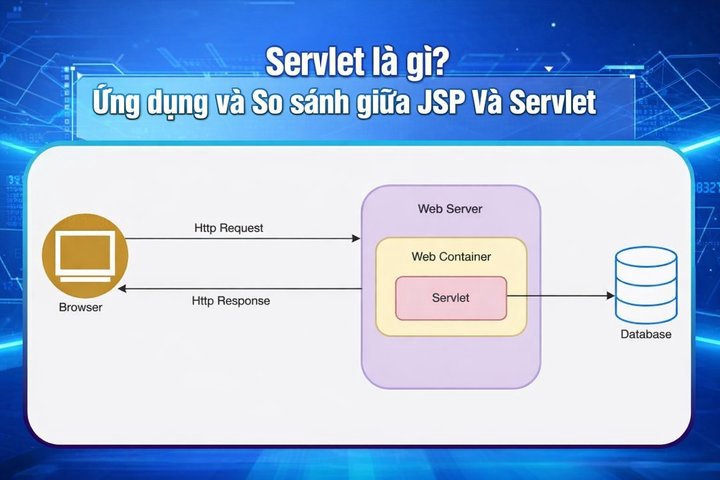
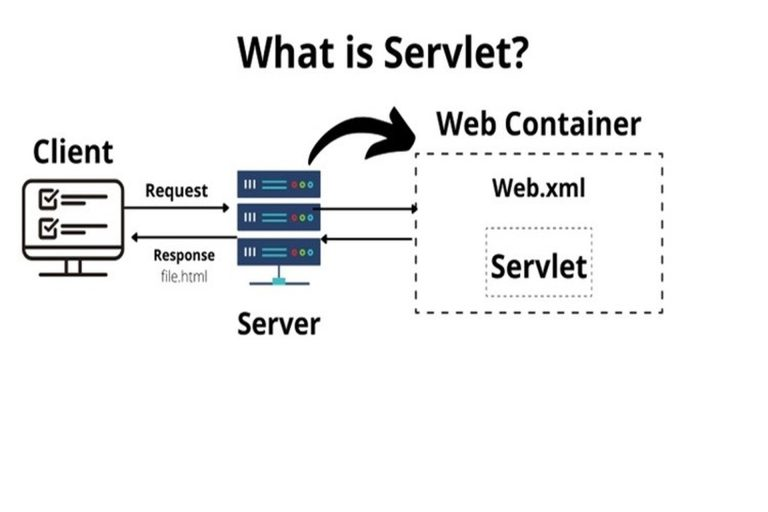
When a user accesses a dynamic web page, the browser sends a request to the web server. The web server forwards this request to the corresponding Servlet. The Servlet processes the request, interacts with the data (if needed), generates response content, and then sends it back to the browser.
Servlets operate inside a Servlet container, which can be Tomcat, Jetty, or GlassFish. The Servlet container provides the runtime environment for Servlets and handles tasks related to lifecycle management, request and response processing.
Servlet Architecture
Web Browser: Users access the web application through their browser, which is the starting point for all requests.
Web Server: Provides hosting services and distributes static files (HTML, CSS, JavaScript) and dynamic files (Servlets).
Servlet Container: Contains and manages Servlets, processes incoming requests from the browser and routes them to the appropriate Servlet.
Servlet: The component responsible for processing requests, accessing data, generating dynamic content, and returning results.
Database: Stores the web application's data. Servlets interact with the database through JDBC to query, update, insert, or delete data.
Key Tasks of a Servlet
Processing forms and data from the browser: Servlets receive data from forms, process, validate, and store it in the database or use it for other purposes.
Communicating with the database: Servlets interact with database management systems (MySQL, Oracle, PostgreSQL) through JDBC to execute SQL statements.
Handling HTTP methods: Servlets handle GET, POST, PUT, and DELETE requests, each corresponding to a separate processing method.
Communicating with other components: Servlets communicate with Java classes, EJBs, JSPs, and other components within the web application.
Executing application logic: Performing calculations, validating data, and navigating between pages.
Why Should You Understand Servlets?
Developing dynamic web applications: Servlet is a core technology for building dynamic web applications with user interaction.
Improved performance and reliability: Servlets are designed to handle many concurrent requests, improving application performance.
Easy integration: Servlets integrate with other Java technologies such as JDBC and JMS, enabling the creation of complex web applications.
Scalability: Servlets are designed to easily scale to meet the demands of large web applications.
Tips for learning Servlets effectively
Start with Apache Tomcat — the most popular Servlet container. Practice creating simple Servlets that handle GET/POST before moving on to advanced features like session management and filters.
Initialization: The Servlet container calls the init() method, which is executed only once during the Servlet's entire lifecycle, preparing the necessary resources.
Request Handling: The Servlet container calls the service() method, which then calls doGet() or doPost() depending on the HTTP method of the request.
Destruction: When the Servlet is no longer in use, the container calls the destroy() method to release resources.
The Role of JVM in Servlets
JVM (Java Virtual Machine) is the runtime environment for Java applications, including Servlets. The JVM handles translating Java bytecode into machine code, managing memory, handling exceptions, and providing essential services. A Servlet cannot function without the JVM.
JSP vs Servlet Comparison
JSP (JavaServer Pages) allows embedding Java code directly into HTML web pages and is often regarded as a special form of Servlet.
Feature
JSP
Servlet
Nature
Dynamic web page with embedded Java
Java class that handles requests
Purpose
Display UI and process logic
Process logic and control flow
Implementation
Write Java code within HTML
Write entirely in Java
Flexibility
Less flexible
More flexible
Performance
May be slower
Faster
Ease of use
Easy for web developers
Requires Java programming knowledge
Advantages of JSP
Separation of content and logic: JSP allows separation of the user interface (HTML) and processing logic (Java).
Easy to use: Write Java code directly in HTML, making it easy to create dynamic web pages.
Code reuse: JSP components can be reused across multiple different web pages.
Disadvantages of JSP
Performance: JSP can reduce performance if not carefully optimized.
Complexity: Large applications can become complex and difficult to maintain.
Security concerns: Embedding Java code in HTML can create security vulnerabilities if not done carefully.
In modern projects, many frameworks like Spring MVC and Jakarta EE have replaced plain Servlets. However, understanding Servlets remains very important because they are the foundation upon which these frameworks are built.
Conclusion:Servlet is a core Java technology for developing dynamic web applications, enabling the creation of interactive web pages and efficient data management. A solid understanding of Servlets is an essential foundation for every Java developer.
A Servlet is a special Java class deployed on a web server that acts as an intermediary between the web browser and data sources to develop dynamic web applications.
QHow are Servlet and JSP different?
Servlet is a Java class that handles logic and controls flow, offering greater flexibility. JSP is a dynamic web page that embeds Java code into HTML, making it easier to use for displaying user interfaces.
QWhat is a Servlet Container?
A Servlet Container (such as Tomcat, Jetty, GlassFish) is the runtime environment for Servlets, managing their lifecycle, handling requests and responses, and managing sessions.
QHow many phases does the Servlet lifecycle have?
The Servlet lifecycle has 3 phases: Initialization (init()), Request Handling (service() → doGet()/doPost()), and Destruction (destroy()) when the Servlet is no longer in use.
QWhat fields are Servlets used in?
Servlets are used in e-commerce, interactive websites, enterprise applications, mobile applications, and building web APIs that provide data to other applications.