RAG là gì? Retrieval-Augmented Generation — khi AI biết tra cứu tài liệu
Trí tuệ nhân tạo

RAG là gì? Retrieval-Augmented Generation — khi AI biết tra cứu tài liệu

RAG (Retrieval-Augmented Generation) là kỹ thuật giúp LLM tra cứu tài liệu thực tế trước khi trả lời, giảm hallucination và cập nhật kiến thức doanh nghiệp theo thời gian thực.

Trong series: Trí tuệ nhân tạo
  1. 1 Vector Database Là Gì? Nền Tảng Của AI Tìm Kiếm Ngữ Nghĩa
  2. 2 Recommendation System Là Gì? Cách TikTok Và Shopee Gợi Ý Sản Phẩm
  3. 3 AI Agent là gì? Tác nhân AI tự động hóa công việc như thế nào?
  4. 4 Deepfake Là Gì? Cách Phát Hiện và Bảo Vệ Bản Thân
  5. 5 Prompt Engineering là gì? Nghệ thuật ra lệnh cho AI hiệu quả
  6. 6 Fine-tuning Là Gì? Tùy Chỉnh AI Model Cho Doanh Nghiệp
  7. 7 RAG là gì? Retrieval-Augmented Generation — khi AI biết tra cứu tài liệu
  8. 8 Luật AI tại Việt Nam là gì? Khung pháp lý cho trí tuệ nhân tạo (cập nhật 2026)
✦ Tóm tắt nhanh
RAG (Retrieval-Augmented Generation) là kỹ thuật giúp LLM tra cứu tài liệu thực tế trước khi trả lời, giảm hallucination và cập nhật kiến thức doanh nghiệp theo thời gian thực.
Bài này thế nào?

RAG — viết tắt của Retrieval-Augmented Generation — là kỹ thuật kết hợp khả năng sinh ngôn ngữ của LLM với bước tra cứu tài liệu thực tế trước khi trả lời, giúp AI không còn phải "đoán mò" từ trí nhớ tham số cố định. Bài viết này giải thích toàn bộ kiến trúc RAG từng bước, cách xây dựng, so sánh với fine-tuning và ứng dụng trong doanh nghiệp.

RAG là gì?

RAG (Retrieval-Augmented Generation) là phương pháp bổ sung kiến thức cho mô hình ngôn ngữ lớn bằng cách tự động tra cứu tài liệu liên quan rồi đưa nội dung đó vào prompt trước khi mô hình sinh câu trả lời. Thay vì chỉ dựa vào kiến thức được "nướng cứng" vào tham số trong quá trình huấn luyện, mô hình RAG có thêm một nguồn thông tin bên ngoài — linh hoạt, cập nhật được và kiểm chứng được.

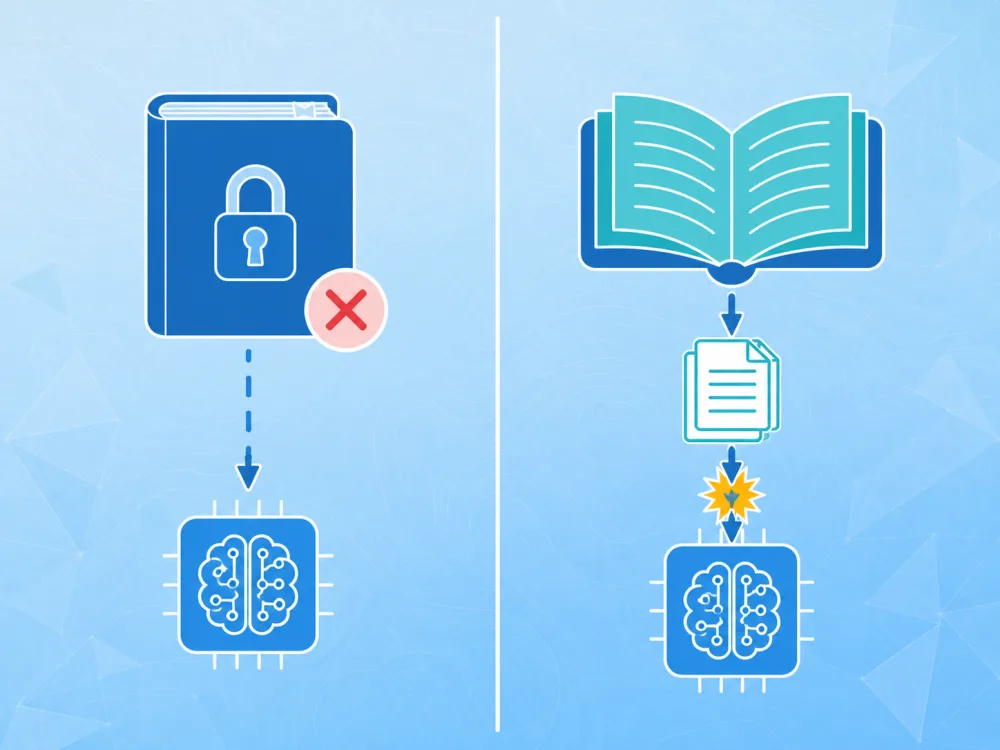
Cách ví dễ hiểu nhất: hãy nghĩ đến kỳ thi mở sách (open-book exam). Một sinh viên thi đóng sách phải nhớ hết trong đầu — dễ nhầm, dễ bịa. Sinh viên thi mở sách được phép tra giáo trình trước khi trả lời — câu trả lời chính xác hơn, có nguồn gốc rõ ràng hơn. RAG biến LLM từ "thi đóng sách" thành "thi mở sách".

Vấn đề RAG giải quyết

Trước khi hiểu RAG hoạt động ra sao, cần nắm ba điểm đau mà nó nhắm đến.

Hallucination — AI bịa thông tin

LLM sinh văn bản bằng cách dự đoán token tiếp theo dựa trên xác suất. Khi không có đủ thông tin trong tham số, mô hình vẫn có thể tự tin sinh ra câu trả lời hoàn toàn sai — một hiện tượng gọi là hallucination. Trong môi trường doanh nghiệp, điều này gây ra rủi ro nghiêm trọng: báo cáo sai, tư vấn pháp lý không chính xác, hỗ trợ kỹ thuật gây lỗi.

Knowledge cutoff — Kiến thức bị đóng băng

Mọi LLM đều có ngưỡng thời gian huấn luyện (cutoff). Sau ngày đó, mô hình không biết gì về các sự kiện, quy định, hoặc sản phẩm mới. Với doanh nghiệp, tài liệu nội bộ (hợp đồng, chính sách, catalog sản phẩm) thay đổi liên tục — huấn luyện lại mô hình mỗi khi có bản cập nhật là không khả thi về chi phí và thời gian.

Kiến thức riêng của doanh nghiệp không có trong mô hình

Dữ liệu nội bộ (tài liệu kỹ thuật nội bộ, lịch sử chăm sóc khách hàng, báo cáo kinh doanh) không bao giờ xuất hiện trong tập huấn luyện công khai. LLM không thể biết những gì chưa từng được đọc.

Kiến trúc RAG từng bước

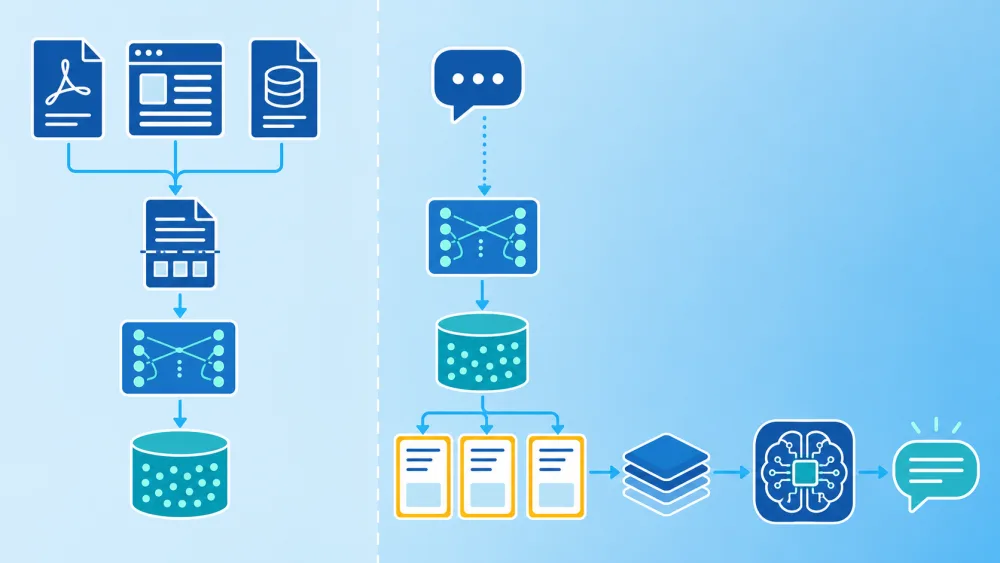
Hệ thống RAG điển hình chia làm hai giai đoạn: indexing (nạp và lập chỉ mục tài liệu) chạy offline, và retrieval + generation (truy hồi và sinh) chạy online khi người dùng hỏi.
Giai đoạn 1 — Indexing (offline)

Bước 1: Nạp tài liệu (Document Loading) Tài liệu từ nhiều nguồn (PDF, Word, trang web, database, Confluence, Notion...) được đọc vào và chuẩn hóa về dạng văn bản thuần.

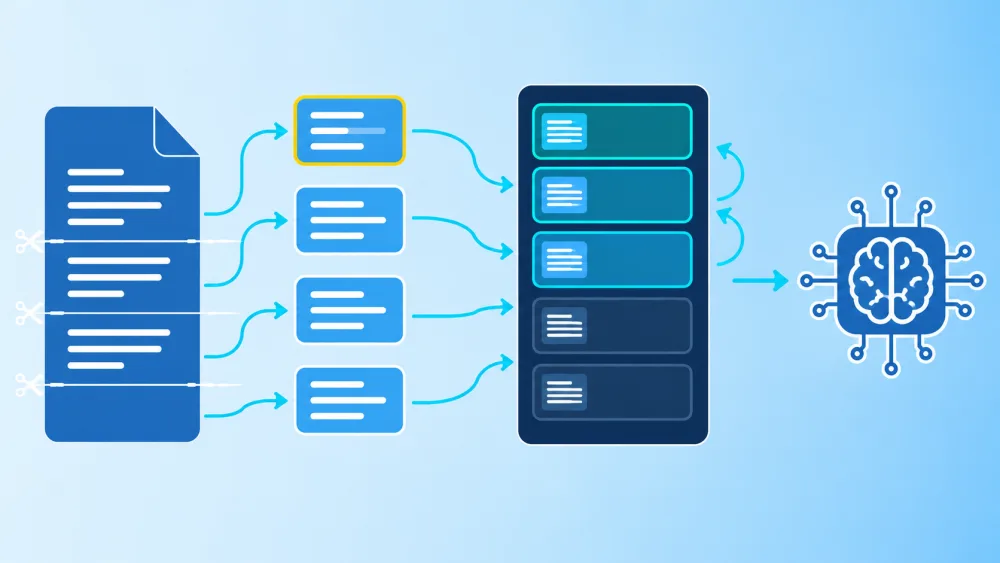
Bước 2: Chunking — Chia nhỏ tài liệu Tài liệu dài được cắt thành các đoạn nhỏ hơn gọi là chunk. Đây là bước quan trọng nhất trong RAG — chunk quá dài gây nhiễu, chunk quá ngắn mất ngữ cảnh. Thông thường dùng 256–512 token mỗi chunk, với overlap 10–20% để không đứt mạch ý.

Bước 3: Embedding — Tạo vector Mỗi chunk được đưa qua mô hình embedding (ví dụ text-embedding-3-large của OpenAI, embedding-001 của Google) để chuyển thành vector số thực nhiều chiều. Các đoạn có nghĩa tương đồng sẽ có vector gần nhau trong không gian.

Bước 4: Lưu vào vector database Cặp (chunk text, vector) được lưu vào vector database như Pinecone, Weaviate, Qdrant, hoặc pgvector — sẵn sàng để tìm kiếm.

Giai đoạn 2 — Retrieval + Generation (online)

Bước 5: Câu hỏi người dùng được embed Khi người dùng đặt câu hỏi, câu hỏi đó cũng được chạy qua cùng mô hình embedding để tạo query vector.

Bước 6: Truy hồi top-k chunk Vector database tìm k chunk có vector gần nhất với query vector nhất (thường k = 3–10), dùng cosine similarity hoặc dot product.

Bước 7: Ghép vào prompt (Context Augmentation) Các chunk được truy hồi được ghép vào prompt trước câu hỏi của người dùng, tạo thành một prompt đầy đủ ngữ cảnh.

Bước 8: LLM sinh câu trả lời LLM nhận prompt đã được bổ sung tài liệu và sinh ra câu trả lời — có căn cứ, có nguồn gốc rõ ràng.

text
 1[Prompt mẫu]
 2
 3Bạn là trợ lý hỗ trợ kỹ thuật. Hãy trả lời câu hỏi dựa trên tài liệu sau:
 4
 5--- TÀI LIỆU ---
 6{chunk_1}
 7{chunk_2}
 8{chunk_3}
 9--- HẾT TÀI LIỆU ---
10
11Câu hỏi: {user_question}
12Trả lời ngắn gọn, chính xác. Nếu tài liệu không đủ thông tin, hãy nói rõ.

Embedding và Vector Database — Giải thích đơn giản

Embedding là gì?

Hãy tưởng tượng một bản đồ ngữ nghĩa: từ "chó" và "mèo" nằm gần nhau vì đều là thú cưng; từ "ngân hàng" (tài chính) và "ngân hàng" (bờ sông) nằm xa nhau dù cùng mặt chữ. Embedding là kỹ thuật biểu diễn văn bản thành tọa độ trên bản đồ ngữ nghĩa đó — dưới dạng vector hàng nghìn chiều.

Mô hình embedding được huấn luyện trên hàng tỷ cặp câu tương đồng để học cách đặt vector: câu "Sản phẩm bị lỗi nguồn" và "Máy không lên điện" sẽ nằm gần nhau, kể cả khi không dùng từ nào giống nhau.

Vector Database là gì?

Vector database là công cụ tìm kiếm được xây dựng đặc biệt cho dữ liệu vector. Không giống SQL tìm kiếm bằng điều kiện bằng/lớn hơn/nhỏ hơn, vector database tính độ tương đồng giữa query vector và mọi vector trong kho, rồi trả về k kết quả gần nhất. Thuật toán ANN (Approximate Nearest Neighbor) như HNSW giúp tìm kiếm cực nhanh ngay cả với hàng triệu vector.

Dùng pgvector nếu đã có PostgreSQL

Nếu hạ tầng của bạn đã chạy PostgreSQL, extension pgvector cho phép lưu và tìm kiếm vector ngay trong Postgres — không cần triển khai thêm database riêng. Phù hợp cho prototype hoặc hệ thống dưới vài triệu vector.

Cách xây dựng RAG hiệu quả

Chunking strategy

Chunking là nơi quyết định chất lượng RAG nhiều nhất. Một số chiến lược phổ biến:

  • Fixed-size chunking: cắt theo số token cố định, đơn giản nhưng có thể đứt câu giữa chừng.
  • Sentence / paragraph chunking: cắt theo ranh giới câu hoặc đoạn văn — ngữ cảnh tự nhiên hơn.
  • Recursive chunking: thử cắt theo đoạn lớn trước, nếu quá dài mới cắt nhỏ hơn — giữ được cấu trúc tài liệu.
  • Semantic chunking: dùng embedding để tự phát hiện điểm chuyển ý, cắt tại đó — chất lượng cao nhất nhưng tốn kém hơn.

Re-ranking — Cải thiện chất lượng top-k

Bước truy hồi vector ban đầu ưu tiên tốc độ (ANN), đôi khi trả về chunk liên quan nhưng chưa đủ chính xác. Re-ranker (như Cohere Rerank hay cross-encoder) đọc lại từng cặp (query, chunk) và chấm điểm chi tiết hơn, sắp xếp lại danh sách trước khi đưa vào prompt. Re-ranking cải thiện đáng kể độ chính xác nhưng thêm latency ~100–300ms.

Điều chỉnh số lượng top-k

k lớn hơn nghĩa là nhiều ngữ cảnh hơn cho LLM — nhưng cũng làm prompt dài hơn, tốn token hơn, và đôi khi gây "lost in the middle" (LLM bỏ qua thông tin giữa prompt dài). Thực nghiệm thường bắt đầu với k=5, sau đó điều chỉnh theo chất lượng câu trả lời thực tế.
RAG vs Fine-tuning — So sánh thực tiễn

RAG vs Fine-tuning: So sánh toàn diện
Tested on 2026-06-12 RAG Pipeline vs Fine-tuned LLM
Đánh giá trên use case chatbot hỗ trợ tài liệu nội bộ doanh nghiệp vừa (500+ trang tài liệu, cập nhật hàng tuần):
Tiêu chí RAG Fine-tuning
Chi phí khởi tạo Thấp–trung bình Cao (GPU training)
Cập nhật kiến thức Tức thì (thêm file vào DB) Phải train lại
Độ chính xác domain Cao (tài liệu cụ thể) Cao (sau khi train đủ)
Kiểm soát nguồn Có thể trích dẫn chunk Không rõ nguồn
Rủi ro hallucination Thấp hơn Thấp hơn (nhưng khác loại)
Phù hợp với Tài liệu thay đổi thường xuyên Phong cách/giọng văn cố định

RAG thắng rõ ràng về tính linh hoạt và khả năng kiểm chứng nguồn. Fine-tuning phù hợp hơn khi muốn mô hình học phong cách trả lời đặc thù hoặc hiểu sâu domain-specific terminology.

Ứng dụng thực tế của RAG

Chatbot hỏi-đáp tài liệu nội bộ

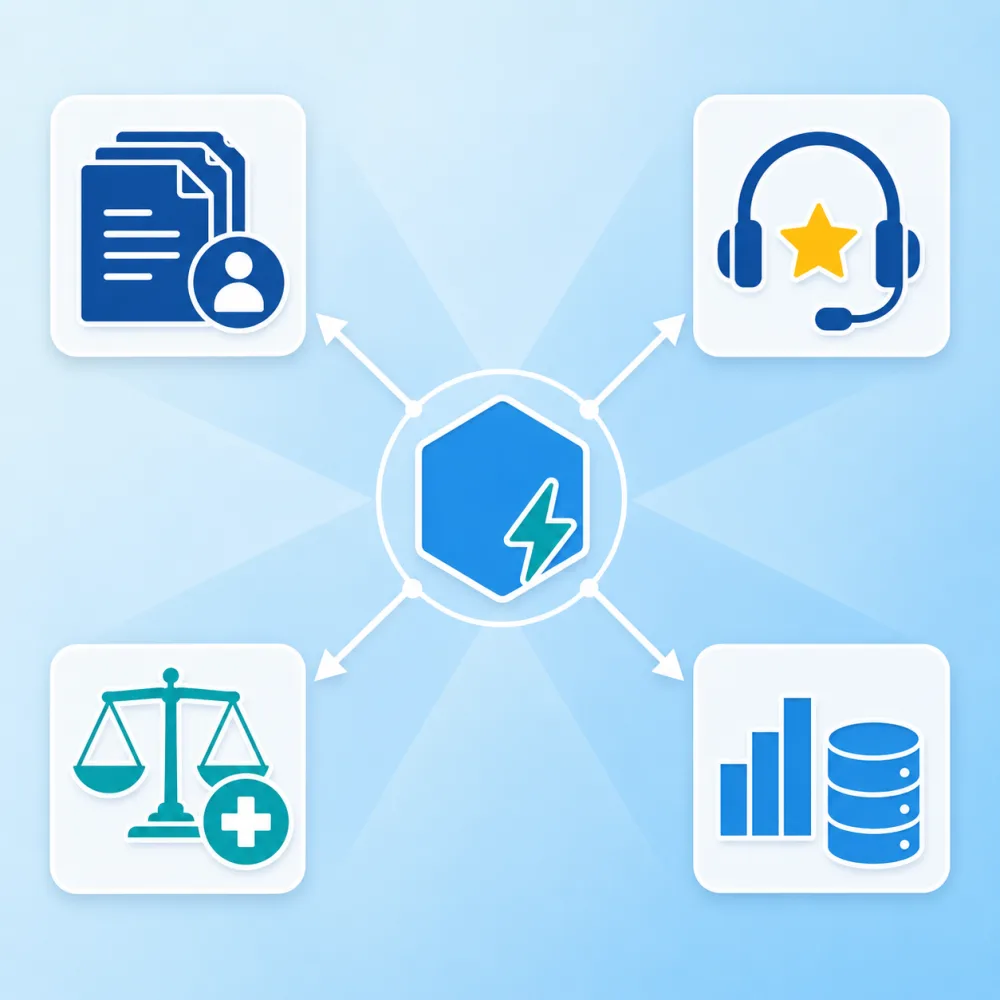
Đây là use case phổ biến nhất: nhân viên có thể hỏi trực tiếp về chính sách công ty, quy trình vận hành, hướng dẫn kỹ thuật — thay vì lục tìm thủ công trong hàng trăm file. Hệ thống truy hồi đúng đoạn tài liệu và sinh câu trả lời ngắn gọn, có trích dẫn.

Hỗ trợ khách hàng tự động

Chatbot chăm sóc khách hàng được nạp toàn bộ FAQ, catalog sản phẩm, chính sách bảo hành. Khi khách hỏi về một lỗi cụ thể, hệ thống tìm đúng hướng dẫn xử lý và trả lời chính xác — không còn phải lập trình thủ công mọi kịch bản.

Tra cứu pháp lý và y tế

Trong lĩnh vực cần độ chính xác cao như pháp lý hoặc y tế, RAG cho phép AI tham chiếu đến văn bản pháp quy, protocol điều trị cụ thể — và quan trọng là có thể hiển thị nguồn để người dùng kiểm chứng.

Phân tích dữ liệu doanh nghiệp với RAG

RAG không chỉ giới hạn ở văn bản tĩnh. Kết hợp với pipeline dữ liệu lớn như Apache Spark để xử lý và cập nhật corpus theo lô, hoặc tích hợp qua API để hệ thống RAG tự động pull dữ liệu mới từ các nguồn khác nhau, là hướng triển khai thực tế trong doanh nghiệp.

Các doanh nghiệp muốn nhanh chóng khai thác insight từ báo cáo kinh doanh nội bộ có thể sử dụng RAG kết hợp với nền tảng phân tích như AlgoData — nơi dữ liệu thị trường và vận hành đã được tổ chức sẵn để đưa vào pipeline truy hồi.
Hạn chế của RAG

RAG không phải là viên đạn bạc. Một số hạn chế cần lưu ý:

Chất lượng phụ thuộc hoàn toàn vào chất lượng tài liệu nạp vào. "Garbage in, garbage out" — nếu tài liệu nguồn lỗi thời, mâu thuẫn hoặc viết kém, câu trả lời của RAG cũng sẽ kém.

Khó xử lý câu hỏi tổng hợp. Các câu hỏi cần tổng hợp thông tin rải rác trên nhiều tài liệu hoặc suy luận nhiều bước khó giải quyết bằng top-k retrieval đơn giản. Advanced RAG (multi-hop retrieval, HyDE, query decomposition) được phát triển để giải quyết hạn chế này.

Latency tăng thêm. Mỗi request cần thêm bước embedding query + vector search + (tùy chọn) re-ranking trước khi gọi LLM. Tổng cộng có thể thêm 200–500ms cho hệ thống phản hồi nhanh.

Chi phí token tăng. Prompt dài hơn do ngữ cảnh được nhồi vào nghĩa là tốn nhiều token hơn mỗi lượt, trực tiếp ảnh hưởng chi phí khi scale.

Không bao giờ nạp dữ liệu nhạy cảm vào vector database dùng chung

Nếu nhiều nhóm người dùng với quyền truy cập khác nhau sử dụng cùng một RAG system, cần triển khai access control ở tầng retrieval — lọc chunk theo metadata (phòng ban, mức độ bảo mật) trước khi trả về. Thiếu bước này có thể khiến thông tin nhạy cảm lọt ra ngoài nhóm được phép.

Kết luận: RAG là bước tiến thực dụng nhất để đưa LLM vào môi trường doanh nghiệp — biến một mô hình ngôn ngữ mạnh nhưng thiếu ngữ cảnh thành trợ lý thực sự biết tra cứu tài liệu của tổ chức, trả lời chính xác và có thể kiểm chứng nguồn.

Nguồn tham khảo

Câu hỏi thường gặp

Câu hỏi thường gặpQ&A
RAG khác fine-tuning thế nào?
RAG truy hồi tài liệu bên ngoài tại thời điểm inference — không thay đổi tham số mô hình, cập nhật kiến thức chỉ cần thêm file mới vào vector database. Fine-tuning bổ sung kiến thức vào trọng số mô hình bằng cách huấn luyện lại, tốn kém hơn và cứng nhắc hơn khi dữ liệu thay đổi thường xuyên. Hai kỹ thuật có thể kết hợp: fine-tune để mô hình hiểu ngữ cảnh domain, rồi RAG để cung cấp tài liệu cụ thể.
Vector database là gì?
Vector database là hệ quản trị cơ sở dữ liệu được tối ưu để lưu trữ và tìm kiếm vector (mảng số thực nhiều chiều). Thay vì so sánh bằng từ khóa, nó tìm kiếm theo độ tương đồng ngữ nghĩa (cosine similarity, dot product) — giúp tìm đúng đoạn tài liệu liên quan kể cả khi người dùng không dùng từ y hệt. Pinecone, Weaviate, Qdrant, pgvector là các lựa chọn phổ biến.
Embedding là gì?
Embedding là quá trình chuyển đổi văn bản (câu, đoạn, tài liệu) thành vector số thực nhiều chiều (thường 768–3072 chiều) sao cho các văn bản có nghĩa tương đồng có vector gần nhau trong không gian. Mô hình embedding như text-embedding-3-large của OpenAI hay embedding-001 của Google thực hiện việc này; vector đầu ra được lưu vào vector database để tìm kiếm nhanh.
RAG có loại bỏ hoàn toàn hallucination không?
Không hoàn toàn. RAG giảm đáng kể hallucination bằng cách neo câu trả lời vào tài liệu thực tế, nhưng không loại bỏ triệt để. LLM vẫn có thể diễn giải sai tài liệu được truy hồi, bỏ sót thông tin trong tài liệu dài, hoặc pha trộn kiến thức nền với tài liệu. Chunking tốt, re-ranking và prompt engineering chặt chẽ giúp giảm thiểu thêm.
Xây một hệ thống RAG cần gì?
Cần bốn thành phần cốt lõi: (1) pipeline nạp và chunking tài liệu, (2) mô hình embedding để tạo vector, (3) vector database để lưu và tìm kiếm, (4) LLM để sinh câu trả lời từ context được truy hồi. Thực tế thêm re-ranker để cải thiện chất lượng top-k và orchestration framework (LangChain, LlamaIndex) để kết nối các bước.

RAG — short for Retrieval-Augmented Generation — is a technique that combines the language generation capabilities of an LLM with a real document retrieval step performed before each answer, freeing AI from having to "guess" purely from a fixed set of learned parameters. This article walks through the complete RAG architecture step by step, covering how to build one, how it compares to fine-tuning, and how it applies in enterprise settings.

What is RAG?

RAG (Retrieval-Augmented Generation) is a method for augmenting large language models with knowledge by automatically retrieving relevant documents and inserting their content into the prompt before the model generates a response. Rather than relying solely on knowledge "baked" into its parameters during training, a RAG-powered model gains access to an external information source — one that is flexible, updatable, and verifiable.

The easiest analogy is an open-book exam. A student taking a closed-book exam must rely entirely on memory — easy to confuse things, easy to make things up. A student allowed to consult their notes can look up the answer before responding — more accurate, with a clear source. RAG transforms an LLM from a closed-book student into an open-book one.

The problems RAG solves

Before understanding how RAG works, it helps to understand the three pain points it targets.

Hallucination — AI fabricating information

LLMs generate text by predicting the next token based on probabilities. When the model's parameters don't contain enough relevant information, it can still produce a confident-sounding answer that is completely wrong — a phenomenon known as hallucination. In enterprise environments this creates serious risks: incorrect reports, inaccurate legal guidance, or support responses that cause technical failures.

Knowledge cutoff — frozen knowledge

Every LLM has a training cutoff date. After that point, the model knows nothing about new events, regulations, or products. For businesses, internal documents (contracts, policies, product catalogs) change constantly — retraining the model with every update is neither cost-effective nor practical.

Proprietary enterprise knowledge absent from the model

Internal data — technical documentation, customer-service history, business reports — never appears in public training sets. An LLM simply cannot know what it has never read.

RAG architecture, step by step

A typical RAG system splits into two phases: indexing (ingesting and indexing documents), which runs offline, and retrieval + generation, which runs online when a user asks a question.

Phase 1 — Indexing (offline)

Step 1: Document loading Documents from multiple sources (PDF, Word, web pages, databases, Confluence, Notion, etc.) are read in and normalized to plain text.

Step 2: Chunking — splitting documents into passages Long documents are divided into smaller segments called chunks. This is the single most important step in RAG — chunks that are too long introduce noise, while chunks that are too short lose context. A common starting point is 256–512 tokens per chunk with a 10–20% overlap to preserve continuity across boundaries.

Step 3: Embedding — generating vectors Each chunk is passed through an embedding model (e.g., OpenAI's text-embedding-3-large, Google's embedding-001) to produce a high-dimensional vector of real numbers. Passages with similar meaning will have vectors close together in the vector space.

Step 4: Storing in the vector database Each (chunk text, vector) pair is stored in a vector database such as Pinecone, Weaviate, Qdrant, or pgvector — ready to be searched.

Phase 2 — Retrieval + Generation (online)

Step 5: The user's question is embedded When a user asks a question, that question is run through the same embedding model to produce a query vector.

Step 6: Retrieving the top-k chunks The vector database finds the k chunks whose vectors are closest to the query vector (typically k = 3–10) using cosine similarity or dot product.

Step 7: Context augmentation — injecting chunks into the prompt The retrieved chunks are prepended to the user's question, forming a context-rich prompt.

Step 8: The LLM generates an answer The LLM receives the document-augmented prompt and produces a response — grounded in real sources and verifiable.

text
 1[Sample prompt]
 2
 3You are a technical support assistant. Answer the question based on the documents below:
 4
 5--- DOCUMENTS ---
 6{chunk_1}
 7{chunk_2}
 8{chunk_3}
 9--- END DOCUMENTS ---
10
11Question: {user_question}
12Answer concisely and accurately. If the documents do not contain enough information, say so clearly.

Embeddings and vector databases — a plain-language explanation

What is an embedding?

Imagine a semantic map: "dog" and "cat" sit close together because both are pets; "bank" (financial institution) and "bank" (riverbank) sit far apart despite being spelled the same. Embedding is the technique of representing text as coordinates on that semantic map — expressed as a vector with thousands of dimensions.

Embedding models are trained on billions of similar sentence pairs to learn how to position vectors: the sentence "The product has a power fault" and "The device won't turn on" will end up near each other even though they share no common words.

What is a vector database?

A vector database is a search engine built specifically for vector data. Unlike SQL, which filters by equality or range conditions, a vector database computes the similarity between a query vector and every vector in the store, then returns the k closest results. Approximate Nearest Neighbor (ANN) algorithms such as HNSW make this search extremely fast even across millions of vectors.

Use pgvector if you already run PostgreSQL

If your infrastructure already runs PostgreSQL, the pgvector extension lets you store and search vectors directly inside Postgres — no separate database to deploy. It is a good fit for prototypes or systems with fewer than a few million vectors.

How to build an effective RAG system

Chunking strategy

Chunking has the greatest single impact on RAG quality. Common strategies include:

  • Fixed-size chunking: splits by a fixed token count — simple but can cut sentences mid-thought.
  • Sentence / paragraph chunking: splits on sentence or paragraph boundaries — more natural context.
  • Recursive chunking: attempts to split on larger boundaries first, falling back to smaller ones only when needed — preserves document structure.
  • Semantic chunking: uses embeddings to detect topic shifts automatically and splits at those points — highest quality but more expensive.

Re-ranking — improving top-k quality

The initial vector retrieval step prioritizes speed (ANN) and sometimes returns chunks that are related but not quite precise enough. A re-ranker (such as Cohere Rerank or a cross-encoder) re-reads each (query, chunk) pair and scores them more carefully, reordering the list before it enters the prompt. Re-ranking meaningfully improves precision at the cost of roughly 100–300 ms of additional latency.

Tuning the top-k value

A larger k gives the LLM more context — but also makes the prompt longer, consumes more tokens, and can trigger "lost in the middle" behavior (where the LLM ignores information in the middle of a long prompt). A practical starting point is k = 5, adjusted based on observed answer quality.

RAG vs Fine-tuning — a practical comparison

RAG vs Fine-tuning: Comprehensive Comparison
Tested on 2026-06-12 RAG Pipeline vs Fine-tuned LLM
Evaluated on a mid-size enterprise internal-documentation chatbot use case (500+ pages of docs, updated weekly):
Criterion RAG Fine-tuning
Setup cost Low–medium High (GPU training)
Knowledge updates Instant (add file to DB) Requires retraining
Domain accuracy High (specific documents) High (after sufficient training)
Source traceability Can cite specific chunks Source is opaque
Hallucination risk Lower Lower (but different failure mode)
Best suited for Frequently changing documents Fixed style / tone

RAG wins decisively on flexibility and source verifiability. Fine-tuning is the better choice when you want the model to learn a distinctive response style or develop deep familiarity with domain-specific terminology.

Real-world applications of RAG

Internal document Q&A chatbot

This is the most common use case: employees can ask directly about company policies, operational procedures, or technical documentation — instead of manually searching through hundreds of files. The system retrieves the right passage and generates a concise, cited answer.

Automated customer support

A customer support chatbot can be loaded with the full FAQ, product catalog, and warranty policies. When a customer reports a specific error, the system finds the correct troubleshooting steps and responds accurately — no need to manually script every possible scenario.

In fields requiring high accuracy, such as law and medicine, RAG lets AI cite specific regulatory texts or clinical treatment protocols — and, crucially, display the source so users can verify the answer themselves.

Enterprise data analysis with RAG

RAG is not limited to static text. Combining it with large-scale data pipelines like Apache Spark to process and refresh corpora in batches, or integrating via API to let the RAG system automatically pull fresh data from multiple sources, are practical deployment patterns in enterprise environments.

Businesses that want to quickly extract insights from internal business reports can use RAG together with an analytics platform like AlgoData — where market and operational data is already organized and ready to feed into a retrieval pipeline.

Limitations of RAG

RAG is not a silver bullet. Several limitations deserve attention:

Output quality depends entirely on the quality of the ingested documents. Garbage in, garbage out — if the source documents are outdated, contradictory, or poorly written, RAG answers will be too.

Synthesis questions are hard. Questions that require aggregating information scattered across many documents, or multi-step reasoning, are difficult to handle with simple top-k retrieval. Advanced RAG variants (multi-hop retrieval, HyDE, query decomposition) have been developed specifically to address this limitation.

Added latency. Every request now requires an extra embedding step for the query, a vector search, and optionally a re-ranking pass before the LLM call. This can add 200–500 ms to the total response time for latency-sensitive systems.

Higher token costs. Longer prompts — filled with retrieved context — mean more tokens consumed per turn, which directly affects cost at scale.

Never ingest sensitive data into a shared vector database

If multiple user groups with different access levels share a RAG system, access control must be enforced at the retrieval layer — filtering chunks by metadata (department, security classification) before returning results. Without this step, sensitive information can leak to users who should not see it.

Conclusion: RAG is the most pragmatic step forward for deploying LLMs in enterprise settings — transforming a powerful but context-blind language model into a genuine assistant that knows how to look things up in the organization's own documents, answer accurately, and point to verifiable sources.

Sources

Frequently Asked Questions

Frequently Asked QuestionsQ&A
How does RAG differ from fine-tuning?
RAG retrieves external documents at inference time — it never modifies model parameters, and updating knowledge is as simple as adding a new file to the vector database. Fine-tuning bakes knowledge into model weights through additional training, which is more expensive and less flexible when data changes frequently. The two techniques can be combined: fine-tune to give the model a deeper understanding of your domain's context, then use RAG to supply specific documents at query time.
What is a vector database?
A vector database is a database management system optimized for storing and searching vectors (multi-dimensional arrays of real numbers). Instead of keyword matching, it retrieves results by semantic similarity (cosine similarity, dot product) — finding the right document passage even when the user's wording differs entirely from the source text. Pinecone, Weaviate, Qdrant, and pgvector are popular choices.
What is an embedding?
Embedding is the process of converting text (a sentence, passage, or document) into a high-dimensional vector of real numbers (typically 768–3,072 dimensions) such that semantically similar texts end up close together in the vector space. Embedding models such as OpenAI's text-embedding-3-large or Google's embedding-001 perform this conversion; the resulting vectors are stored in a vector database for fast retrieval.
Does RAG completely eliminate hallucination?
Not completely. RAG significantly reduces hallucination by grounding answers in real documents, but it does not eliminate it entirely. An LLM can still misinterpret the retrieved text, miss information buried in long documents, or blend background training knowledge with the retrieved content. Good chunking, re-ranking, and tight prompt engineering help reduce it further.
What does it take to build a RAG system?
You need four core components: (1) a document ingestion and chunking pipeline, (2) an embedding model to generate vectors, (3) a vector database to store and search those vectors, and (4) an LLM to generate answers from the retrieved context. In practice you'll also want a re-ranker to improve top-k quality and an orchestration framework (LangChain, LlamaIndex) to wire everything together.