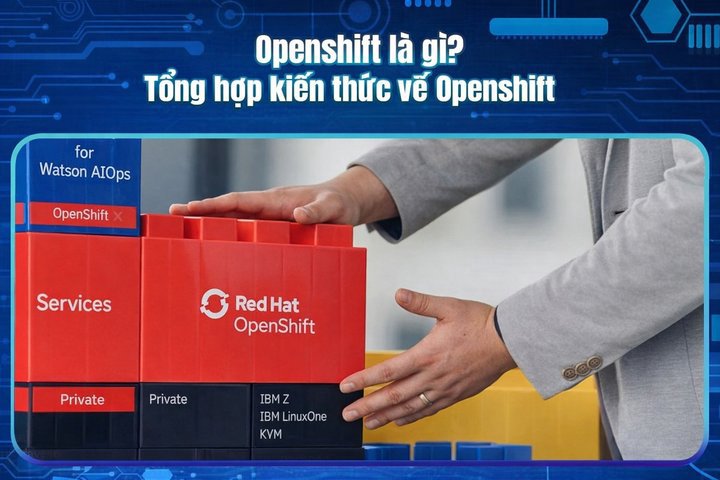
OpenShift is Red Hat's open-source container platform built on Kubernetes, helping enterprises deploy, manage, and scale containerized applications. This article provides a comprehensive guide to OpenShift from concepts to standout features.
2019Trusted since
B2BData solutions
Data·AIExpertise
Need data solutions for your business?
AlgoData has helped businesses with data engineering, analytics & AI since 2019.
OpenShift is an open-source container as a service (CaaS) platform developed by Red Hat. It provides an environment to deploy, manage, and scale containerized applications on cloud platforms and on-premise infrastructure. With the support of Kubernetes, OpenShift has become a critical tool helping organizations build modern applications based on micro-services.
The platform not only focuses on rapid deployment but also ensures high availability and security. The combination of OpenShift and Kubernetes allows developers to easily create quality products while minimizing risks during development and deployment.
OpenShift supports a wide range of programming languages and frameworks:
Java: Supports Spring Boot, JBoss EAP, and WildFly. The rich Java ecosystem combined with OpenShift's scalability creates an ideal environment for large and complex applications.
Python: Supports Django and Flask. Suitable for web applications and data science projects.
Node.js: Allows building powerful backend applications, especially useful for real-time applications and microservices.
Ruby on Rails: Provides a developer-friendly environment with automated deployment features, enabling application updates without downtime.
PHP: Supported through Apache and Nginx, making PHP application deployment easy.
.NET: Supports .NET Core and .NET Framework, opening opportunities for enterprises using Microsoft technology to transition to containerization.
Advantages and Key Features of OpenShift
Convenient Application Management
OpenShift automates many management tasks such as version updates, application deployment, monitoring, and resource management, helping reduce the burden on DevOps teams.
Easy Customization and Deployment
Users can flexibly configure resources, services, and networking to ensure applications perform optimally in specific environments.
OpenShift provides comprehensive documentation, an active user community, and an intuitive web interface. Combined with Kubernetes, OpenShift makes deploying and scaling modern applications easy.
Tip for Getting Started with OpenShift
Use the OpenShift Developer Sandbox (free) to experiment with the platform before deploying to production. This is the best way to familiarize yourself with the interface and integrated CI/CD workflows.
Consistency Across All Infrastructures
OpenShift allows consistent application deployment across public clouds, private clouds, or on-premise environments without reconfiguring. This saves both cost and time.
Flexibility
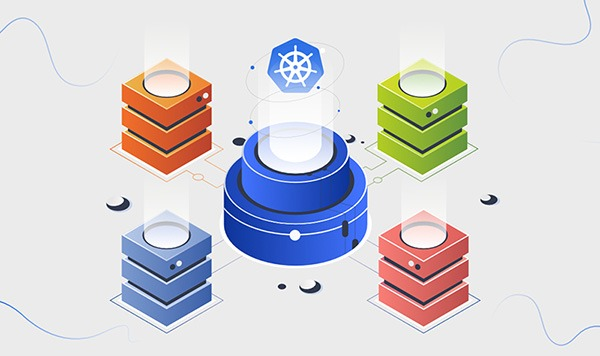
Thanks to Kubernetes, OpenShift can deploy complex applications comprising multiple services and components, opening up many opportunities for developers to create modern applications.
Note on Costs
The commercial Red Hat OpenShift version has significant costs including subscription and support fees. Carefully evaluate your budget and compare with other solutions such as EKS (AWS) or AKS (Azure) before making a decision.
Conclusion:OpenShift is a powerful container platform built on Kubernetes, helping enterprises deploy modern applications with high flexibility, strong security, and consistency across all infrastructures.
OpenShift is an open-source container as a service (CaaS) platform developed by Red Hat, built on Kubernetes, that helps deploy, manage, and scale containerized applications.
QHow is OpenShift different from Kubernetes?
OpenShift is built on Kubernetes but adds many additional features such as a web console, integrated CI/CD, enhanced security, and commercial support from Red Hat.
QWhat programming languages does OpenShift support?
OpenShift supports many languages and frameworks: Java (Spring Boot, JBoss), Python (Django, Flask), Node.js, Ruby on Rails, PHP, .NET, and many others.
QIs OpenShift free?
OpenShift has a free open-source version (OKD). Red Hat OpenShift Container Platform is the commercial version with fees, which comes with professional technical support.
QWho should use OpenShift?
OpenShift is suitable for enterprises wanting to deploy containerized applications, DevOps teams needing CI/CD automation, and organizations requiring consistency across multiple cloud infrastructures.