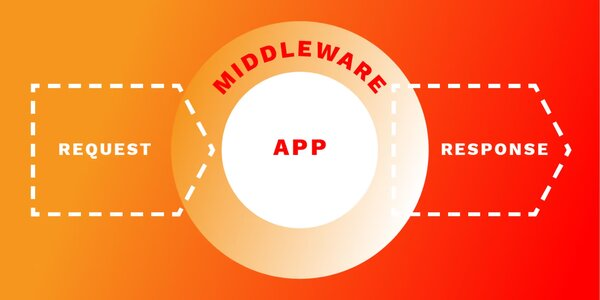
Middleware is a software layer that connects system components, processing requests before they reach the main application. This article explains how it works, types, applications in REST API, and practical examples with Laravel.
2019Trusted since
B2BData solutions
Data·AIExpertise
Need data solutions for your business?
AlgoData has helped businesses with data engineering, analytics & AI since 2019.
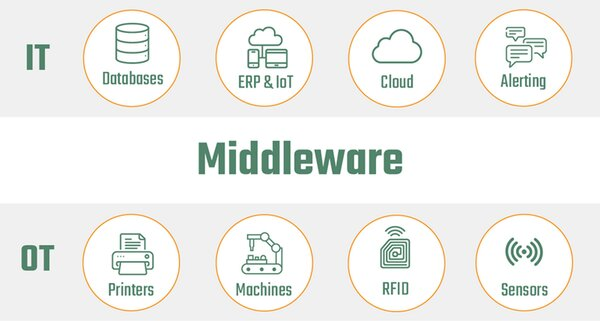
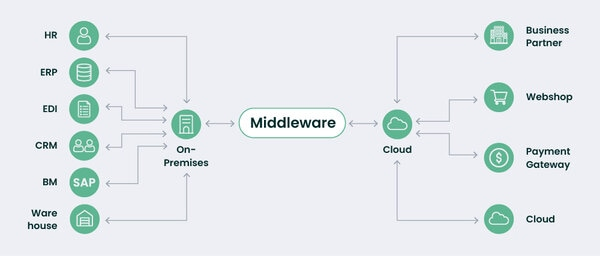
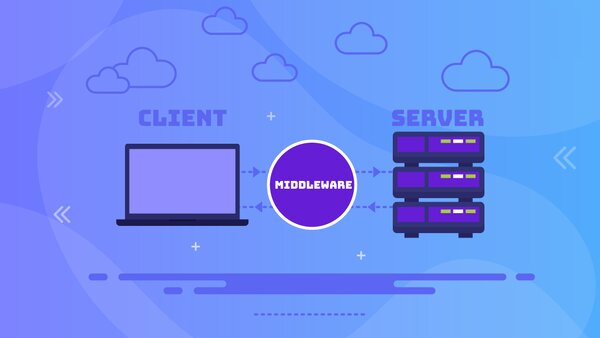
Middleware is a software layer between the operating system, database, and application. It acts as a bridge enabling different system components to communicate and exchange data, regardless of programming language or platform.
The concept of middleware emerged in the 1980s when enterprise systems needed to integrate applications across different platforms. Instead of each application handling its own connections, middleware provides a common abstraction layer — reducing complexity and improving scalability.
In modern web development, middleware typically refers to the request/response processing mechanism in frameworks like Express.js, Laravel, and Django — intercepting and processing HTTP requests before they reach the controller.
How It Works
Middleware operates on a pipeline model (processing chain):
Client sends an HTTP request to the server.
Middleware 1 intercepts the request → performs processing (e.g., CORS check).
Middleware 3 processes further (e.g., logging, rate limiting).
Controller receives the middleware-processed request, executes business logic.
Response travels back through the middleware pipeline before reaching the client.
Each middleware can:
Forward the request to the next middleware (call next()).
Block the request and return a response immediately (e.g., 401 Unauthorized).
Transform the request/response (add headers, transform data).
Middleware Types
Type
Function
Examples
Message-Oriented (MOM)
Asynchronous messaging between systems
RabbitMQ, Apache Kafka, ActiveMQ
Database Middleware
Connects applications to multiple database types
ODBC, JDBC, Sequelize
Application Server
Provides application runtime environment
Tomcat, WildFly, IIS
API/Integration
Connects and manages APIs between services
MuleSoft, Apache Camel, Kong
Web Middleware
Processes HTTP requests in web frameworks
Express middleware, Laravel middleware
RPC Middleware
Remote procedure calls between systems
gRPC, XML-RPC, JSON-RPC
Middleware vs API Gateway
Middleware handles logic inside the application (authentication, logging). API Gateway manages external traffic (routing, rate limiting, load balancing). In microservices, an API Gateway often combines multiple middleware internally.
Middleware in REST API
In REST APIs, middleware handles common tasks separated from business logic:
Middleware
Function
Examples
Authentication
Verifies users via JWT, OAuth, API Key
passport.js, jwt-auth
Authorization
Checks resource access permissions
Role-based, Policy-based
Validation
Validates input data
express-validator, Form Request
Rate Limiting
Limits requests per time period
express-rate-limit, throttle
CORS
Allows requests from other domains
cors middleware
Logging
Logs request/response data
morgan, monolog
Compression
Compresses responses to reduce bandwidth
compression, gzip
Error Handling
Centralized error processing
Error middleware
Example authentication middleware in Express.js:
JavaScript
1constauthMiddleware=(req,res,next)=>{ 2consttoken=req.headers.authorization?.split(' ')[1]; 3if(!token)returnres.status(401).json({error:'Token required'}); 4 5try{ 6req.user=jwt.verify(token,process.env.JWT_SECRET); 7next();// Pass to next middleware/controller
8}catch(err){ 9res.status(403).json({error:'Invalid token'});10}11};1213app.get('/api/profile',authMiddleware,profileController);
Performance: Caching and compression middleware optimize response time.
Monitoring: Logging middleware records all requests for tracking and debugging.
Middleware Best Practices
Keep each middleware simple, doing one thing (Single Responsibility). Order correctly — CORS before Authentication before Authorization. Avoid placing business logic in middleware. Use middleware groups for easier management.
Conclusion:Middleware is an essential intermediary software layer in modern application architecture, from enterprise system integration to HTTP request processing in web frameworks. Understanding and using middleware correctly helps build secure, scalable, and maintainable applications.
Middleware is a software layer between the operating system/database and applications, helping components communicate, exchange data, and process requests efficiently.
QHow does Middleware work?
Middleware intercepts requests before they reach the main application, performs processing (authentication, logging, data transformation), then forwards or returns a response. This forms a middleware pipeline.
QWhat are the types of Middleware?
Types include: Message-Oriented (MOM), Database Middleware, Application Server Middleware, API/Integration Middleware, and Web Middleware (handling HTTP requests in frameworks like Express, Laravel, Django).
QWhat does Middleware do in REST APIs?
In REST APIs, middleware handles common tasks like JWT/OAuth authentication, logging, rate limiting, CORS, input validation, response compression, and error handling — separated from business logic.
QHow do you create Middleware in Laravel?
Use php artisan make:middleware MiddlewareName, write logic in the handle() method, register in bootstrap/app.php or assign directly to routes/groups. Laravel supports global, route, and group middleware.