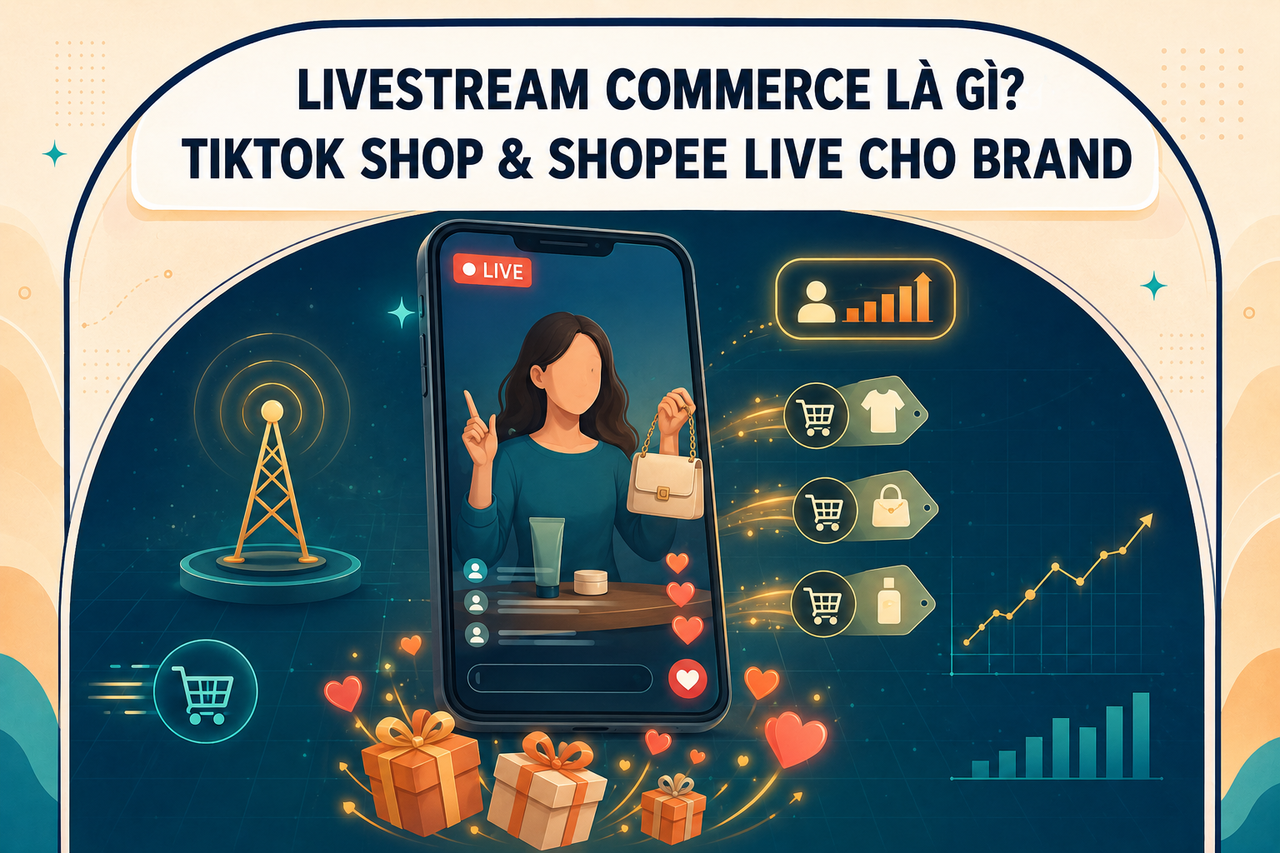
In less than a decade, online shopping has been fundamentally transformed by a deceptively simple innovation: real-time video broadcasting combined with instant checkout. Livestream Commerce is no longer a future trend — it is the present reality, with millions of live sessions unfolding every day across Southeast Asia alone. Brands that have yet to establish a presence on this channel are leaving a significant share of revenue on the table.
What Is Livestream Commerce?
Livestream Commerce is a form of e-commerce in which a seller or host presents products via a live video broadcast while viewers can place orders and complete payment without ever leaving the stream interface. It fuses two of the most powerful forces in modern consumer behavior — entertainment and commerce — into a single seamless experience. Viewers are not passively watching an advertisement; they are actively participating in a live event where they can ask questions, see products demonstrated in real time, and buy on the spot.
The concept originated in China in 2016 when Alibaba launched Taobao Live. Within its first two years, Taobao Live generated over $15 billion in GMV and became a primary sales channel for tens of thousands of Chinese brands. That success inspired global platforms including TikTok, Shopee, Instagram, and YouTube to rapidly integrate shoppable livestream features into their products. What started as a Chinese phenomenon has since become a global commerce infrastructure layer.
What separates Livestream Commerce from conventional online retail is the real-time dimension. Viewers do not merely see a product — they watch the host demonstrate it, answer skeptical questions on the spot, and react to audience feedback live. This radical transparency builds trust that static product photography simply cannot achieve. Combined with countdown timers, limited-quantity flash deals, and the visible social proof of hundreds of viewers buying simultaneously, Livestream Commerce triggers purchasing decisions far faster than any standard browsing experience.
Why Livestream Commerce Has Exploded in Southeast Asia
Southeast Asia is an ideal market for Livestream Commerce because of the convergence of multiple enabling factors. Smartphone penetration exceeds 80% in Indonesia, Thailand, and the Philippines. Mobile data costs rank among the lowest globally. And cultural affinity for short-form video content — fueled by TikTok's meteoric rise — has conditioned hundreds of millions of users to consume entertainment on their phones for hours each day. TikTok Shop across Southeast Asia surpassed $20 billion in GMV in 2024, nearly tripling from 2022. Shopee Live recorded a 3x increase in live sessions over the same period.
The psychological mechanics of FOMO and social proof are the core engines driving purchase behavior inside livestreams. When viewers see comments like "just ordered two," "sold out in 30 seconds," or "my third time buying this" flood the screen, the brain's herd instinct activates automatically. The cognitive shortcut is straightforward: if many people are buying right now, the product must be worth it. Visible inventory countdowns — 100 remaining, then 50, then 10 — compound this urgency into an almost irresistible pressure. No form of traditional advertising can replicate this psychological mechanism with equivalent efficiency.
Beyond psychology, Southeast Asia's digital payment infrastructure has matured sufficiently to support frictionless instant checkout. Digital wallets like ShopeePay, GoPay, GrabPay, and MoMo, combined with buy-now-pay-later options from Kredivo and Akulaku, have virtually eliminated payment friction. Viewers need not enter card details or switch to another application — checkout completes in two or three taps within the live interface itself. This seamlessness is a decisive factor in why Livestream Commerce conversion rates routinely outperform standard e-commerce by three to five times.
How a Livestream Commerce Session Works
A professional Livestream Commerce session follows a carefully engineered flow designed to maximize both engagement and revenue. The host opens with a warming-up segment — sharing tips, a mini-game, or a compelling story — to build audience and establish energy. Once viewership stabilizes, the host begins pinning products to the broadcast frame. A single tap on a pinned product takes the viewer directly to the product card with an add-to-cart button, all without exiting the live stream. The purchase journey from discovery to checkout can complete in under fifteen seconds.
Flash deals are the single most effective tactical weapon in Livestream Commerce. Every twenty to thirty minutes, the host announces a special offer that exists for only five to ten minutes or while stock lasts, accompanied by a visible countdown timer. The psychological impact is immediate and measurable: add-to-cart rates typically spike three to five times above the session baseline during flash deal windows. Brands running high-performing livestreams typically engineer three to four flash deals per two-hour session, distributed at strategic intervals, layered with exclusive viewer-only vouchers that cannot be obtained elsewhere.
Platform algorithms on both TikTok and Shopee actively amplify live content that demonstrates strong engagement signals. Sessions with high comment volume, reactions, shares, and add-to-cart actions are distributed to progressively larger audiences in real time, creating a compounding growth loop: more engagement drives more reach, which drives more new viewers, which drives more engagement. This is why hosts actively solicit comments — asking viewers to vote on product colors, comment their city, or tag a friend — rather than simply presenting products. Interactive engagement is simultaneously a conversion tactic and an organic distribution strategy.
TikTok Shop and Shopee Live serve fundamentally different user mindsets and reward different brand strategies. TikTok Shop is a discovery-first platform: users open TikTok for entertainment, not with shopping intent, yet they are drawn into purchase decisions by compelling content. TikTok's algorithm delivers exceptional viral potential — a brand-new shop with zero followers can reach 10,000 to 50,000 concurrent viewers if its live content resonates strongly enough. The core audience skews toward Gen Z and younger millennials (18–30 years old), who are predisposed to impulse and trend-driven purchases.
Shopee Live operates on an intent-driven model. Users who open Shopee typically arrive with a purchase goal in mind, and livestreams serve as a research and validation tool that accelerates the final decision. Shopee's audience profile differs meaningfully: shoppers tend to compare prices more carefully, value brand familiarity, and respond strongly to loyalty programs and voucher stacking. Conversion rates on Shopee Live are generally higher than on TikTok Shop, but organic reach is significantly lower; brands typically need Shopee Ads budget or an established follower base to drive consistent viewership.
Matching platform to product category is essential. Fashion, beauty, skincare, and fast-moving consumer goods perform best on TikTok Shop because they lend themselves to visual demonstration and emotional impulse buying. Electronics, large household appliances, nutritional supplements, and subscription products fit more naturally with Shopee Live because their buyers require deliberate consideration and prefer established brands. Many sophisticated brands now operate parallel strategies: TikTok Shop to acquire new customers through discovery, Shopee Live to convert and retain them through intent. The two platforms are complementary rather than competitive when approached with distinct content strategies.
Measuring Livestream Commerce performance requires a dedicated KPI framework that differs from conventional marketing metrics. GMV per session — the total order value generated attributable to a single livestream, including orders placed within 24 hours after the session ends — is the primary commercial indicator. A brand with mid-range products (priced $8–$20) and solid execution can reasonably target $1,000–$2,500 in GMV per session after two to three months of optimization. Top-tier brand accounts on TikTok Shop in categories like beauty and fashion regularly exceed $50,000 in a single two-hour live.
Peak concurrent viewers indicates the content pull of the broadcast and the effectiveness of the promotional build-up. The viewer-to-buyer conversion rate — the percentage of unique viewers who complete a purchase — typically ranges from 3% to 8% for well-optimized sessions, which is two to four times higher than standard e-commerce conversion benchmarks. Average Order Value inside a livestream tends to run 20–35% higher than on standard product pages, driven by bundle promotions and in-session cross-selling. A host who can naturally connect a hero product to two or three complementary items during a single product pitch is adding significant AOV uplift that compounds across an entire session.
Add-to-cart rate and cart abandonment rate deserve close tracking alongside conversion. A high add-to-cart rate paired with elevated abandonment suggests friction at checkout — possibly a missing voucher, unclear shipping cost, or a payment method gap. The Return Viewer Rate — the proportion of previous session viewers who return for the next live — is a leading indicator of community health and long-term channel viability. Brands achieving return viewer rates above 30% are building a loyal livestream audience, which dramatically reduces the cost of driving future sessions and creates a sustainable moat against competitor campaigns.
AlgoData Livestream Analytics: Real-Time Market Intelligence
AlgoData provides a comprehensive Livestream Commerce analytics suite that equips brands with both internal performance measurement and full competitive market intelligence. The Competitor Livestream Tracking module automatically monitors the live activity of direct competitors within the same product category — capturing broadcast schedules, session durations, peak viewer counts, pinned product lists, and flash deal timing with daily updates. Brands can reconstruct a competitor's entire live strategy — what they sell, when they sell it, and how it performs — without ever watching a single session manually.
The GMV Estimation Engine infers competitor session revenue using the correlation between pre-live and post-live product rankings, the velocity of new reviews appearing in the 24–48 hours following a session, and aggregate platform sales rank data. While not an exact figure, the margin of error stays below 15% versus actual GMV in backtested comparisons, making it a reliable enough benchmark for competitive intelligence purposes. The Industry Livestream Benchmark feature allows brands to compare their own session performance — viewer count, engagement rate, and estimated GMV — against both the category average and the top-quartile performers in their specific segment.
The Optimal Broadcast Time Analyzer processes historical livestream data across the entire competitive landscape within a given category to identify which time windows deliver the highest engagement and estimated conversion. Results consistently surprise brands: prime time at 20:00–22:00 is not always the optimal choice. In several categories including beauty and food and beverage, the 12:00–13:00 lunch slot and the 15:00–16:00 afternoon window yield stronger outcomes due to meaningfully lower competitive density. AlgoData's hourly heatmap displays both competitive intensity and opportunity index side by side, allowing brands to make informed, data-driven scheduling decisions rather than defaulting to convention.
Optimization Tips for Stronger Livestream Commerce Results
Broadcast timing is the most frequently underestimated lever in a brand's livestream strategy. Aggregate data from thousands of sessions on TikTok Shop and Shopee Live in Vietnam and broader Southeast Asia confirms that 20:00–22:00 commands the highest absolute viewer traffic but also the most intense competition. New or smaller brands should seriously evaluate the 12:00–13:00 or 19:00–20:00 windows, where traffic is moderately lower but competitive density drops substantially more, giving platform algorithms an easier path to amplifying a session to new audiences. Industry-specific analysis, rather than market-wide averages, consistently produces more actionable scheduling guidance.
Flash deal planning should happen during the pre-production stage, not improvised on air. The proven structure for a two-hour live session distributes deals as follows: a light warm-up deal in the first five to ten minutes to signal value and retain early arrivals; the first major flash deal around the twenty to twenty-five minute mark after audience volume has stabilized; a second deal near the fifty to sixty minute mark to re-energize attention; and a grand finale deal in the final fifteen minutes to recover viewers who may have been browsing without committing. Each deal should be teased five to ten minutes in advance. Product mix within a session should follow a deliberate architecture: one to two hero products that demonstrate well on video and carry strong margins, three to five cross-sell products that complement the heroes, and one to two accessible entry-price products to capture first-time buyers.
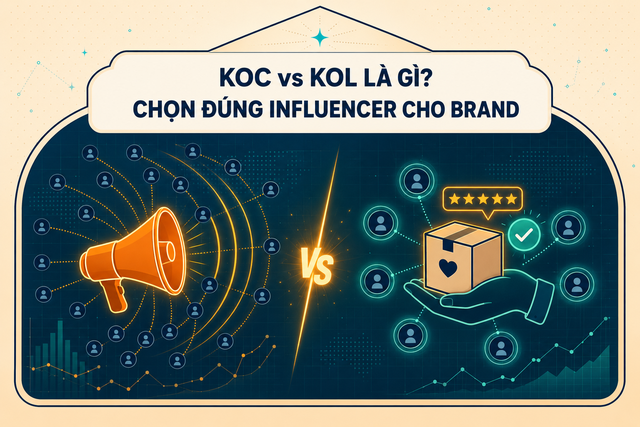
Host selection is often the single most consequential decision in a livestream strategy, and it is frequently misunderstood. Many brands default to influencers with large follower counts, but a KOC with 10,000 to 50,000 highly engaged followers in the precise product niche consistently outperforms a celebrity with millions of loosely relevant followers. An effective livestream host needs four core competencies: the ability to read and respond to incoming comments intelligently and at speed; sustained energy and charisma across two to three hours without fading; genuine product knowledge sufficient to answer technical questions with authority; and the skill to create authentic urgency without sounding scripted. A well-prepared brief covering the ten key product messages, the top twenty anticipated audience questions, and the exact flash deal sequence gives any host a significant performance advantage.
Conclusion: Livestream Commerce Is No Longer Optional
Livestream Commerce has cleared its experimental phase and established itself as an indispensable revenue channel for any brand competing seriously in the Southeast Asian market. With TikTok Shop SEA GMV exceeding $20 billion in 2024 and Shopee Live maintaining a tripling growth rate over two-year cycles, this channel is claiming an increasing share of total regional e-commerce spend with no deceleration in sight.
Brands that succeed at scale in Livestream Commerce do not rely on execution quality alone — they compete with data. Knowing what time competitors go live, which products are trending in the category, and how your session metrics compare against industry benchmarks are competitive inputs that internal dashboards cannot provide. AlgoData delivers this market intelligence layer in full, supporting brands from broadcast scheduling through product mix optimization to post-session competitive analysis.
Whether your brand is planning its first live session or working to scale from $5,000 to $50,000 in monthly livestream GMV, having the right market data in hand compresses the learning curve significantly. Contact AlgoData to schedule a demo of the Livestream Analytics dashboard and receive a complimentary industry benchmark report for your product category.
What is KOC vs KOL?
What is Social Listening?
What is RFM Analysis?