Algo Data for FMCG: Seasonal Demand & Regional Analytics
Trend Reports

Algo Data for FMCG: Seasonal Demand & Regional Analytics

Algo Data (algodata.io) — deep market analytics for FMCG and food: forecast seasonal demand, analyze regional consumption differences, optimize distribution, and detect emerging food trends from real data.

In this series: Algo Data
  1. 1 What Is Livestream Commerce? TikTok Shop & Shopee Live for Brands
  2. 2 In-Depth Facebook/Meta Analytics with Algo Data
  3. 3 What Is Churn? Analyzing and Reducing Customer Churn Rate
  4. 4 Algo Data for Electronics: Price War & Launch Timing
  5. 5 In-Depth Zalo Analytics with Algo Data
  6. 6 What Is RFM? Customer Segmentation Model for E-Commerce
  7. 7 KOC vs KOL: What's the Difference and Which to Choose?
  8. 8 Algo Data for Beauty: KOC-Driven Marketing & Ingredient Trends
  9. 9 In-Depth Market Data Analytics with Algo Data
  10. 10 Algo Data for FMCG: Seasonal Demand & Regional Analytics
✦ Quick summary
Algo Data (algodata.io) — deep market analytics for FMCG and food: forecast seasonal demand, analyze regional consumption differences, optimize distribution, and detect emerging food trends from real...
How was this post?

In FMCG, a one-week forecast error is enough to empty supermarket shelves or fill a warehouse with stock that won't move. Import the wrong product to the wrong region and it sits in the wrong warehouse. Miss a seasonal window — Tet, summer, or the rainy season — and the revenue is gone permanently because the stock expired before it could be sold. Algo Data provides the intelligence layer to ground every distribution and production decision in actual demand data — not intuition, not delayed reports.

FMCG 2026: Speed and Localization Decide Everything
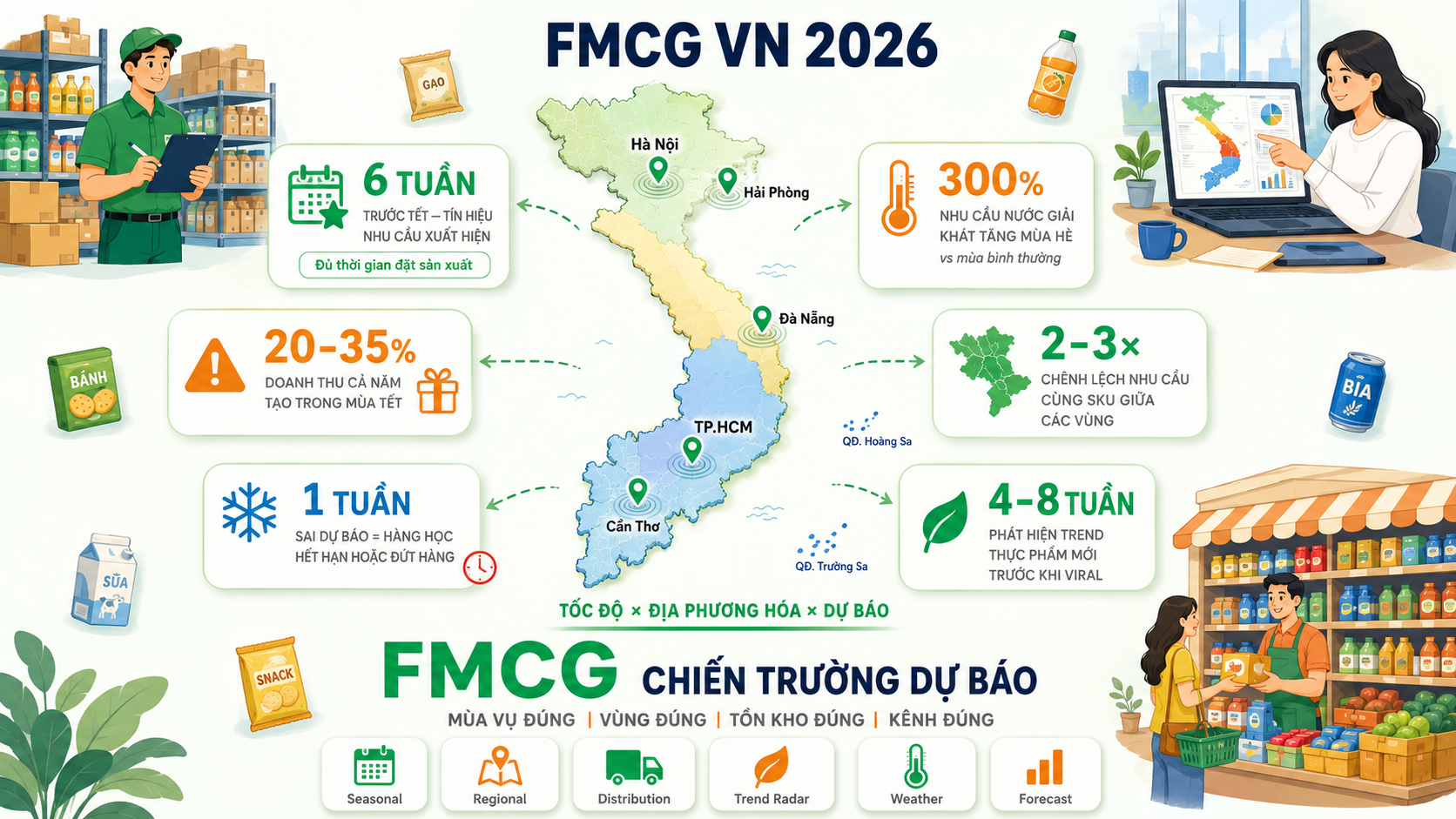
Fast-Moving Consumer Goods — the name says it all. In this industry, speed isn't a competitive advantage; it's a survival requirement:

  • Short shelf lives: Tet confectionery, summer beverages, frozen foods — a wrong forecast means spoiled product, money thrown away
  • Extreme seasonal demand: energy drinks surge 300% in summer; Tet cakes, candied fruits, and seeds explode in the three weeks before Tet then vanish after; hotpot broth peaks in the rainy season — wrong timing means missing the season entirely
  • Strong regional preferences: Northern Vietnam eats pho, the South eats hủ tiếu; Hanoians and Saigonese drink different beer brands; the Central region eats significantly spicier — uniform national distribution wastes resources

The consequences for those still relying on Excel and intuition:

  • Stockout during peak season — lost revenue, lost shelf space, damaged distributor relationships
  • Post-season surplus — forced below-cost clearance or disposal of expired goods
  • Misdistributed inventory — Hanoi warehouse full while Ho Chi Minh City runs dry, or vice versa

The winner in FMCG is whoever accurately forecasts weekly demand by region and adjusts distribution dynamically based on real market signals.

What Is Algo Data?
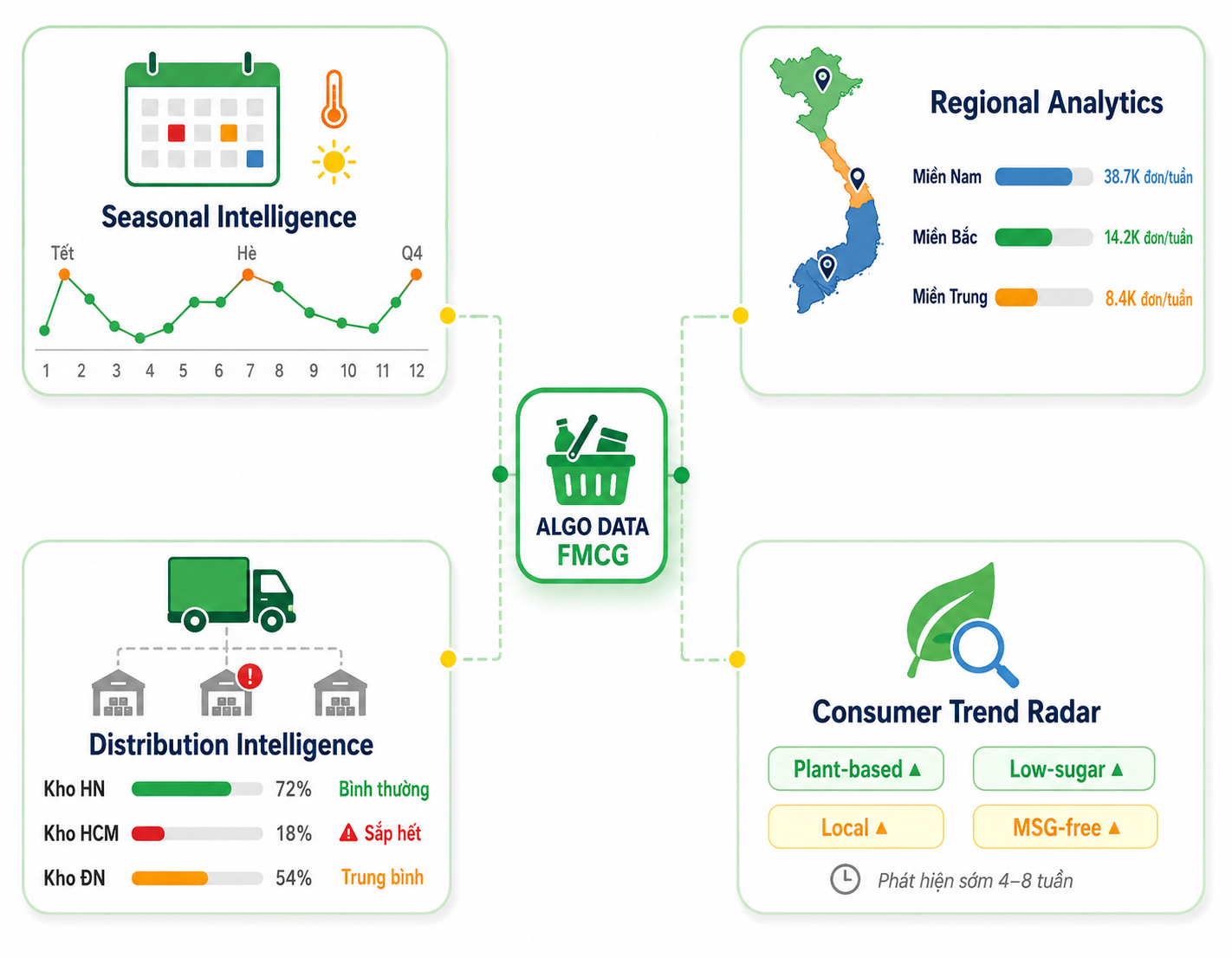
Algo Data is a comprehensive market analytics platform for the FMCG and food industry — combining historical sales data, search signals, weather data, and consumer behavior trends to deliver weekly demand forecasts, regional analysis, and distribution strategy insights.

Not ERP software. Not an internal reporting tool. Algo Data is the external market intelligence layer — telling you what the market needs, where, and when, before the bad scenario unfolds.

4 core pillars:

  • Seasonal Intelligence — forecast demand by season, holiday, and weather cycle
  • Regional Analytics — map consumption differences across regions and localize assortment
  • Distribution Intelligence — optimize inventory allocation by channel and geography
  • Consumer Trend Radar — detect emerging food trends before they go mainstream

Key Features
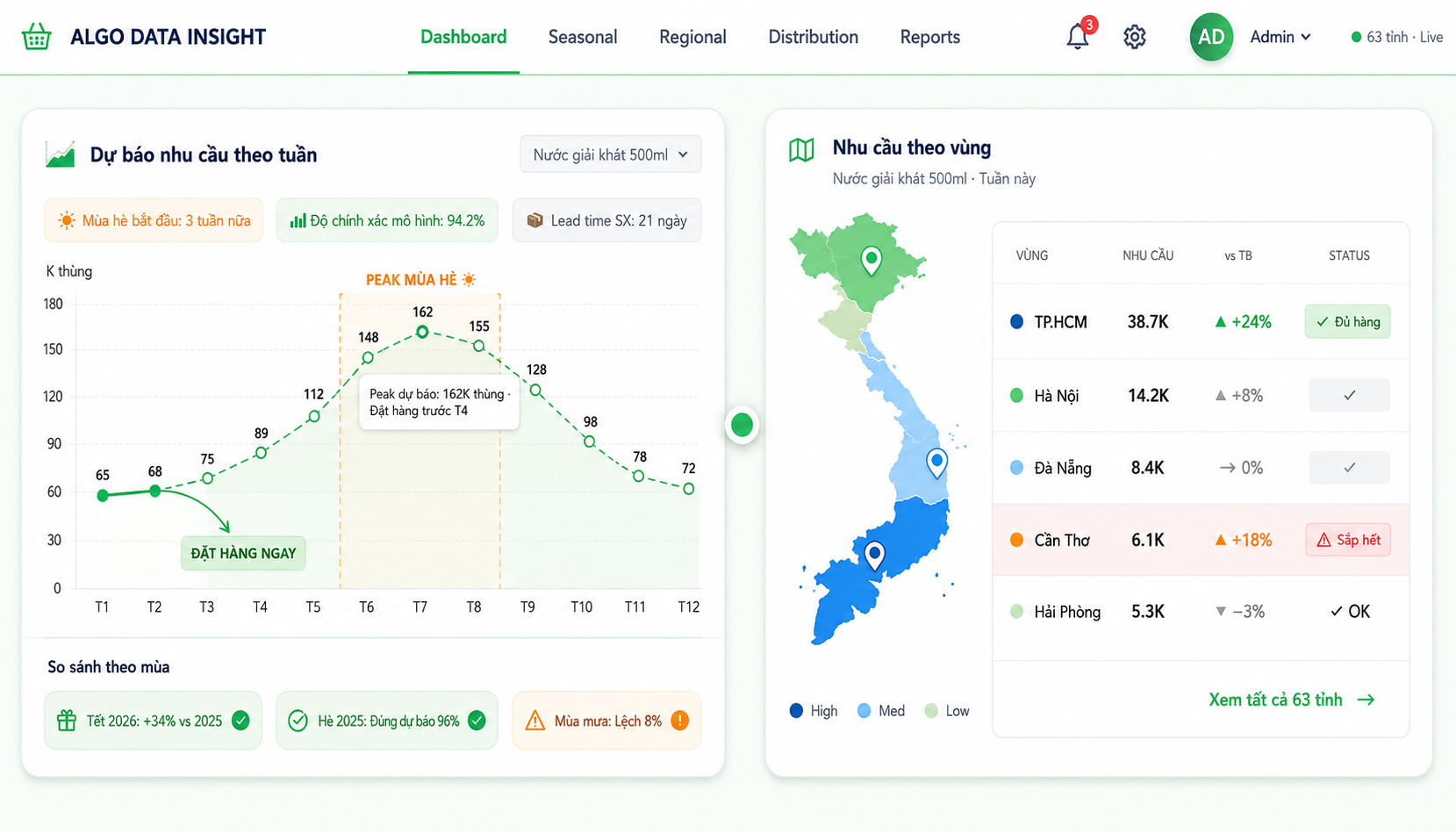
Seasonal Intelligence: Know Which Week Demand Spikes — 4–6 Weeks in Advance

In FMCG, nothing is worse than being reactive to seasonal demand. Placing production orders after demand has already spiked is too late — manufacturing and logistics lead times typically run 3–6 weeks.

Tet generates 20–35% of annual revenue for many FMCG categories

Algo Data detects pre-Tet demand signals 6 weeks before the holiday — from the moment consumers start searching and placing early orders. That's enough lead time to ramp production capacity, source raw materials, and position warehouse inventory before the market explodes.

  • Tet (Lunar New Year): confectionery, candied fruit, nuts, bottled soft drinks, canned beer — weekly demand forecasts from T-6 weeks to T+1 week relative to Tet
  • Summer (April–August): beverages, ice cream, energy drinks, electrolyte drinks — forecasts modeled on temperature projections and historical data
  • Rainy season (South: May–November; North: May–September): hotpot bases, instant noodles, ready-to-eat meals — demand peaks shift by region
  • Local festivals: Ghost Month (Vu Lan), Mid-Autumn, Christmas, Valentine's — each occasion drives different category demand spikes
  • Weather-demand correlation: a 1°C temperature increase drives how much more beverage demand — modeled from real historical data

Regional Analytics: The Real Demand Map of Vietnam's 63 Provinces

Vietnam is not a homogeneous market. Three regions have fundamentally different palates, consumption habits, and purchasing power.

Equal per-capita distribution is a formula for wasting budget

Distributing fish sauce equally by population between Hanoi and Central provinces is fundamentally wrong — Central Vietnamese consume 2–3x more fish sauce. Allocating Hanoi beer by population share is wrong — brand loyalty and drinking habits are completely different by region. Algo Data provides the real demand map so you can allocate distribution budgets where they actually generate return.

  • Regional flavor profiles: spicy/salty/sweet preference mapping — Central is significantly spicier, the South prefers sweeter, the North tends saltier — directly affecting formulation and product positioning
  • Local brand loyalty: some brands are nearly unsellable in one region but dominate another — data to allocate marketing spend where it converts
  • Channel mix by region: ratio of modern trade (supermarkets/convenience stores) vs traditional trade (wet markets/small shops) varies significantly by province — adjust distribution strategy accordingly
  • Purchasing power by geography: which provinces have high premium segment penetration, which are value-segment dominated — guides assortment decisions by market

Distribution Intelligence: Right Product, Right Warehouse, Right Time

  • Stock allocation optimization: distribute inventory across regional warehouses based on local demand forecasts — prevent simultaneous surplus in one region while another runs dry
  • Replenishment timing: alert when inventory at a region is approaching stockout risk based on actual sell-through velocity and demand forecast
  • Channel mix analytics: which products perform better in supermarkets vs traditional trade vs online — optimize distribution budget allocation
  • Competitor shelf share: track competitor shelf space in each channel and region — identify areas where competitors are weak to concentrate resources
  • Emerging food trends: plant-based, low-sugar, organic, probiotics, local sourcing — detected from search signals and early reviews 4–8 weeks before breaking out
  • Ingredient concern monitoring: when an ingredient starts being linked to negative news (sugar, preservatives, MSG) — demand for products containing it drops before media coverage peaks
  • Meal occasion shifts: work-from-home eating patterns, solo dining trend, health-conscious breakfast habits — which categories rise and fall as behavior changes
  • Price sensitivity mapping: when input costs rise, which categories consumers cut first and which maintain demand regardless — guides pricing strategy

Who Should Use Algo Data?
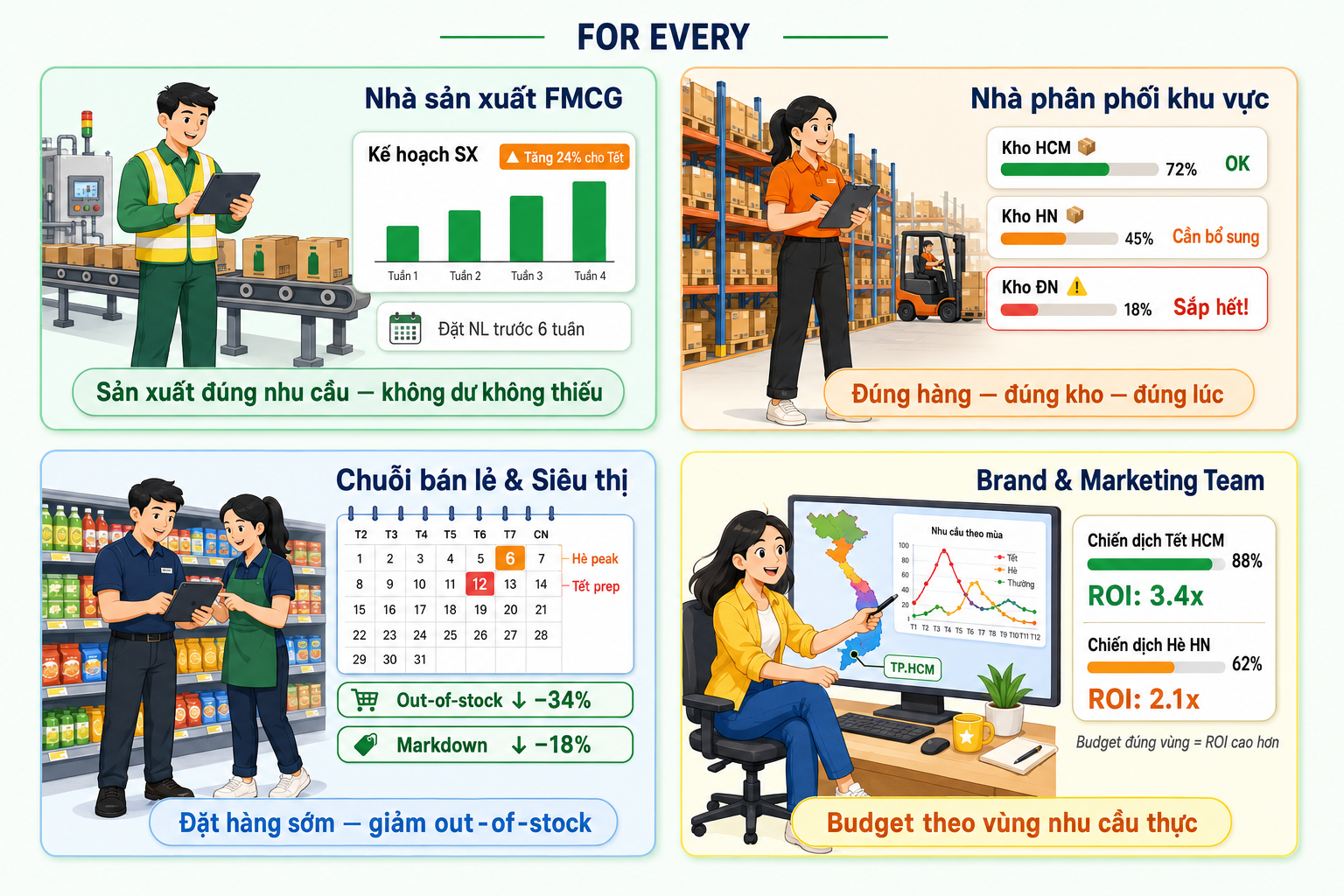
FMCG Manufacturers

Plan production schedules against real weekly market demand instead of internal quotas. Align production capacity and raw material procurement with seasonal peaks. Avoid overproduction leading to expiry.

Regional Distributors

Order the right product mix for each region, not a uniform national assortment. Optimize inventory based on local demand forecasts. Know which areas are running low so you can redistribute before stockout.

Retail Chains & Supermarkets

Allocate products to the right stores by geography and by season. Reduce out-of-stock rates during peak periods and reduce post-season markdown costs. Place supplier orders earlier based on forward-looking demand forecasts.

Brands & Marketing Teams

Plan marketing campaigns aligned with actual demand cycles. Allocate advertising budgets to regions with the highest demand concentration. Measure real demand impact from campaigns, not just impressions.

Algo Data vs. Traditional Approaches

Criteria Traditional Approach Algo Data
Demand forecasting Experience + internal history ✓ Market data + weather + early signals
Regional analysis Sales team reports (slow, incomplete) ✓ Real data per province, weekly updates
Distribution optimization Internal meetings, gut decisions ✓ Automated local demand forecasting
Trend monitoring Trade press, market gossip ✓ Early signals 4–8 weeks from real data
Decision speed Weeks to compile reports ✓ Dashboard updated daily

Get Started with Algo Data

Register at algodata.io — try the free tier to explore core features before deciding to upgrade.

Recommended first steps for FMCG businesses: run Seasonal Intelligence on your top 5 SKUs and compare weekly demand forecasts against current production and import plans. The gap between those two numbers is the inventory risk you're not currently managing. Then run Regional Analytics to see which SKUs are distributed out of proportion with actual regional demand.

Conclusion: In FMCG, there's no such thing as "a minor error" — stockout during Tet season means lost annual revenue; expired surplus means immediate cash loss. Algo Data transforms demand forecasting from "what the experienced person thinks" into a measurable, verifiable, continuously improving process.
Sources

Frequently Asked Questions

Frequently Asked QuestionsQ&A
How accurate is Algo Data's FMCG seasonal demand forecasting?
Algo Data combines three years of historical data with live signals (search trends, early orders, weather forecasts) to produce weekly and monthly demand forecasts — significantly more accurate than pure experience-based estimates. Particularly effective for clearly cyclical seasons like Lunar New Year, summer, and the rainy season.
How granular is the regional data breakdown?
Algo Data segments to province/city level and can drill down to district level for major urban centers. You can compare demand between Hanoi, Ho Chi Minh City, Da Nang, Can Tho, and other provinces — by SKU, category, and sales channel.
Does Algo Data track emerging food trends?
Yes. Algo Data detects rising food trends (plant-based, low-sugar, organic, local sourcing) from search signals, product reviews, and social media content — typically 4–8 weeks before they break out on e-commerce platforms or supermarket shelves.
How does Algo Data help optimize FMCG inventory?
FMCG products have short shelf lives and high disposal costs. Algo Data's weekly demand forecasts let you align production schedules and import orders closely with real market demand — reducing excess inventory and expiry rates.
What scale of FMCG business is Algo Data right for?
It fits every scale: large FMCG manufacturers monitoring the full market, regional distributors optimizing their product mix, and retail chains or supermarkets placing more precise regional and seasonal orders.

Trong ngành FMCG, sai dự báo một tuần là đủ để đứt hàng trên kệ siêu thị hoặc hàng tồn kho đầy kho mà không bán được. Nhập hàng sai vùng là sản phẩm ngồi đúng kho sai thành phố. Bỏ lỡ một mùa vụ — Tết, mùa hè, hay mùa mưa — là mất doanh số không gỡ được vì hàng đã hết hạn sử dụng trước khi kịp bán. Algo Data cung cấp lớp intelligence để mọi quyết định phân phối và sản xuất trong ngành FMCG đều dựa trên dữ liệu nhu cầu thực — không phải kinh nghiệm cảm tính hay báo cáo chậm trễ.

FMCG năm 2026: Tốc độ và địa phương hóa quyết định tất cả

Fast-Moving Consumer Goods — ngay cái tên đã nói lên tất cả. Trong ngành này, tốc độ không phải lợi thế mà là điều kiện tồn tại:

  • Hạn sử dụng ngắn: bánh kẹo Tết, nước giải khát mùa hè, thực phẩm đông lạnh — dự báo sai là hàng hỏng, là tiền vứt đi
  • Nhu cầu cực kỳ theo mùa: nước tăng lực tăng 300% mùa hè; bánh chưng, mứt, hạt dưa bùng nổ trước Tết 3 tuần rồi tắt ngay sau Tết; nước sốt lẩu tăng vào mùa mưa — sai timing là sai tất cả
  • Đặc thù vùng miền cực mạnh: miền Bắc ăn phở, miền Nam ăn hủ tiếu; người Hà Nội uống bia nhãn khác người Sài Gòn; miền Trung ăn cay hơn cả hai — phân phối đồng đều là lãng phí nguồn lực

Kết quả của những ai vẫn dùng báo cáo Excel và kinh nghiệm cảm tính:

  • Hết hàng đúng mùa cao điểm — mất doanh số, mất kệ siêu thị, mất lòng tin đối tác phân phối
  • Ứ đọng hàng sau mùa vụ — phải bán xả dưới giá vốn hoặc hủy hàng hết hạn
  • Phân phối không đều — kho Hà Nội đầy hàng nhưng TP.HCM đang hết, hoặc ngược lại

Người thắng trong FMCG là người dự báo đúng nhu cầu từng vùng từng tuần và điều phối phân phối linh hoạt theo tín hiệu thực tế.

Algo Data là gì?

Algo Data là nền tảng phân tích dữ liệu thị trường chuyên sâu cho ngành FMCG và thực phẩm — kết hợp dữ liệu lịch sử bán hàng, tín hiệu tìm kiếm, dữ liệu thời tiết và xu hướng tiêu dùng để cung cấp dự báo nhu cầu theo tuần, phân tích vùng miền và insight chiến lược phân phối.

Không phải phần mềm ERP. Không phải công cụ báo cáo nội bộ. Algo Data là lớp external market intelligence — cho bạn biết thị trường đang cần gì, ở đâu và khi nào, trước khi kịch bản xấu xảy ra.

4 trụ cột chính:

  • Seasonal Intelligence — dự báo nhu cầu theo mùa vụ, lễ tết và chu kỳ thời tiết
  • Regional Analytics — phân tích sự khác biệt tiêu dùng theo vùng miền và địa phương hóa danh mục
  • Distribution Intelligence — tối ưu phân bổ hàng hóa theo kênh và theo khu vực
  • Consumer Trend Radar — phát hiện xu hướng thực phẩm mới nổi trước khi trở thành mainstream

Tính năng nổi bật

Seasonal Intelligence: Biết tuần nào nhu cầu tăng — trước 4–6 tuần

Trong FMCG, không có gì tệ hơn là bị động trước mùa vụ. Đặt hàng sản xuất sau khi nhu cầu đã tăng là quá muộn — thời gian chuẩn bị (lead time) sản xuất và logistics thường mất 3–6 tuần.

Tết Nguyên Đán tạo ra 20–35% doanh thu cả năm cho nhiều ngành hàng FMCG

Algo Data phát hiện tín hiệu tăng nhu cầu trước Tết từ 6 tuần trước ngày Tết — từ khi người tiêu dùng bắt đầu tìm kiếm và đặt hàng trước. Đủ thời gian để tăng công suất sản xuất, đặt nguyên liệu và bố trí kho bãi hợp lý trước khi thị trường bùng nổ.

  • Tết Nguyên Đán: bánh kẹo, mứt, hạt, nước ngọt đóng chai, bia lon — dự báo theo tuần từ T-6 đến T+1 so với ngày Tết
  • Mùa hè (tháng 4–8): nước giải khát, kem, nước tăng lực, đồ uống điện giải — dự báo theo nhiệt độ dự báo và dữ liệu lịch sử
  • Mùa mưa (miền Nam tháng 5–11, miền Bắc tháng 5–9): lẩu, mì gói, đồ ăn liền — peak demand thay đổi theo từng vùng
  • Lễ hội địa phương: rằm tháng 7, Trung Thu, Giáng Sinh, Valentine — mỗi dịp kéo theo nhu cầu ngành hàng khác nhau
  • Weather-demand correlation: nhiệt độ tăng 1°C → nước giải khát tăng bao nhiêu % — mô hình hóa từ dữ liệu thực

Regional Analytics: Bản đồ nhu cầu thực của 63 tỉnh thành

Việt Nam không phải một thị trường đồng nhất. Ba miền có khẩu vị, thói quen tiêu dùng và sức mua hoàn toàn khác nhau.

Phân phối đồng đều theo đầu người là công thức lãng phí ngân sách

Phân phối nước mắm đều nhau giữa Hà Nội và miền Trung là sai từ gốc — người miền Trung dùng nước mắm gấp 2–3 lần. Bia cũng vậy: thói quen uống và mức độ gắn bó với từng nhãn hàng khác nhau hoàn toàn theo vùng. Algo Data cung cấp bản đồ nhu cầu thực để phân bổ ngân sách phân phối đúng nơi, đúng lúc.

  • Khẩu vị theo vùng: miền Trung ăn cay, miền Nam ưa ngọt, miền Bắc thiên về mặn — ảnh hưởng trực tiếp đến công thức sản phẩm (formulation) và định vị (positioning) cho từng thị trường
  • Gắn bó thương hiệu theo địa phương (brand loyalty): cùng một ngành hàng, có nhãn hàng gần như vô hình ở miền Bắc nhưng lại thống lĩnh thị trường miền Nam — dữ liệu để đặt ngân sách marketing đúng nơi thay vì trải đều vô hiệu quả
  • Cơ cấu kênh bán theo vùng: tỷ lệ kênh hiện đại (modern trade) so với kênh truyền thống (traditional trade) khác nhau rõ rệt theo tỉnh — điều chỉnh chiến lược phân phối sát thực tế từng khu vực
  • Sức mua theo địa lý: tỉnh nào phân khúc cao cấp chiếm tỷ trọng lớn, tỉnh nào hàng bình dân thống trị — định hướng danh mục sản phẩm theo từng thị trường

Distribution Intelligence: Đúng hàng, đúng kho, đúng lúc

  • Tối ưu phân bổ hàng (stock allocation): điều phối hàng giữa các kho khu vực dựa trên dự báo nhu cầu địa phương — không để kho miền Bắc thừa trong khi kho miền Nam đang thiếu cùng lúc
  • Lịch bổ sung hàng (replenishment timing): cảnh báo khi tồn kho tại một khu vực tiến đến ngưỡng rủi ro hết hàng — dựa trên tốc độ bán thực tế kết hợp dự báo nhu cầu
  • Phân tích cơ cấu kênh bán (channel mix): sản phẩm nào phù hợp siêu thị, sản phẩm nào mạnh ở tạp hóa hoặc sàn thương mại điện tử — tối ưu phân bổ ngân sách phân phối theo kênh
  • Thị phần kệ hàng đối thủ (shelf share): theo dõi mức độ hiện diện của đối thủ theo kênh và theo vùng — phát hiện khu vực đối thủ đang yếu để dồn nguồn lực vào đúng chỗ

Consumer Trend Radar: Đọc được thay đổi khẩu vị trước khi nó thành trend

  • Xu hướng thực phẩm mới nổi (emerging food trends): thuần thực vật, ít đường, organic, probiotic, nguyên liệu địa phương — phát hiện từ tín hiệu tìm kiếm và đánh giá người dùng sớm 4–8 tuần trước khi bùng nổ
  • Theo dõi lo ngại thành phần (ingredient concern): khi một nguyên liệu bắt đầu bị gắn với tin tiêu cực — đường, chất bảo quản, bột ngọt — nhu cầu sản phẩm liên quan đã giảm trước khi truyền thông đưa tin rộng rãi
  • Dịch chuyển thói quen ăn uống (meal occasion shift): làm việc tại nhà, ăn một mình, bữa sáng lành mạnh — những thay đổi hành vi này ảnh hưởng trực tiếp đến ngành hàng nào tăng trưởng và ngành hàng nào co lại
  • Bản đồ độ nhạy cảm giá (price sensitivity mapping): khi giá nguyên liệu tăng, ngành hàng nào người tiêu dùng co lại trước, ngành hàng nào vẫn giữ nhu cầu ổn định — định hướng chiến lược giá

Ai nên dùng Algo Data?

Nhà sản xuất FMCG

Lập kế hoạch sản xuất theo nhu cầu thực tế từng tuần thay vì theo quota nội bộ. Điều chỉnh công suất và nguyên liệu đúng mùa cao điểm. Tránh tình trạng sản xuất dư thừa dẫn đến hàng hết hạn.

Nhà phân phối khu vực

Đặt hàng đúng danh mục cho từng vùng, không nhập đồng nhất toàn quốc. Tối ưu tồn kho theo dự báo nhu cầu địa phương. Biết khu vực nào đang thiếu hàng để điều phối nội bộ kịp thời.

Chuỗi bán lẻ & Siêu thị

Phân bổ hàng đúng cửa hàng theo địa lý và theo mùa. Giảm tỷ lệ hết hàng trên kệ (out-of-stock) trong mùa cao điểm và giảm giảm giá thanh lý (markdown) hàng tồn sau mùa vụ. Đặt hàng từ nhà cung cấp sớm hơn dựa trên dự báo nhu cầu.

Brand & Marketing Team

Lập kế hoạch chiến dịch marketing theo đúng chu kỳ nhu cầu thực tế. Phân bổ ngân sách quảng cáo theo vùng có nhu cầu cao. Đo lường tác động chiến dịch lên nhu cầu thực tế.

Algo Data vs. cách làm truyền thống

Tiêu chí Cách truyền thống Algo Data
Dự báo nhu cầu Kinh nghiệm + lịch sử nội bộ ✓ Dữ liệu thị trường + thời tiết + tín hiệu sớm
Phân tích vùng miền Báo cáo sales team (chậm, thiếu) ✓ Dữ liệu thực từng tỉnh, cập nhật tuần
Tối ưu phân phối Họp nội bộ, quyết định chủ quan ✓ Dự báo nhu cầu địa phương tự động
Theo dõi trend mới Đọc báo, nghe thị trường ✓ Tín hiệu sớm 4–8 tuần từ data thực
Tốc độ ra quyết định Vài tuần để tổng hợp báo cáo ✓ Dashboard cập nhật hằng ngày

Bắt đầu với Algo Data

Đăng ký tài khoản tại algodata.io — dùng thử miễn phí để trải nghiệm bộ tính năng cơ bản trước khi quyết định nâng cấp.

Bước đầu tiên đề xuất cho ngành FMCG: chạy Seasonal Intelligence cho top 5 SKU của bạn và so sánh dự báo nhu cầu theo tuần với kế hoạch sản xuất/nhập hàng hiện tại. Khoảng cách giữa hai con số đó chính là rủi ro tồn kho bạn đang chưa quản lý được. Sau đó chạy Regional Analytics để xem SKU nào đang được phân phối không đúng tỷ lệ với nhu cầu thực tế theo vùng.

Kết luận: Trong FMCG, không có khái niệm "sai một chút" — hết hàng đúng mùa Tết là mất doanh số cả năm, hàng tồn dư quá hạn là mất tiền mặt ngay. Algo Data biến dự báo từ công việc của "người có kinh nghiệm" thành quy trình có thể đo lường, kiểm chứng và cải thiện liên tục.

Nguồn tham khảo

Câu hỏi thường gặp

Câu hỏi thường gặpQ&A
Algo Data dự báo nhu cầu FMCG theo mùa chính xác đến mức nào?
Algo Data kết hợp dữ liệu lịch sử 3 năm với tín hiệu hiện tại (tìm kiếm, đặt hàng sớm, thời tiết dự báo) để đưa ra dự báo nhu cầu theo từng tuần và từng tháng — với độ chính xác cao hơn đáng kể so với ước tính thuần túy từ kinh nghiệm. Đặc biệt hiệu quả với các mùa vụ có chu kỳ rõ ràng như Tết Nguyên Đán, mùa hè và mùa mưa.
Dữ liệu vùng miền được phân tách đến cấp độ nào?
Algo Data phân tách đến cấp tỉnh/thành phố và có thể drill-down đến quận/huyện cho các đô thị lớn. Bạn có thể so sánh nhu cầu giữa Hà Nội, TP.HCM, Đà Nẵng, Cần Thơ và các tỉnh thành khác — theo từng SKU, từng ngành hàng và từng kênh bán.
Algo Data theo dõi được trend thực phẩm mới nổi không?
Có. Algo Data phát hiện xu hướng thực phẩm đang nổi (plant-based, low-sugar, organic, sản phẩm địa phương) từ tín hiệu tìm kiếm, review sản phẩm và nội dung mạng xã hội — thường trước 4–8 tuần so với khi trend đó bùng nổ trên sàn TMĐT hoặc kệ siêu thị.
Algo Data giúp tối ưu tồn kho FMCG như thế nào?
FMCG có hạn sử dụng ngắn và chi phí phá hủy hàng hỏng rất cao. Algo Data cung cấp dự báo nhu cầu theo tuần để bạn điều chỉnh lịch sản xuất và nhập hàng sát với nhu cầu thực tế — giảm tồn kho dư thừa và tỷ lệ hàng hết hạn.
Algo Data phù hợp với quy mô nào trong ngành FMCG?
Phù hợp từ nhà sản xuất FMCG quy mô lớn cần theo dõi toàn thị trường, đến nhà phân phối khu vực cần tối ưu danh mục hàng hóa, và cả các chuỗi bán lẻ/siêu thị cần đặt hàng chính xác theo từng vùng và từng mùa.