DDoS la moi de doa nghiem trong co the gay thiet hai lon ve tai chinh va uy tin. Ket hop nhieu lop phong thu (WAF, Anycast, rate limiting, giam sat traffic) la cach hieu qua nhat de bao ve he thong.
DDoS (Distributed Denial of Service) is a distributed denial-of-service attack that uses botnets to send massive traffic aimed at overloading the target system. This article analyzes the types of attacks, signs of detection, and effective prevention solutions.
2019Trusted since
B2BData solutions
Data·AIExpertise
Need data solutions for your business?
AlgoData has helped businesses with data engineering, analytics & AI since 2019.
This article will help you understand what DDoS is, the signs of detection, the consequences of being attacked, and provide effective prevention and response measures.
Overview of DDoS and DoS
Before diving deep into DDoS, we need to understand the concept of DoS and the differences between these two types of attacks.
What is DoS?
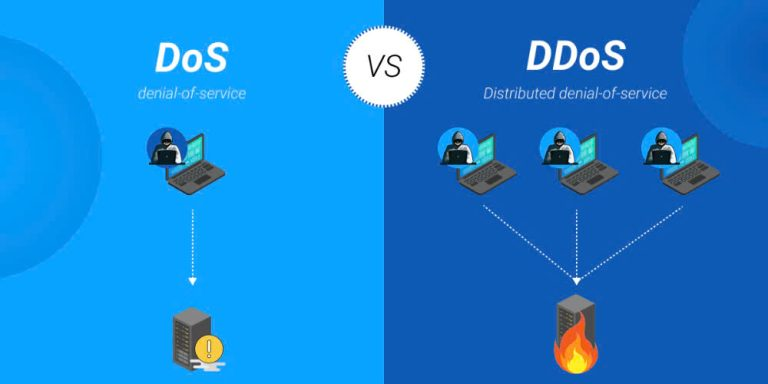
DoS (Denial of Service) is a form of cyberattack aimed at making a system, network, or service inaccessible to legitimate users. The attacker's goal is to flood the system's resources by sending too many requests, preventing it from processing and responding to legitimate requests.
There are many ways to carry out a DoS attack. The most common method is sending a large volume of network traffic to the target, exceeding its processing capacity. Protocols such as TCP, UDP, ICMP, and HTTP are commonly used in DoS attacks.
The danger of DoS attacks is that they cause a denial of service, shutting down the system or network and preventing users from accessing critical resources. This seriously affects the normal operations and reputation of an organization.
What is DDoS?
DDoS (Distributed Denial of Service) is a more advanced form of DoS attack. Instead of using just one computer or a single source, the attacker uses multiple systems, typically thousands or millions of malware-infected devices (botnet), to simultaneously send massive volumes of malicious traffic to the target.
In a DDoS attack, the attacker controls the botnet to launch attacks from many different locations. This helps hide the real address and exponentially increases the attack power.
DDoS attacks are becoming increasingly sophisticated and harder to prevent. Attack bandwidth continues to rise, potentially reaching from tens to hundreds of Gbps. Victims of DDoS attacks face enormous pressure with high damage costs.
Differences Between DoS and DDoS
Although DoS and DDoS are both attacks aimed at disrupting or disabling services, they have several key differences:
DoS uses only one computer or one network connection to carry out the attack. DDoS leverages the power of many computers in a large botnet network.
A DoS attack is generally easier to detect and block compared to DDoS. DDoS attacks typically cause greater damage and are much harder to counter.
DoS uses fewer spoofed IP addresses compared to DDoS. With DDoS, malicious requests come from many different IP addresses, making traffic filtering more complex.
DoS attacks may be the choice of individual hackers, while DDoS requires the attacker to have the capability to control a large botnet network.
DoS attack duration is usually shorter than DDoS. DDoS attacks can last continuously for days or even weeks.
There are various reasons behind a DDoS attack. Here are some common causes:
Financial Motivation
In some cases, attackers use DDoS as a tool to threaten and extort businesses and organizations. They demand the victim pay a ransom to end the attack and restore normal system operations.
Political Motivation
DDoS attacks are sometimes used as a tool to sabotage the activities of political organizations and institutions as a form of "hacktivism." Attackers may target government websites, state agencies, or non-governmental organizations to cause disruption and interfere with operations.
Personal Motivation
In some cases, attackers use DDoS for revenge, to cause inconvenience, or to harm a specific website, company, or individual due to personal conflicts. This motivation often stems from dissatisfaction, jealousy, or a desire to prove one's abilities.
Consequences of DoS and DDoS Attacks
A DoS attack, especially DDoS, can cause severe consequences for businesses and organizations:
Business disruption: Attacked businesses experience service interruptions, are unable to serve customers, leading to lost revenue and profits.
Hardware damage: The enormous traffic volume in DDoS attacks can overload and damage network equipment and servers.
Brand reputation loss: In users' eyes, a website that frequently goes down appears unreliable and unprofessional. This negatively affects brand image.
High recovery costs: To restore systems and strengthen defenses, organizations need to spend significant amounts after each successful attack.
Overview of Current DDoS Attack Types
Currently, there are many different forms of DDoS attacks used by hackers. Here are some common techniques:
SYN Flood Attack
In this attack, the attacker uses a botnet to send a large volume of TCP requests with the SYN flag to the victim's server. However, they do not complete the three-way handshake, forcing the system to wait and maintain many half-open connections, leading to overload.
UDP Flood Attack
This technique involves using a botnet to send massive numbers of UDP packets to random ports on the server. This causes overload and exhausts system resources.
HTTP Flood Attack
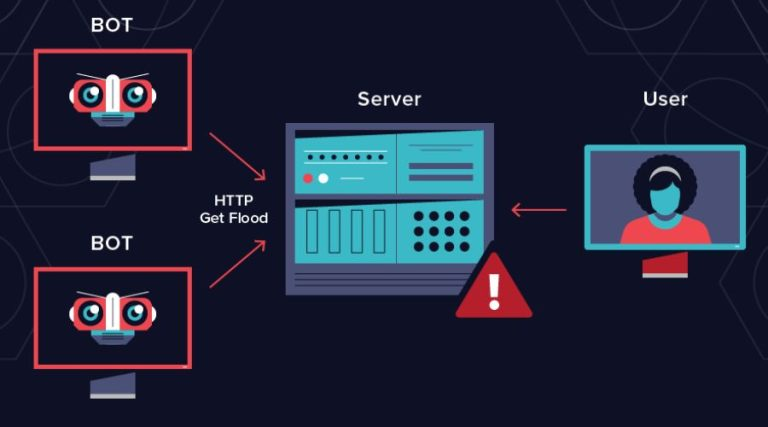
In this attack, the attacker uses a botnet to simultaneously send a large volume of legitimate HTTP requests to the web server. The sudden increase in traffic quickly exhausts system resources, leading to a denial of service.
Ping of Death Attack
The Ping of Death attack involves sending ICMP packets larger than 65,535 bytes, exceeding the allowed limit of the IP protocol. When the server receives these packets, it encounters errors and may stop functioning.
Smurf Attack
This attack combines IP spoofing techniques and security vulnerabilities in the ICMP protocol to inject malicious code into packets. When sent to multiple servers on the network, these packets are amplified and multiplied many times over, overloading the victim.
Fraggle Attack
Similar to the Smurf attack, the Fraggle Attack uses UDP packets with spoofed IP addresses to attack the target. These packets are sent to port 7 (echo) and port 19 (chargen) on the victim's server, creating a packet loop that overloads the system.
In this attack, the attacker opens thousands of connections to the web server and keeps these connections in a half-open state for as long as possible. This forces the server to maintain many simultaneous connections, leading to resource exhaustion and denial of service.
NTP Amplification Attack
This attack exploits vulnerabilities in the NTP (Network Time Protocol). The botnet spoofs the victim's IP address to send massive requests to public NTP servers. As a result, the NTP server sends responses many times larger than the original request, overloading the victim.
HTTP GET Attack
In this technique, the attacker uses a botnet to send a large volume of HTTP GET requests to URLs on the website. This consumes system resources and overloads the server, making it unable to respond to requests from legitimate users.
Advanced Persistent DoS (APDoS) Attack
APDoS is a more sophisticated form of DDoS attack that uses prolonged, hard-to-detect attack tactics that evolve over time. This attack is typically carried out with the goal of capturing sensitive information or causing long-term damage to the victim.
Signs of a DDoS Attack
How can you detect a DDoS attack in progress in a timely manner? Here are some common signs:
Website Loads Slowly or Becomes Inaccessible
When your website is under a DDoS attack, users will have difficulty or may even be unable to access the website because the server is overloaded and cannot process requests in time.
Network Bandwidth Is Consumed
An abnormal sudden spike in website traffic within a short period is a sign of a DDoS attack. Monitor traffic charts to detect any abnormal signs early.
Server Overload
When too many requests are sent to the server at the same time, system resources are quickly exhausted. The server cannot respond in time and falls into an overloaded state.
System Error Messages
During a DDoS attack, users may encounter error messages such as "connection timed out" or "service unavailable" when trying to access the website.
Guide to Effective DDoS Attack Prevention Methods
To protect your website and network systems from DDoS attack threats, businesses and organizations should implement the following preventive measures:
Use Premium, Quality Hosting Services
Choosing a reputable hosting provider with a strong security system and robust DDoS resistance is one of the most important measures to protect your website. A quality hosting service will provide advanced security features, continuous monitoring, and the ability to handle large traffic volumes.
When choosing a hosting provider, ensure they have experience handling DDoS attacks and offer protective measures such as Web Application Firewall (WAF), Intrusion Detection/Prevention Systems (IDS/IPS), and malicious traffic filtering capabilities.
Monitor Website Traffic
Use monitoring and traffic analysis tools to track and detect abnormal signs early, especially sudden increases in access volume within a short period.
Create Blackhole Routing
This technique involves configuring routers to route all packets from the attacker's IP address into a "black hole," where they are completely removed from the network without affecting the system.
Use Web Application Firewall (WAF)
WAF acts as a protective shield between users and the web application, helping to monitor, filter, and block malicious requests before they reach the server.
Prepare Backup Bandwidth
Increase bandwidth to accommodate the sudden surge in access when under a DDoS attack. This helps maintain service availability and minimize impact on users.
Limit Access Volume
Set a limit on the number of access requests per IP address within a given time period. When this threshold is exceeded, subsequent requests are denied to prevent overload.
Anycast is a network routing technique that allows a single IP address to be used across multiple servers. When Anycast is applied, user requests are distributed across multiple servers, helping reduce load and increase system resilience.
Guide to Effective DDoS Attack Response
If your website or system is under a DDoS attack, follow these steps to minimize damage and restore operations:
Contact Your Internet Service Provider (ISP)
Immediately notify your ISP about the ongoing attack. They can help you filter malicious network traffic and block the attack from its source.
Contact Your Hosting Provider
If you use a hosting service, contact your provider for incident support. They can apply additional protective measures and help minimize the impact of the attack.
Common Vulnerabilities Exploited in DDoS Attacks
Attackers commonly exploit the following security vulnerabilities to carry out DDoS attacks:
Monoculture Vulnerability
This vulnerability appears when many organizations use a common platform or popular solution. Attackers can exploit a shared weakness in the system to attack multiple targets simultaneously.
Technical Debt Vulnerability
Technical debt arises when applications or systems are not properly designed and deployed from the start, creating many potential security vulnerabilities. Attackers can exploit these vulnerabilities to carry out DDoS attacks.
Complexity Vulnerability
The more complex a system is, the more weaknesses and vulnerabilities there are for attackers to exploit. As the scale and diversity of a system increase, detecting and preventing DDoS attacks also becomes more difficult.
Frequently Asked Questions About DDoS
Which Websites Are Most Vulnerable to Attacks?
E-commerce websites, government websites, financial services, online gaming, and social media are some of the common targets of DDoS attacks. However, any website or system can become a victim if not adequately protected.
Example of a DDoS Attack
In 2016, DynDNS (a DNS service provider) became the victim of a large-scale DDoS attack. This attack caused many major websites such as Twitter, Netflix, PayPal, and Spotify to experience outages and become inaccessible for several hours.
Can a Firewall Completely Prevent DDoS?
Firewalls play an important role in protecting systems from DDoS attacks, but they cannot completely prevent them. To optimize defense capabilities, you need to apply multiple security measures in a coordinated manner.
How Long Does a DDoS Attack Last?
The duration of a DDoS attack depends on many factors such as scale, attack method, and the victim's defense capabilities. An attack can last from a few minutes to several days or even weeks depending on the specific case.
DDoS la moi de doa nghiem trong co the gay thiet hai lon ve tai chinh va uy tin. Ket hop nhieu lop phong thu (WAF, Anycast, rate limiting, giam sat traffic) la cach hieu qua nhat de bao ve he thong.
Conclusion: DDoS is a distributed denial-of-service attack that uses botnets to overload target systems. With many forms from SYN Flood, HTTP Flood to NTP Amplification, attacks are becoming increasingly sophisticated and harder to prevent. For effective protection, organizations need to combine quality hosting, WAF, traffic monitoring, rate limiting, and Anycast, while also having a timely response plan when attacked.